This week I celebrate the second week of the Writing and Spiritual Practice Ecourse. I have learned two things; among others that I would like to share. I read an essay on Clear seeing by Fiona Robyn and the question ‘What gets in the way of my clear seeing?’
For me, it is this state of anticipation; thinking that this action is preparing me for the next; never in this moment. For instance cleaning the house: ‘When this is all done I will sit down and do ‘whatever’.’
So to address this I wrote a funny small stone watching; me the cleaning fairy flitting like a butterfly spreading cleanliness, perfume and fresh air … albeit with a hypodermic syringe, even polishing the studious one as she worked doggedly in the corner to get things done!!
The cleaning woman manifests as a hypodermic syringe
injecting cleanliness and perfume.
Freshly laundered linen erupts from the machine.
Recharged pot pourri of rose petals and chamomile buds.
The oil burner exudes rich perfumed breath
with bergamot and thyme.
Even the bookworm in the corner
is not exempt from her vervent purge;
her desk is elbow greased, polished with lavender beeswax.
Such is the fervour of the Friday cleaning fairy.
Air from the open back door not so perfumed,
but tingles as the fairy leaves as quietly as she arrived.
Secondly, accepting praise, or not in my case; stops me from seeing clearly. This ecourse is a forum for us to contribute thoughts, hopes, praise and fears, maybe in the form of small stones. Each day I have ventured in and produced some precious gems carefully smoothed. As the week passed so the praise popped in … meaningful words timefully (?) placed. However, I fearfully brushed it aside; more cruelly I lost my patience, began having negative thoughts … ‘Oh! She is just saying that,’ ‘She likes the sound of her own voice’ ‘I bet she says that to everyone”
Not accepting the praise; twisting my gut this way and that to de-recognise the truth and my worth.
So today I accept the praise proffered so graciously yesterday and throughout the week. I hold it for a proud moment and offer it to you all; without you it would not have happened
Welcome praise
warms heart
motivates mind
return love
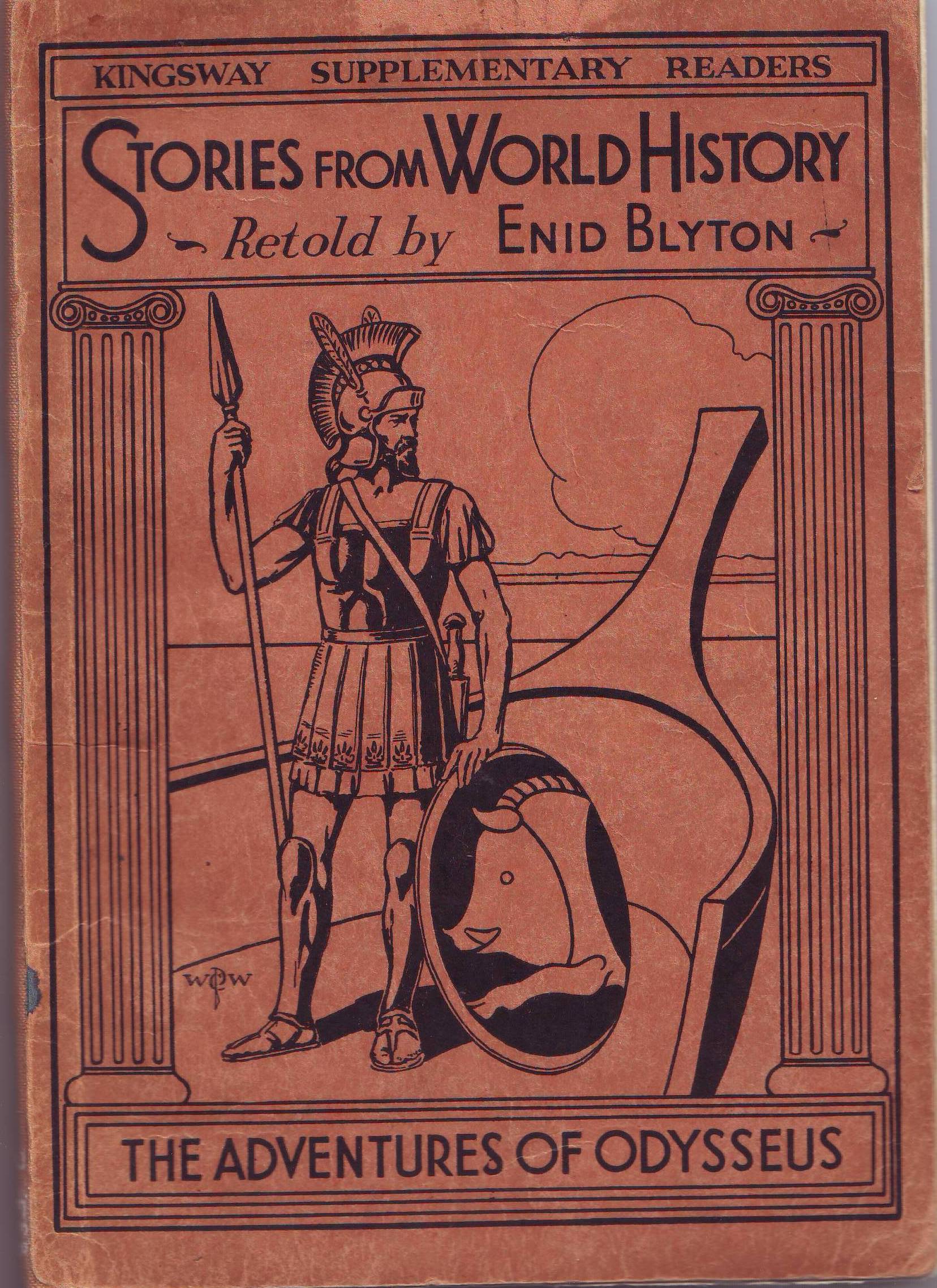
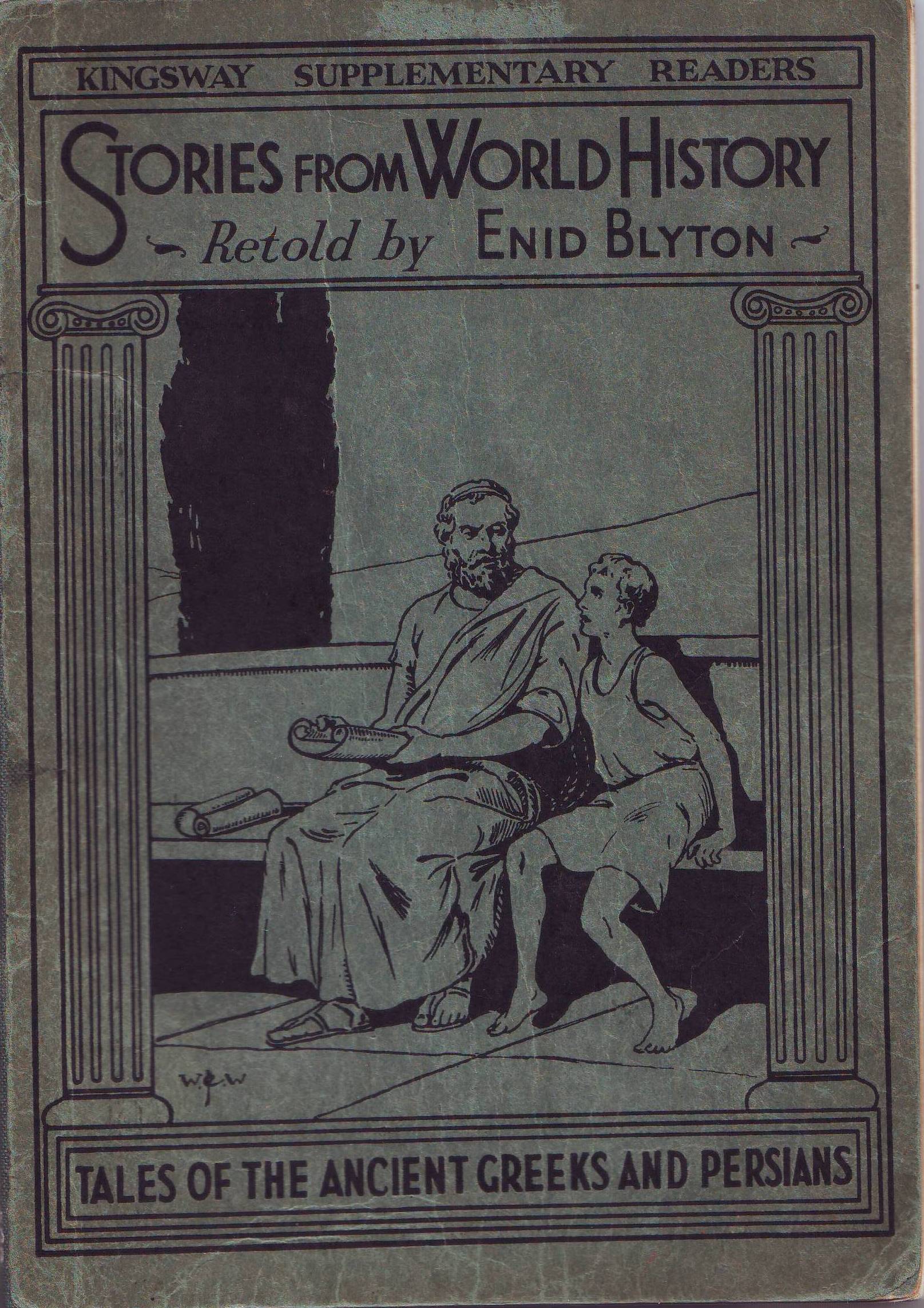
Friday’s Library snapshot … Enid Blyton and History Books.
I can remember reading Enid Blyton stories when I was a child in the 1950s. I enjoyed the Famous Five most of all. While tidying the shelves in our Children’s Collection I came across these titles that I was not familiar with. These Stories from world history are 1934 editions; probably out of print in my time. However I wish that I had read them; especially when I started my classics degree I might have understood Greek history and its relationship to Greek Mythology a bit better.

Alphabe Thursday … Y is for Yeshe Tshogyel.

Yeshe Tshogyel (757-817) (tib., Ye-shes mtsho-rgyal) the renowned Tibetan consort of Padmasambhava; she was born into a noble family and later resided at the court of Trisong Detsen. She met the Indian scholar Santaraktsita and Padmasambhava said to have transmitted Vajrayana Buddhism to Tibet and neighbouring countries in the 8th century.
Her relationship with Padmasambhava was fairly short but during that time he was to give her many important teachings especially those connected to the tutelary deity Vajrakila
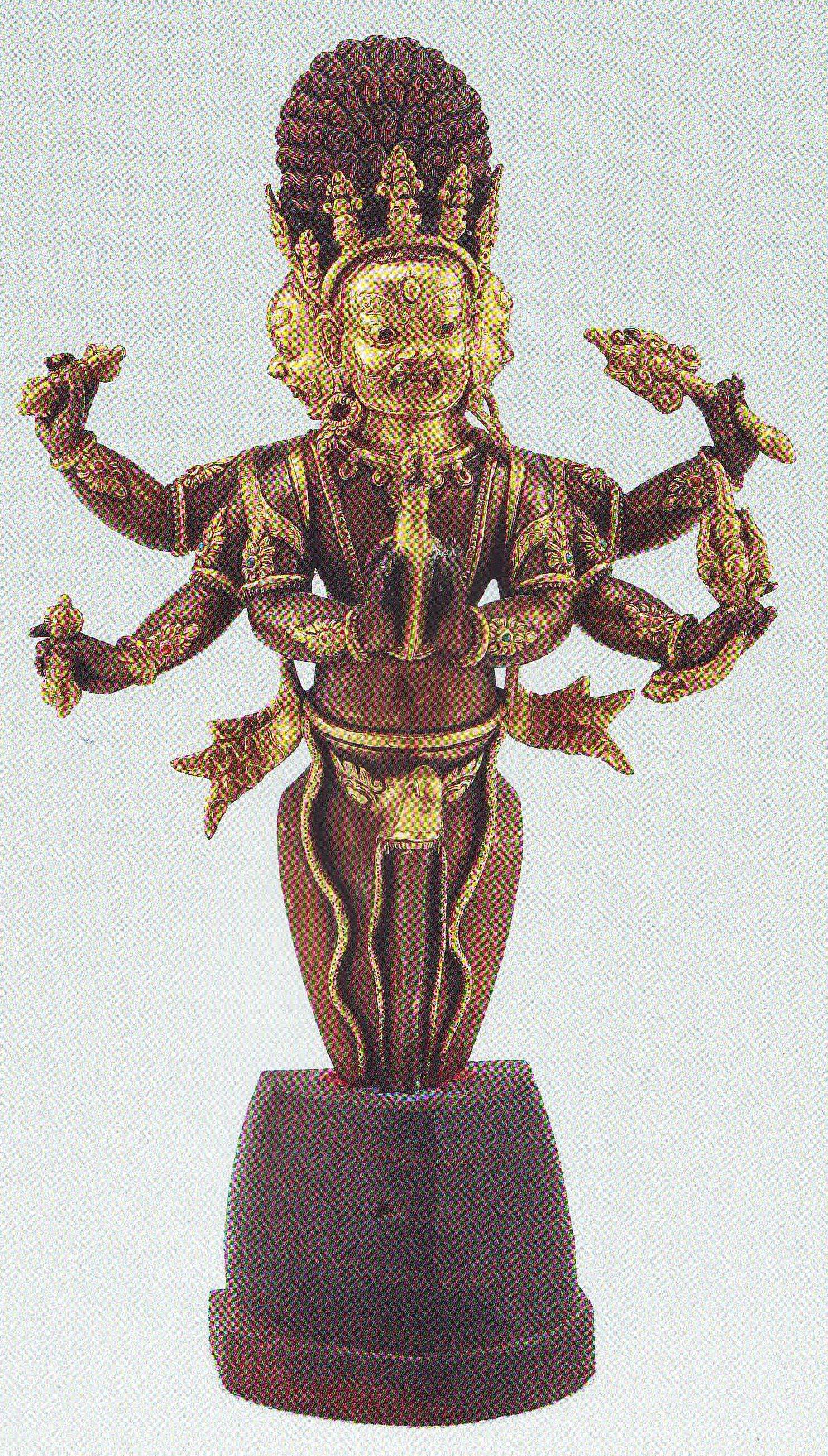
As well as writing a biography of Padmasambhava she said to have recorded many of his teachings which were concealed as terma (hidden treasure) for later discovery. After Padmasambhava left she spread the Dharma in the eastern regions of Tibet.
Pictures from Raume & Freud
e/Space and bliss.

100 Word Challenge for Grown Ups – Week#65

In honour of trees with orange dots; I wonder why this tree will be cut down. For a book or paper; to small perhaps? However, if it is a matter of human convenience I hope its destruction is carefully considered. May it be removed with care and another planted in a protected area. It could be that the tree is diseased; therefore for the protection of others; its demise is for the best. Let’s hope it is replaced quickly with a native variety not prone to disease and able to provide refuge for other wildlife. She steps from her wooden soap box!

Wednesday’s wise woman … Chico da Silva
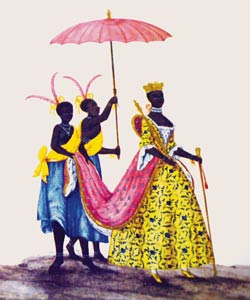
Chico da Silva (Francisca da Silva de Oliveira 1732-1796) became known as the slave who became a queen. She was the daughter of Antonio Caetano de Sa; a Portuguese master and his enslaved lover Maria de Costa
Chica first worked for Sergeant Manuel Pires Sardinha by whom she had two sons; who went to Portugal to study at Coimbra. Her second master Jose da Silva Oliveira was forced to sell her to Joao Fernandes de Oliveira; a diamond mine owner and governor of Arraial do Tijuco, one of the richest men in Brazil.
Chico and Joao became lovers and had thirteen children. In 1777 Joao returned to Portugal with his sons who were granted noble status in the Portuguese court. Their daughters remained in Brazil with Chico and went to the famous Convent Macaúbas. Although they never married during Joao’s absence Chico retained her high status.
Joao and Chica da Silva’s relationship was a scandal in colonial Brazilian society. Chica, a former slave went on to become the most powerful women in colonial Brazil. Chica was banished from her local church that was frequented by whites only. However, unperturbed and to show the locals Chica’s power; Joao built her a church for her personal use.
Chico went to great lengths to fit the status quo by joining threes brotherhoods one for whites, another for Africans and the other for Mulattoes.
Chica became a symbol of Brazil’s so called ‘racial democracy’. Scholars suggest that she used miscegenation and her connections to achieve and keep her higher social status like other African Brazilians at the time. Historians maintain that concubinage and marriage between a white male and a black female in colonial Brazilian society was a way in which slaves could change their social position and not be subject to racism.
Also, manumission (the freedom of slaves) thought to be the beginning for the formation of a positive black identity, was in fact the contrary and the of acceptance of values of the elite, and the assimilation of former slaves and their their descendants in this society
It seems that sex was the key for some females slaves and her children to gain freedom. Concubinage with white men offered advantages to black women because, once free, they reduced the stigma of colour and slavery for them and for their descendants.
Chica, like other freed female slaves, achieved her freedom, loved, had children and ensured they had a good education. So that her offspring could maintain a place in Brazilian high society.
Chica da Silva died in 1796. She was buried at the Church of Sao Francisco de Assis, a privilege that only wealthy whites enjoyed.
Weekly Photo Challenge … Geometric
I hope this fits the bill; taken from the Jolly Sailor on Saturday at Burseldon looking towards the Bursledon Bridge another source of mathematical equations.
Even the ripples are almost geometric





Last week I …
Last week I enrolled on a Writing and Spiritual Practice Ecourse.
I have never done such a thing before. I have attended various Creative Writing Courses at Night School; so I will look forward to learning at a distance, However the Spiritual Practice bit might be a little challenging and I am beginning to wish I had used my helpful pseudonym as a shield from the real world.
The reading materials have came and I have spent sometime over the weekend reading and writing.
We were sent an Essay on Faith and asked to use it as springboard for our daily writing practice for the first week of a four week course.
The essay began with a quote by Julia Cameron ‘Leap, and a net will appear’ and its relationship to faith … so I picked up my pen and wrote :-
I am not familiar with this saying; but I have heard the expression ‘ As one door closes so another opens’ ; I cringe every time I hear it; for a couple of reasons, but in particular, it is usually said (in my opinion) by someone who doesn’t know what they are talking about; someone outside the situation without compassion or wisdom, just a throwaway remark to justify the result.
Also this adage can only be said with any conviction after the event. Indeed on some occasions the saying appears to be true. Should I have faith in that? I prefer to look at the good result as some sort of magic.(Is that faith?)
However, when one is in the middle of the despair, there does not seem to be a door; let alone for it to open. Also from my experience the door when it becomes visible only opens with a huge amount of effort; I muster up the last bit of energy and fall through the door only to find I have come on the wrong day.
(Does the energy come from faith?)
I have come to a place in my life; and it feels like mighty plateau with rich resources, vast experience, even a so called faith (I have taken refuge in a Buddhist community) I have a good job, home, family and friends. What more could I ask for?
I stand worthless, my life, props and responsibilities are redundant. Where do I leap to?
In the essay the narrator suggests that we act as if someone or something is looking after us. What if we do not have this faith? Maybe after years of let downs and scrambling back up has left us without energy or faith do go on and make that leap.
This all sound like I am dull, dreary and self-centred and of course I am sometimes. There are times and increasingly so when I am upbeat and fun. Mostly I can laugh at myself and the ridiculous things I get bogged down with.
There is phrase I say to my daughter (I don’t know where I heard it) ‘don’t ride a foolish donkey with another foolish donkey’ Just let go! I should remind myself of it!
I was not going to share this with my readers; just in case you thought I might become ‘born again good person who writes poems; and that won’t do.

Oh I nearly forgot!
Poem at beginning of exercise
Smooth worn
in winter rain
summer sun
waits in prickly place.
Then after exercise and 1 hour of yoga!
Warm heart
swirling energy
plane banks to land at Heathrow.
Silent Sunday

Welcome Saturday
After week of ups and downs; old painful experiences and some new joys. I welcome Saturday with a small stone.
Linger
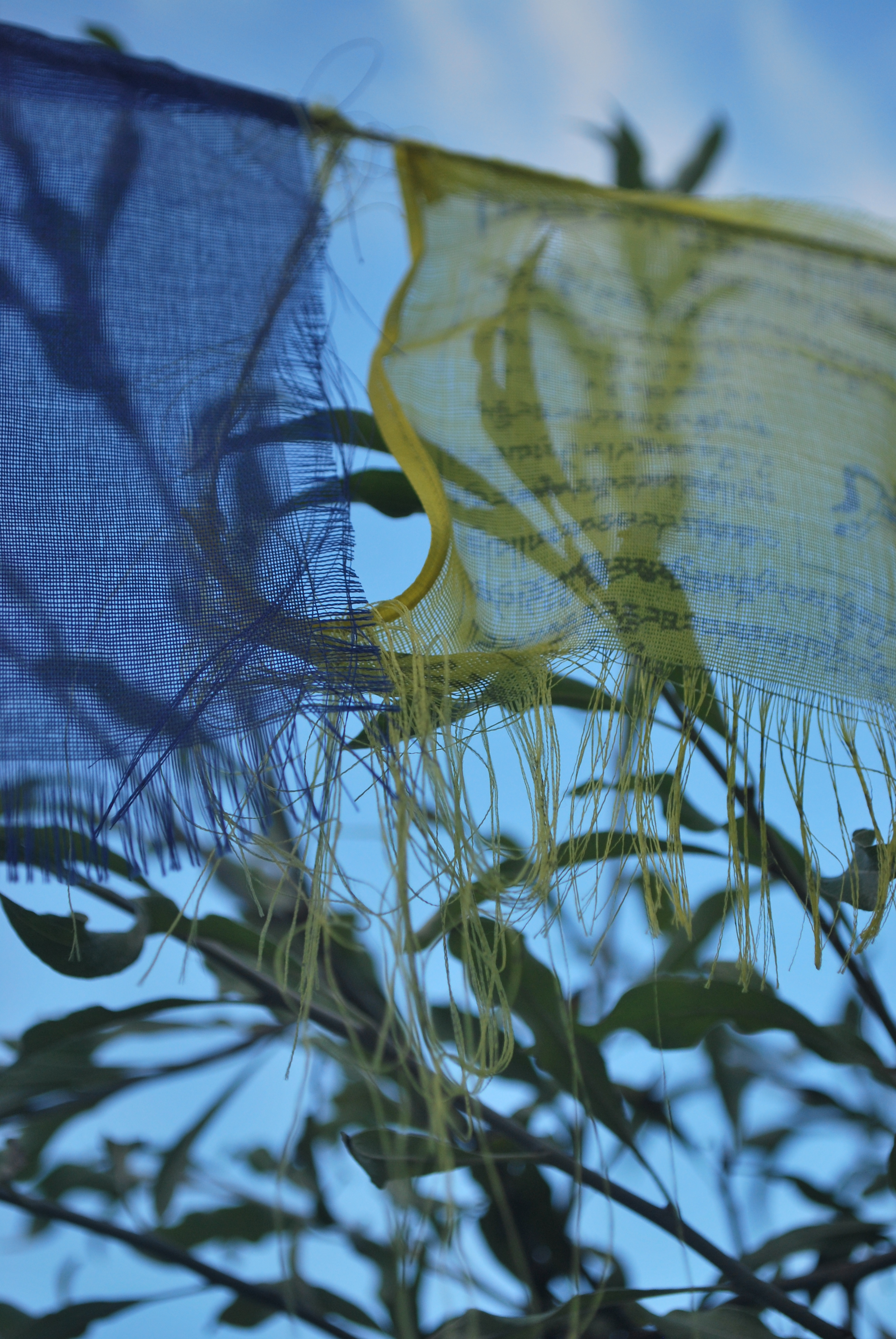
flags unfurled
frayed heart
exposed to weather.
Friday’s Library Snapshot …
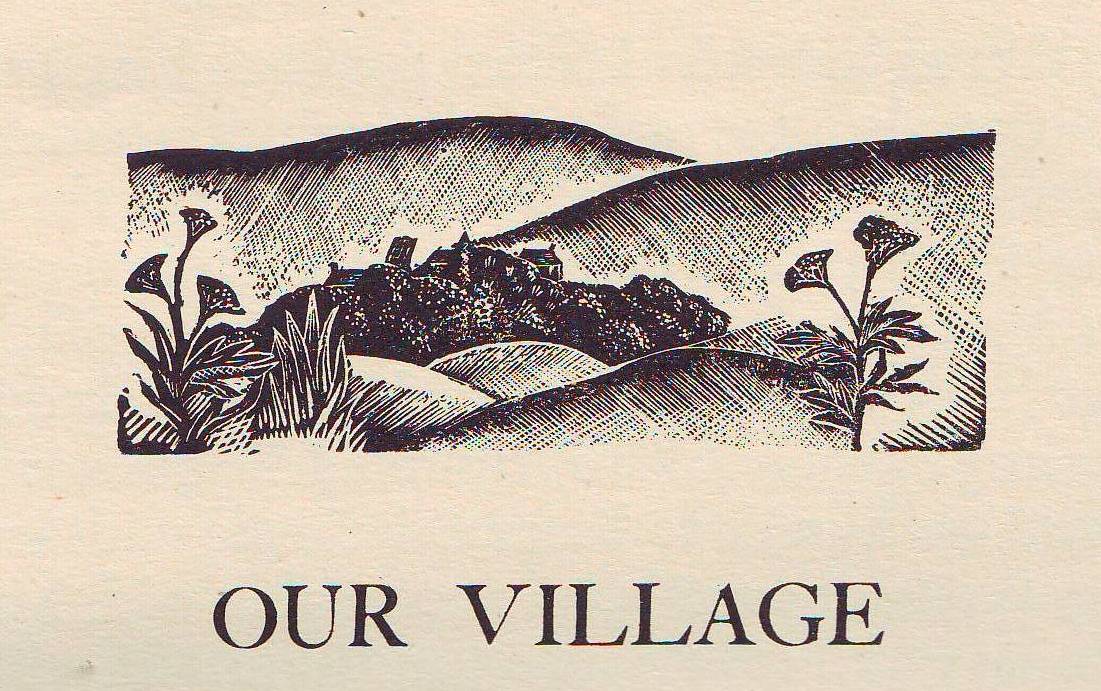
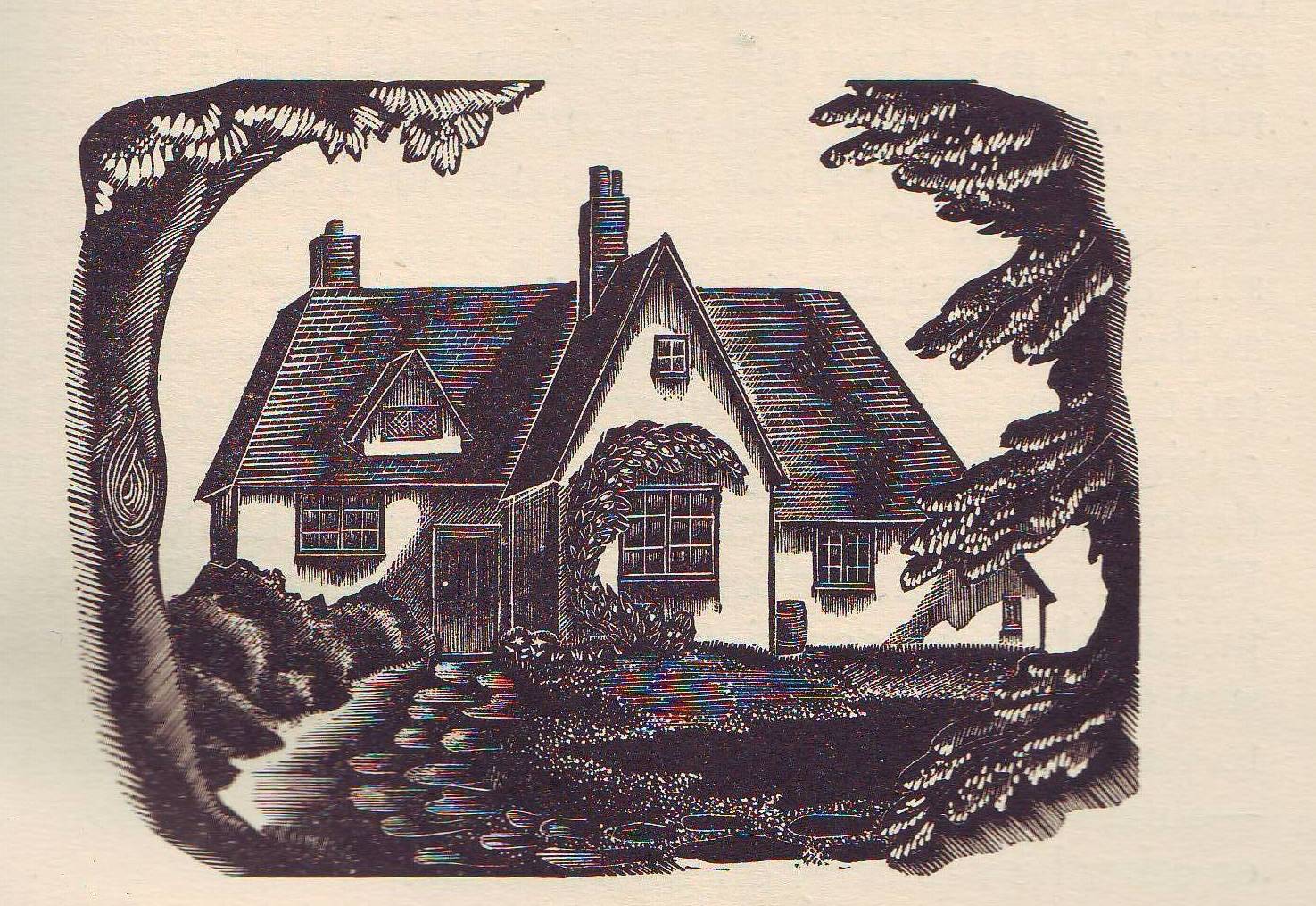
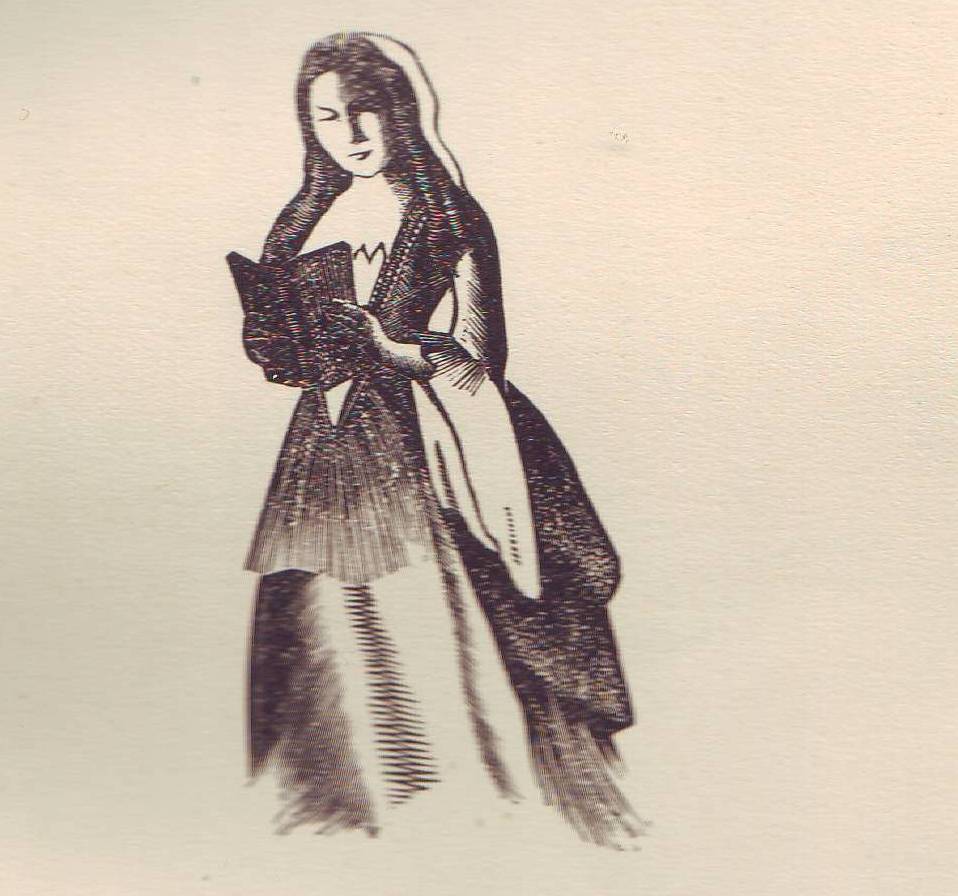
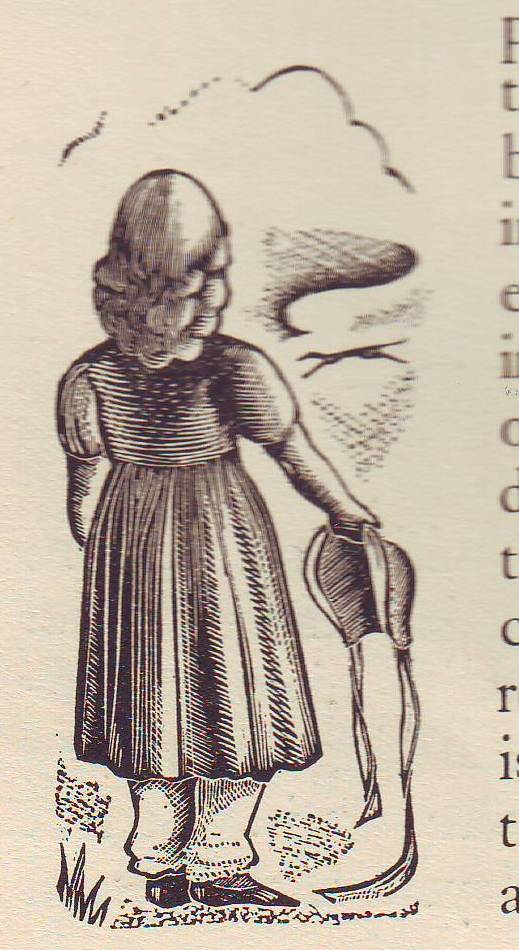
After last week’s post I found this edition of Our Village by Mary Russell Mitford with a lino-cut and wood-engravings by Muriel Kent; the type, 16pt Calson Old Face; set and printed by B.A. Calver in 1948 in the School of Art, University of Reading.
I have no information about Muriel but think these images are lovely

 Coat Hanger Doll's House