This week has been OK!
This week has been mixed; as watcher of life (my life) mixed is OK. It means there was some not so good and some excellent. As a half-full -cup kind of person I will tell you only about the best!
And my visit with some colleagues to the Typography Department where we learned a little about some presses and did some printing. One piece on a replica of the Gutenberg Bible fame; that I will tell you about later. Then another on a cast iron press from the 18th century using a wood block from the same period.

Kiss of printer’s ink
cast iron machines
Treadled with tiny foot
stitch with unbroken silken thread.
100 Word Challenge for Grown Ups – Week#66
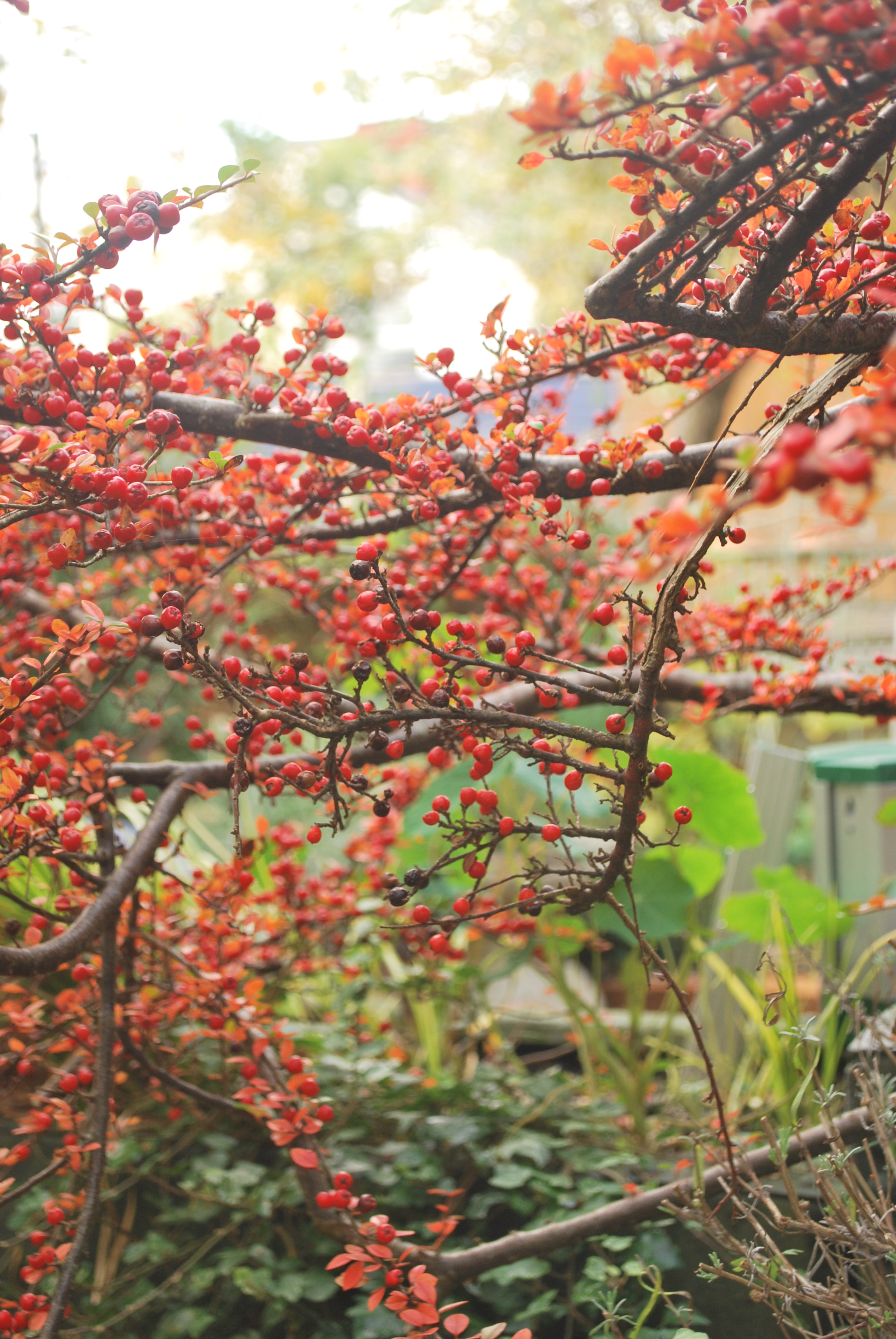
In the deafening silence the gardener retires;
he lets the garden be.
Sycamore leaves flutter down to a stylish layer that hides the previous rotting debris.
Vacant snail shells dampened by the late afternoon mist
glisten like glass marbles;
in the mud flattened by the marauding, fat fluorescent chested pigeons.
who squabble for breadcrumbs fallen below the bird table.
Yellow beaked blackbird scurries under the cotoneaster;
pecks greedily at the scarlet dots of juice.
Lazy ginger Tom while watching the eager infiltrators,
in the last of the sun;
stretches, yaws and sidles in the back door as it closes shut.

Friday’s Library Snapshot … Willy Pogany
Between 1860 and 1930 the illustrator’s art in England and America flourished.During this time artists such as Kate Greenaway, Arthur Rackman, Dulac and Willy Pogany revolutionised the art of children’s book illustration. Their carefully conceived and beautifully executed illustrations that made children’s books appealing to all ages and early editions of their works are highly collectable.
Willy Pogany (born Vilmos Andreas Pogány; 1882-1955) studied at Budapest Technical College; later in Munich and Paris before moving to London aged 23. Here he became a successful book illustrator during the highest peak of the so called Golden Age of book illustration between 1906 and 1915.
Pogany was not a British citizen so when war broke out he emigrated to America.He continued to illustrate many more children’s books which never reached the same ‘production values’ he had enjoyed with the British publishers such as Harrap.
Pogany designed scenery and costumes for the New York Metropolitan Opera House, mural decorations for William Randolph Hearst and other public buildings and galleries. He lived in Hollywood for a time working on films and painting portraits of the stars before settling in New York where he died in 1955.
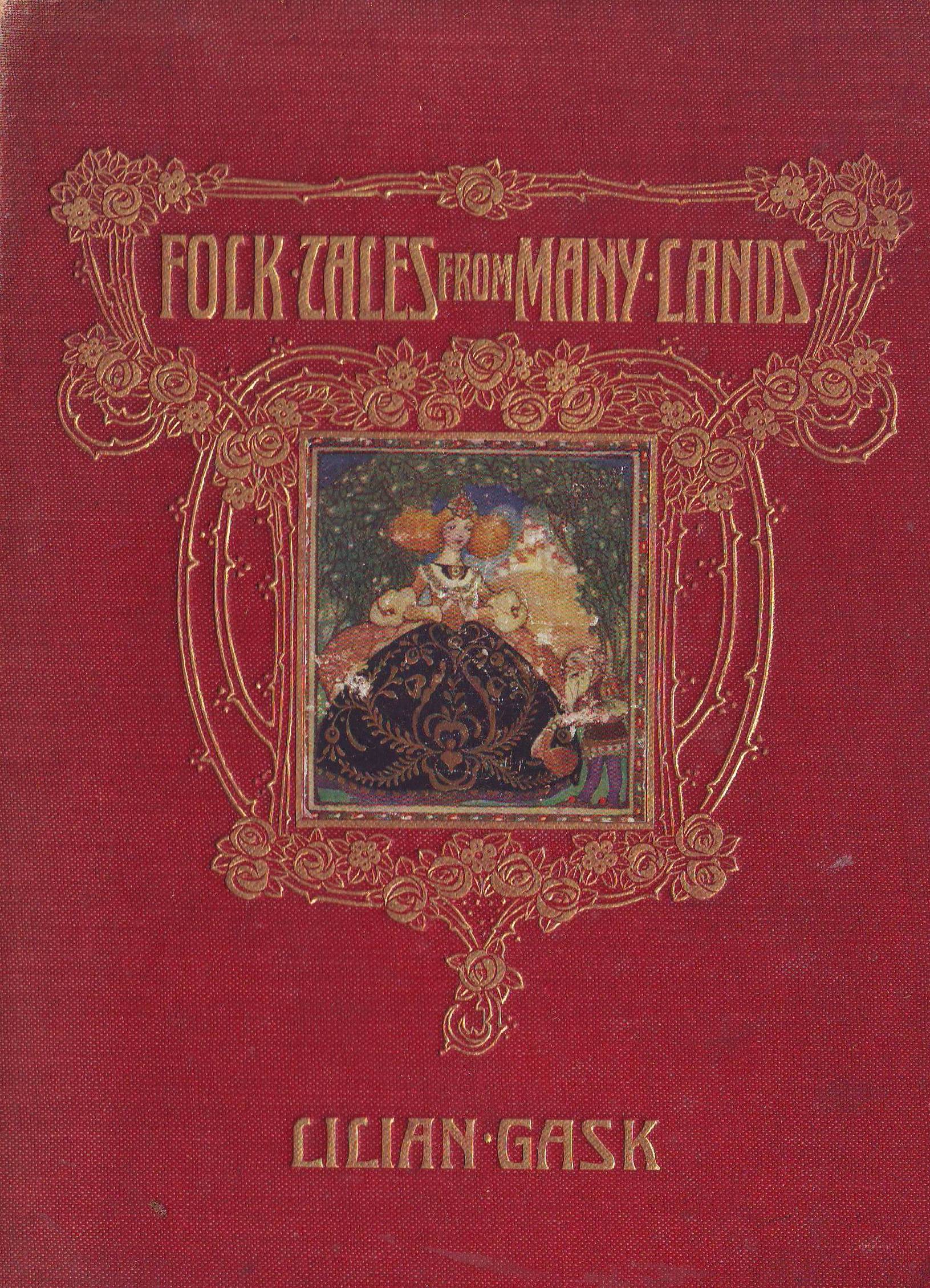
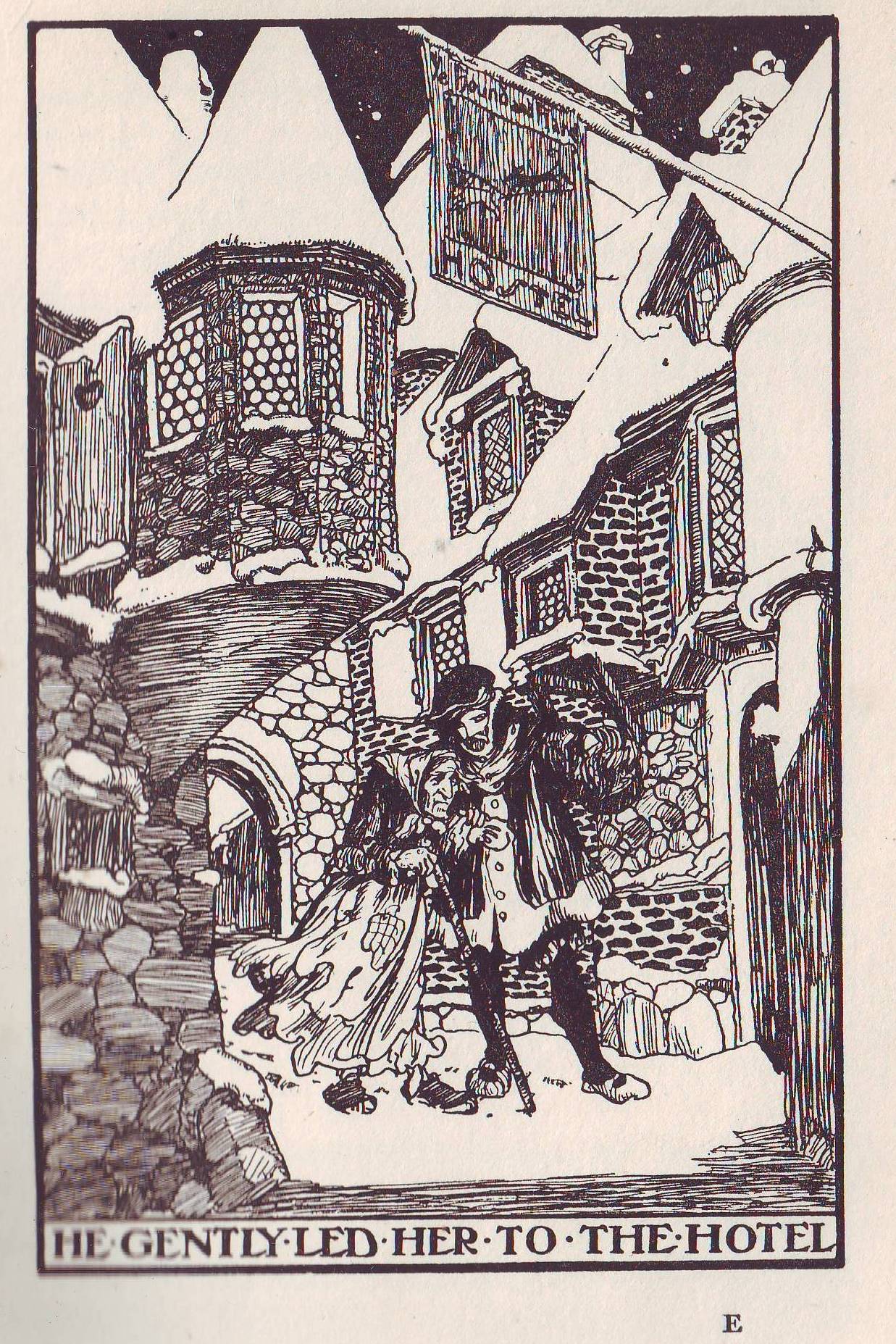
Published by Harrap 1910

Alphabe Thursday … Z is for Mary Zambaco
Maria Zambaco (1843-1914), born Marie Terpsithea Cassavetti was an artist and model favoured by the Pre Raphaelites; such as Edward Burne-Jones, Whistler and Dante Gabriel Rossetti. She was the daughter of Hadji and Euphrosyne Cassavetti, cousins of the Ionides; leaders of the London Circle of Greek Merchants and Financiers. She was married to Demetris Zambaco; doctor to the Greek community in Paris. Maria found the marriage humdrum so she left her husband and returned with her two children to London where she studied art.

In 1866 Mrs Cassavetti commissioned Edward Burne-Jones who was a member the Society of Painters in Water- Colours, to paint, Maria in Cupid finding Psyche, an introduction which led to their tragic affair.
In 1870 Burne-Jones resigned his membership of the society following a controversy over his painting Phyllis and Demophoön.

Maria was clearly recognizable as the barely draped Phyllis (as they are in several of Burne-Jones’s finest works), and the draped nakedness of Demophoön coupled with the suggestion of female sexual assertiveness offended Victorian sensibilities. Burne-Jones was asked to make a slight alteration, but instead he took the painting and himself from the Society.
During this time Burne-Jones left his wife for Maria which caused a great scandal, especially when Maria threatened to commit suicide. After they broke up, Maria continued to appear in Burne-Jones’ paintings as a sorceress or a temptress, such as in the Beguiling of Merlin and the controversial Phyllis and Demophoön.

Maria continued to dedicated herself to art, and studied at the Slade School under Alphonse Legros and under Rodin in Paris. She died there in 1914 and her body was returned for interment in the family sarcophagus at the Greek Orthodox necropolis in London where she is recorded under her maiden name.
Further Reading William Morris a life in our times by Fiona MaCarthy

Et cetera

In my job I see many beautiful things; but over the years and among a degree of ugliness it becomes obliterated. The job and its so called urgency and personal demands becomes the direction of the mind. Until I remind myself of beauty even at work and the books (and manuscripts; the Book of Hours written by hand)
I am not a religious person but I cannot fail to see the beauty in a Book of Hours.
It was a devotional book popular among Christians of northern Europe during the Middle Ages. A typical book of hours would contain prayers, gospels and psalms. Usually written in Latin; used by monks and nuns and generally recited. They were often given to women as a love token by a husband to his bride.
As many books of hours were richly illustrated they form an important record of life in the 15th and 16th century as well s Christian iconography.
As a librarian the Book of Hours epitomises a beautiful book; a rose among the thorns. When I consider the colour and the quality; I cannot fail to imagine the difficulties of the craftsman, the cost, the availability of the inks, pens,paper, time and the light and I am in awe.
Like water lily
that comes from the mud and rotting vegetation
at the bottom of the lake
it took her breath.
Our eyesight is a precious sense used and abused moment by moment. In my job my eyesight is paramount.
How do we celebrate it?
As we do all our perfections that we fail to notice day by day. So not often then?
Wednesday’s Wise Woman … Dolores Ibarruri

Dolores Ibarruri (1895-1989) during the republic and the Spanish Civil War was considered by some as an exceptional woman . She was known the Pasionaria; an Earth Mother of War and official spokesperson of the Communist Party. She was able to communicate with the masses and encourage the troops.
Dolores was born one of eleven siblings in a Basque mining town. She had a fair education and unlike most girls at that time was able to stay at school until she was fifteen. Dolores may have become a teacher but it was more important for her to support her poor family.
In 1915 she married a militant Socialist miner; Julian Ruiz only two of their six children survived beyond infancy.
Recalling this desperate time she said ‘Woman’s curse and a mother’s curse, weeping for our innocent children to whom we can offer nothing but tear-stained caresses; weeping for our dismal lives without horizon… ‘
Despite her family commitments as a young woman she began to read Marxist literature “ it was as if a window had been opened on life …’ The struggle for a Socialist Society became her aim. Encouraged by the Russian Revolution in 1917 Dolores joined the Socialist Party and made bombs with other members while preparing for the general strike.
Pasionaria became a household name for the left and recognised with Emma Goldman and Indira Gandhi as the most mythologised female figures of the 20th century
However like many women I have researched and written about; Dolores the woman didn’t always match the Pasionaria label of virgin, saint, mother-role-model, courageous and self sacrificing.
In the eyes of her opponents; Franco sympathisers she was tarred with different brush. She was considered a ‘redeemed whore’ ; a violent and fearsome woman. Her supporters believed her masculine characteristics as positive and others as ‘unnatural and evil; more like a beast than a woman.’
Dolores was not a saint or a sinner she tried her best in appalling circumstances to redress the repressive situation of women.
‘Women’s goal, her only aspiration in the shackles of poverty .. raising our children, serving our husbands who treat us with total disregard.’
According to Shirley Mangini; Dolores was ‘most visible and provocative figure in her party’ and not surprised ‘that she was treated an ambiguous combination of fear and reverence.’ Also as the war progressed and the left began to fail Dolores was able to persuade the troops that despite the lack of arms and resources they could win the war. She convinced wives and mothers to accept the loss of their men bravely. As a result she became a significant role model for women of the left.
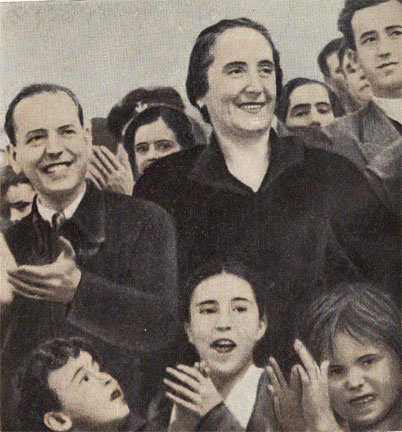
Dolores Ibárruri (Dolores Ibárruri Gómez, “La Pasionara” (1895-1989)
Further reading Memories of resistance ; women’s voices from the Spanish Civil War by Shirley Mangini.
Et cetera

Today as part of an exercise for Writing and Spiritual Practice course and a reflection on our different senses I thought about ‘touch’
I was immediately taken back to the 1970s when I worked for a while in a paper mill founded in the 19th century. Although it was recognised as producing the finest paper in the world; sadly Croxley Mill of John Dickinson did not move with the times. It went into economic decline and out of business in the 1980s
When the paper had been made and cut; it progressed to the Salle where the paper sheets of various sizes and quality was counted packaged before being dispatched all over the world.
The process was done by human touch. The ladies began as apprentices when they left school. Counting each each sheet one at a time carefully so the precious paper was not damaged. If the paper was damaged in any way it would be repulped and the process would have to begin again; many days work would have been lost. The ladies became more experienced and quicker; in time they were able to sense the amount of paper before them with the touch of their finger tips.
These ladies were nationally renown for their skills and won many competitions in their time.
I will never touch a piece of paper without remembering those ladies as they stood in appalling working conditions at the end of a noisy factory floor; touching the paper before packing it into boxes and brown paper; all made at Croxley Mill.
Tender touch leaves a formless trace.
Freely given, unmeasured
without condition or limit.
Remains an indelible mark
a lasting impression
as any mighty punch
Weekly Photo Challenge … Renewal
Cyclamen coum never ceases to surprise me,
Among the sycamore leaves
rotting without dignity or grace
she peeps and turns
from me to face the fading November sun


Last week I remembered …
Last week I had a message from my daughter who lives in Rio de Janeiro:
She said, and I cut and paste ‘Off to Praça XV market tomorrow. Want me to look for anything?’ at first I gave the usual motherly reply ‘Oh no dear! You just go and have a nice time’ and ‘sent’
And then I thought; about the market and our visit earlier this year. The market is in a busy intersection of major roads and below a huge flyover. For around 300 metres the market straddles the strip of shade, Away from the blinding sun or torrential rain every saturday morning. The market ‘stalls’; a loose term to describe the little space occupied by the would-be sales man or woman. They are often little more than a smoothed out carrier bag or piece of cardboard spread on the ground with a few bits and bobs to sell. Something like a worn pair of shoes, a pair of spectacles and a Sony Walkman; nothing is considered unsaleable. As the strip meanders along, so the stalls become ‘up market’ and tables appear, the trash becomes more attractive and of course more costly. I remember particularly a man who sold pencils; not just pencils but boxes of them in every colour and grade; a delight for me as I have a pencil and paper fetish.
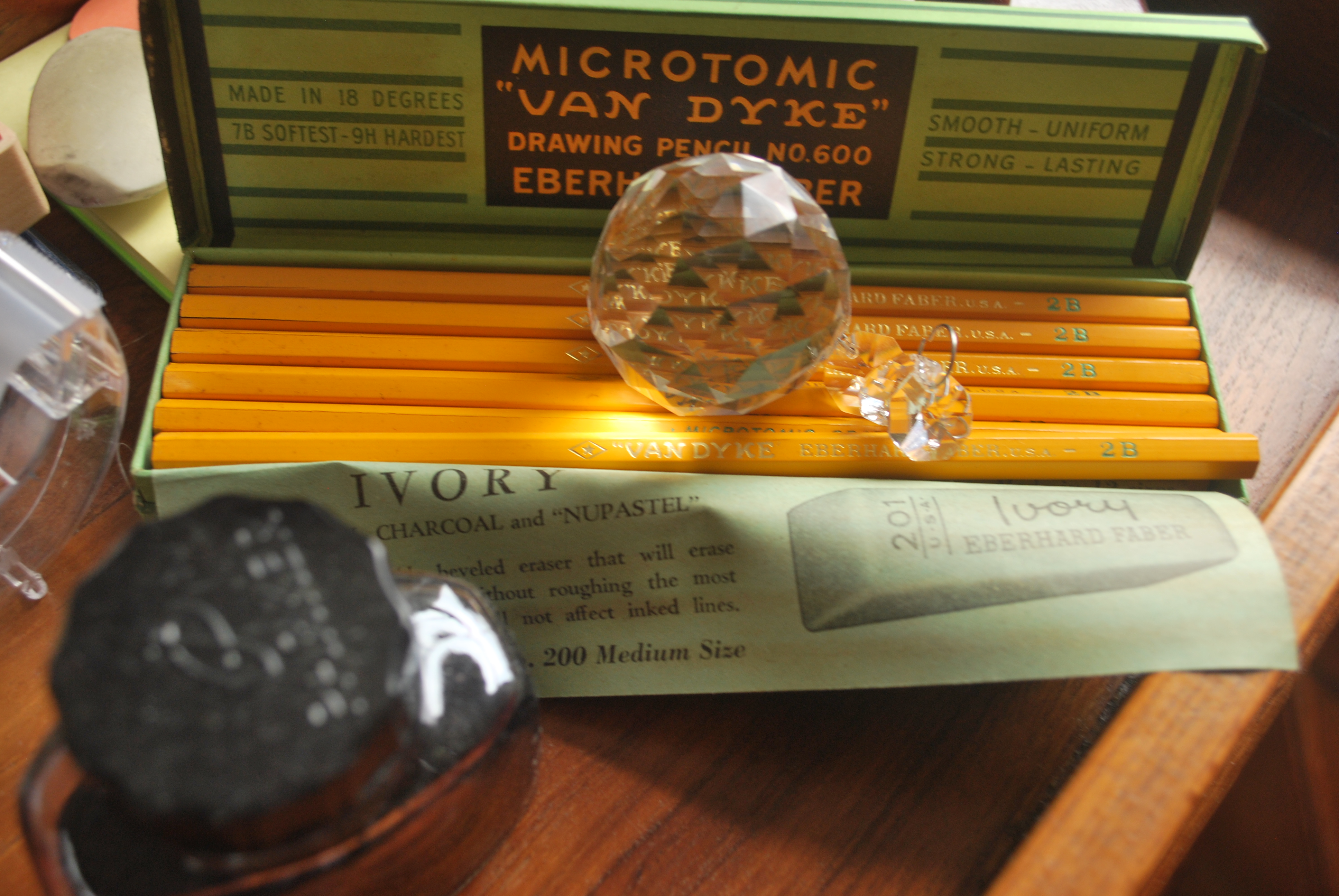
I bought a box of 20 slender golden 2Bs and to this day they remain on my desk untouched; a beautiful reminder of a lovely Saturday morning before breakfast in Rio. Another man sold me a piece from broken lead crystal chandelier; he sat in the shade of the concrete jungle polishing little shards of sparkle to sell for a few reais. Ladies sold fine embroidery, lace. Every stall was a delight, an Aladdin’s cave in an emporium of things you never knew you wanted.
So I reply again and say
A bead, a button, a ribbon or a twist of silk
pop it in the post
make my day
thanks Mum … send.
Silent Sunday
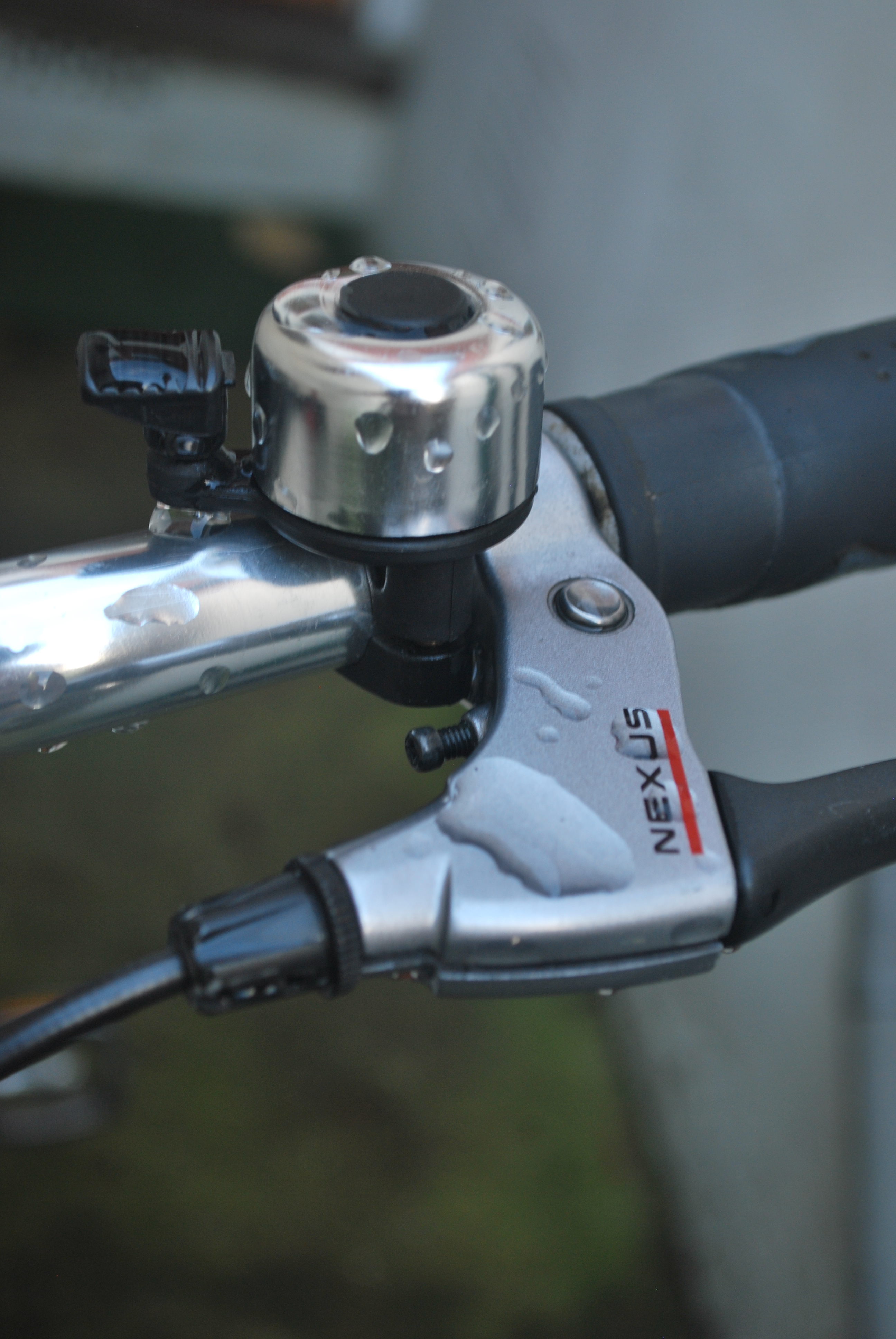
My bell may as well
be silent on my way to work
The unhearing students are not distracted
by nature, their friends
or education
No! their earphones are in place
 Coat Hanger Doll's House