Monday etc.
Today we had problems with our water supply at work; so much so we were sent home. Unfortunately, the problem was widespread, so once those of us who lived nearby got home we also found ourselves without water. It was, no matter how uncomfortable a welcome treat; so I did some wood engraving. Since my lesson I have not done as much as I hoped. So taking advantage of the good light I set to work. I found a tiny piece of wood: I am reluctant at this early stage to use the larger more expensive pieces of wood. I have a small selection of practice pieces that are fine. This piece is 6×4 cms and you will see not too much unlike my ‘other one but it was just good to practice the ‘marks’ I made with Chris. This is an early stage … before I dare to print it …. Watch this space.


A couple of weeks ago I …


A couple of weeks ago I went on a journey! It was to be a round trip of 10 hours and required an overnight stay and best of all; a day off work!
I was to met a man who would teach me the rudiments of wood engraving, and to embed some methods, so that I could at least start engraving.
Chris the wood engraver lives in Gateshead over the river Tyne from Newcastle about 300 miles from Reading where I live. I took the train after work on Tuesday and arrived in a cheap and not so cheerful hotel around 8.30.pm; a short trip from the station. It was fine for an overnight stay but it was pretty grim. The next morning I learned that the building had been a prison and a reform centre for young offenders in the 19th century. This might account for chill and gloom that loomed about the place. Luckily my sentence wasn’t going to be long. The next morning I took a trip across the river to Gateshead for my lessons. Unfortunately, I have a fear of learning and my relationship with teachers is fraught with memories of the dark ages. However, this teacher soon became aware of my discomfort and introduced me to his dog a beautiful Bennington puppy, his delightful daughter who need no further description and then tea!! We learned that we shared a love of tea; of the Chinese kind. As the ‘lesson progressed now a little more calmly (on my part; Chris remained patient and kind) the tea flowed; literally from Green to Oolong to Pu’erh. I then became more relaxed and comfortable. While I am not ready for the big wide world of wood engravers. I am a little more confident with the wood, tools and methods to carry on for a until I find a teacher/mentor a little nearer home. To find such a person might be difficult as he or she will also need to love tea!
Silent Sunday

Saturday Why?

It Saturday, when I chew the fat and decide whether the week has been good or bad. Never a particularly accurate straw poll, so will not stand the test of the Which Report. So of course the results often remain unanswered. This week, my two daughters jumped two mighty hurdles and landed unscathed; one with a very nice and much deserved promotion and the other had her the last two pins removed from her newly repairing broken leg. I had my request for a reduction of working hours approved. So after several weeks of uncertainty we all celebrated.
However as we all silently anticipated the future even with our new found ‘energies’, we are still touched with fear for various reasons. But are truly thankful for these medals of success.
Today I am going to London to see an exhibition at the National Gallery, or so I thought. During the anxieties earlier this week (these aforementioned joys were not without trepidation on Tuesday) I booked the tickets, but without care these online transactions need, I mistakenly didn’t notice the lack of receipt of payment. I did not become aware of this oversight until last night to anything about it except grizzle about my ‘failure’ Why is that?
Friday’s Library snapshot …
I was given a gift this week; always a delight but this was a book and particularly special; it is a catalogue of Eric Fraser’s work. I was surprised at the magnitude and diversity of his work as I only ‘knew’ him through the Radio Times, with his programme illustrations and advertisements in the national papers.
He was an illustrator first and foremost but he also designed trademarks, exhibition murals, coins, stamps, church windows, pub signs, posters and packaging. He worked with pen, brush and a scraper. He was a draughtsman with a strong sense of line, a painter with a strong sense of colour, an experimenter in combinations of line with colour washes and in new twists of an ‘old’ medium like lino-cut.
Eric George Fraser (1902-1983) born in London where lived all his life. Fraser illustrated scenes from mythology, such as Beowulf fighting a dragon. With pen and ink he drew legendary and several works of Shakespeare. In the 1960s he designed the the jackets for the Everyman’s Library series. He also illustrated J.R.R. Tolkien’s books, such as the Folio Society edition of Lord of the Rings in 1977.
So I will really enjoy dipping into my gift and seeking out some ‘original’ works we may have in the library. I found one or two …


Alphabe Thursday … F is for Doctor Foster
 Doctor Foster went to Gloucester
In a shower of rain:
He stepped in a puddle,
Right up to his middle,
And never went there again.
Although making a regular appearance in recent nursery-rhyme books, Doctor Foster has little traceable history and was first printed by James Orchard Halliwell in The nursery rhymes of England in 1844. The rhyming of middle and puddle, however points to the old form of the word piddle having been used originally. Boyd Smith (1920) suggests that the rhyme describes the incident in the travels of Edward I, whose horse, the story goes, once stuck so deep in the mud of a Gloucester street that planks of wood had to placed on the ground before the creature could regain its footing. Edward is said to have refused to go there ever again. A rhyme in Gammer Gurton’s Garland (1810) tells a different story.
Old Doctor Foster went to Gloster,
To preach the word of God.
When he came there, he sat in his chair,
And gave all the people the nod.

Wednesday’s Wood Engraver … Mabel Annesley


Lady Mabel Marguerite Annesley (1881-1959) was a wood-engraver and watercolour artist. Her work can be found in British Museum, the Victoria and Albert, the National Gallery of Canada and the Museum of New Zealand. She also exhibited in the Festival of Britain in 1952.
At fourteen she studied at the Frank Calderon School of Animal Painting in London At eighteen she was elected a member of the Belfast Art Society and exhibited with them for many years.
It was some years later when she learned the art of wood engraving at the Central School in London. She was soon regarded with Robert Gibbings and Gwen Raverat as the leading wood engravers in Britain. She was unusually articulate and her autobiography, as well as describing vividly scenes and people in England, Ireland and New Zealand and places where she had lived in the world, it throws light on the abstract and physical values on things she had encountered. It would seem that she had collected material over many years for what was to be a picture book; it includes thirty-five wood engravings that are an intimate recording of the world she describes. The book called As the Sight Is Bent, was left unfinished at her death. It was was published by the Museum Press in 1964.
Weekly Photo Challenge … from between

Each week, watching out for the weekly photo challenge is a bitter/sweet moment. The prompt always seems more difficult than the previous week. Although this seems a little melodramatic after a day or two of mild trepidation, and tearing out of what little hair I have remaining, I do get a good idea. Then I can relax for the rest of the week.
This week, I did have a couple of ideas but again my choice came out of the blue. Or rather from between the folds of a map used many years ago during a family holiday. A buttercup; unceremoniously poked into a safe place and sadly never to be looked at again; until now.
It was not carefully preserved; so not a particularly attractive sight and it did not survive long.
I had been rummaging among the old maps looking for collage materials to use that evening. Sacrilege! I hear the map lovers cry. Not finding exactly what I wanted, I thought the tiny flower might suffice but it didn’t make the journey to the art class.
Being useful even while resting …
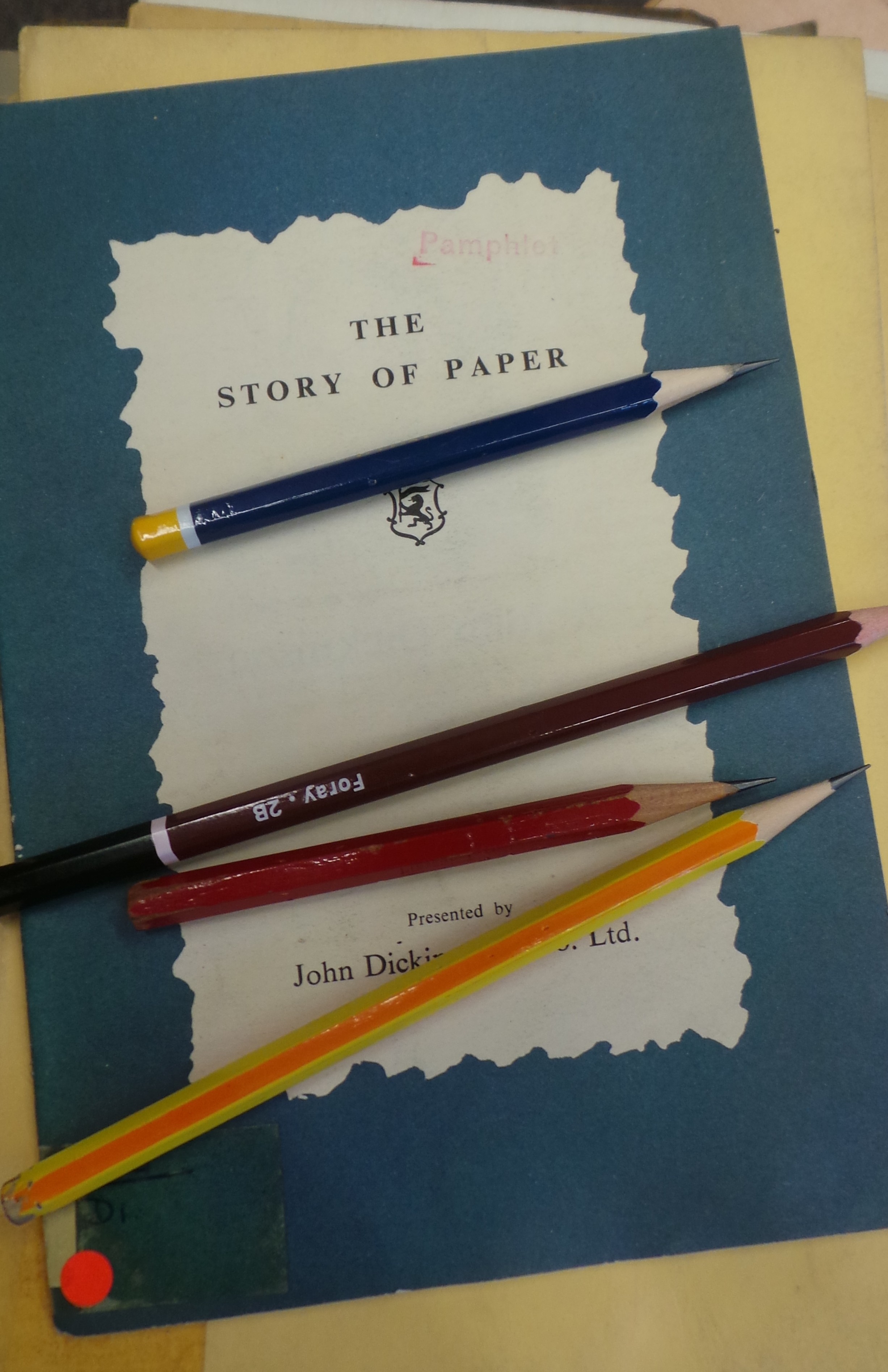
I do!! Sometimes more than others! Whether this good or bad I don’t know. Procrastination must be useful! Sharpening pencils between tasks is a joy!
Silent Sunday
 Coat Hanger Doll's House