Friday from the Library …
I have the perfect job, not just the stuff ,I do but the people I do it with! There is a lot to do and few of us to do it etc etc. I know, its not high power, no one is going to die if it doesn’t get done. Nonetheless, we are of a public service we have ideals to keep (the Vice Chancellors tells us so) and we work hard to maintain them.
Still, I love my job especially at Special Collections … I should tell you about it more; perhaps?
This week I began working on a little collection of books, donated recently ; books about the publishing, not elderly or rare (21st century) but they will compliment our earlier collections perfectly. Suffice to say, they are unpacked and almost ready to go … be classified and onto the shelf that is!
Also, this week I finished my part of smaller collection of books relating to the art of Charles Mozley … I am not to sure of the copyright implications so I won’t show the covers yet. They are, to be on honest, not my cup of tea … but will, I hope be of interested to researchers in book jackets, illustration, graphic design etc.


Alphabe Thursday … B is for Matsou Basho (1644 – 1694)

It would seem that Japanese people are among the most avid mountaineers and walkers of mountains in the world. However, it has not always been this way. Japanese mountains have been sacred since prehistoric times, they were too holy for the steps of ordinary peoples. So, shrines and sanctuaries were built at their feet instead from where they could be worshiped at a dignified distance.
In the 6th century Buddhism was introduced from China and new practices were allowed. The devotees would climb to the highest peaks to communicate more closely with the gods. Although monks and aesthetics continued to wander up, down and among the foot hills; climbing the mountains became a central part of the religious practice, particularly among the Shugendo; a Buddhist mountaineering sect. So, while there were festivals, ceremonies and prolonged rituals, a kind of priestly guide service emerged. The 17th century Zen poet Basho with is companion climbed some of Shugendu’s most sacred mountains, during his wanderings he tells us in his epic poem The narrow road of the deep north ‘ … I set off with my guide on a long march of eight miles to the top of the mountain. I walked in the mists and clouds, breathing the thin air of high altitudes and stepping on slippery ice and snow, till at last through a gateway of clouds, as it seemed, to the very paths of the sun and moon, I reached the summit, completely out of breath and nearly frozen to death.’
After Shugendo was banned in the 19th century, it was no longer a major religion in Japan, but the shrines can still be seen and Mount Fuji remains a busy pilgrimage site for the remaining practitioners and devoted mountaineers.

Wednesday’s Wood engraver …


I have been looking at these prints by Gillian Tyler in Patricia Jaffe’s book about Women Engravers for a while, I know nothing of this engraver so I waited until I could find some information. I was particularly drawn to them as they seemed to be less rigid than some engravings I have featured over previous weeks. Patricia says, ‘ … rich… wild net of lines and finely contrasted textures … ‘ and she is right. I think they are bold too.
Gillian Tyler (1935) was born in Baltimore, Maryland, wood engraver and painter; graduated from from Smith College, Northampton, Massachusetts ; which I understand is one of the oldest American colleges and still remains exclusively for women.
Gillian runs her own small Cricket Press where she lives in Thetford, Vermont. I have no more information and would love to know more.
Weekly Photo Challenge … Angular
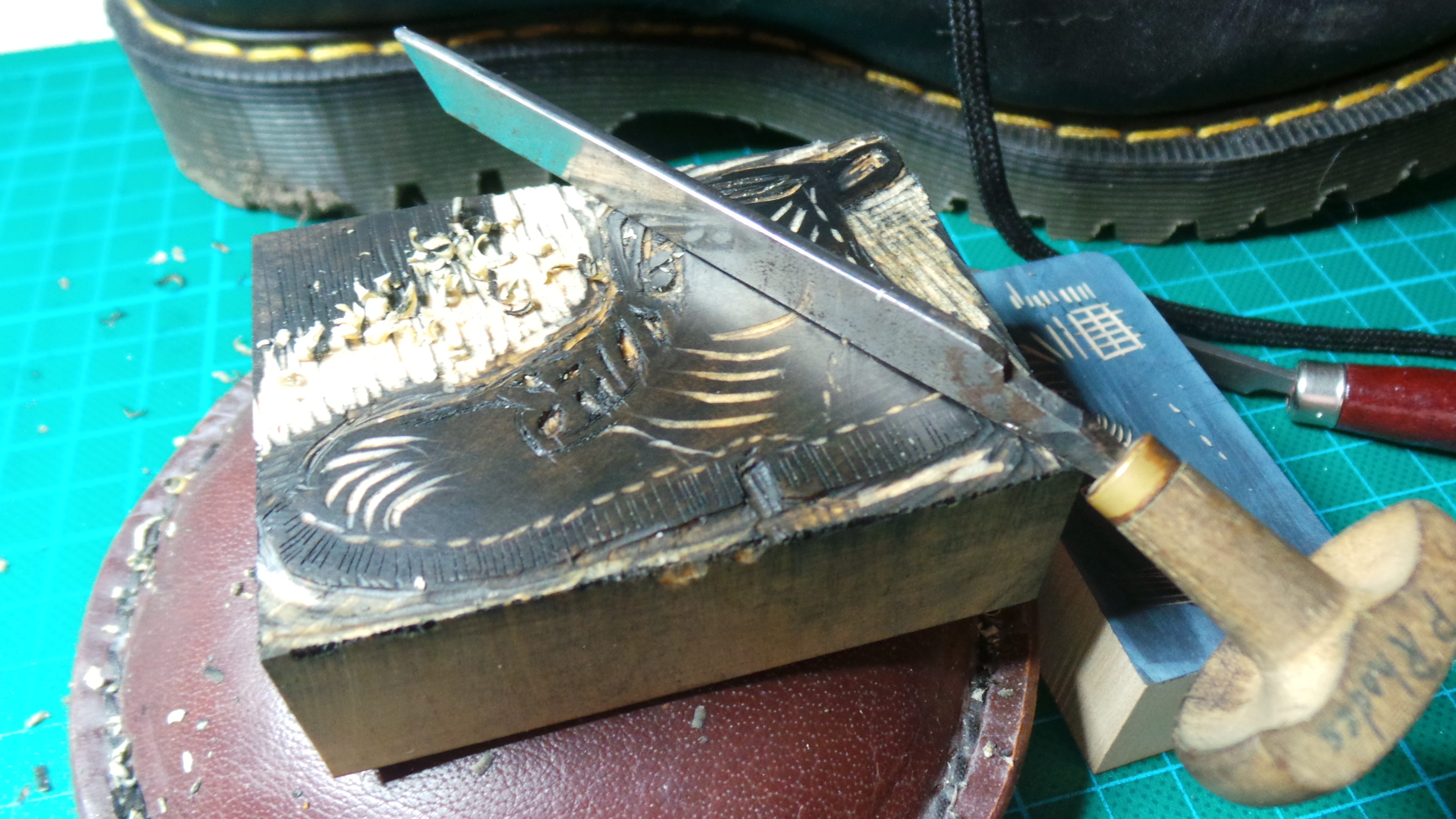
As a print-maker I have a treasured set of gravers, some are new and others are quite elderly but no less valued. Each has been precision engineered and their steel blades have been honed to perfection. They are ground to fine angles to engrave very hard wood to produced delicate designs. This is the idea, for me it doesn’t always happen.
However, each would be worthless without the cleverly turned handle that fits snugly in the hand of engraver.


Monday … last week I learned …


After a topsy-turvy week , I ended with a Life Painting lesson not the best I have ever had. I was not entirely comfortable standing a round for a couple of hours or more gawping at a naked bloke; contemplating the shadows around his eyes, the tone of skin warm or cold? Does this mean I have failed as an artist? That’s a shame ; at the first hurdle.
Silent Sunday …
Saturday
… is the day when I offer heart felt thanks to those who have been of service or not within and without the cyber-world of Nela Bligh. The world of Postaday where she holds forth in an unseemly fashion dragging information from that quarter and spurting in this. So thanks to you all and those who comment extra thanks xxx
And thanks to Peter Hay.
Sometime, soon after I started to work in the Library at the University of Reading, I came across a little collection of books published by a local company called Two Rivers Press. It was founded by the late Peter Hay, an artist and illustrator.
His work and one in particular called Apples, Berkshire and Cider inspired me; not only is it a beautifully illustrated and annotated alphabet book , the images are hand printed. A couple of years ago I began printing myself and without the skills and know-how of Peter, I began having art lessons. So a wondrous journey began. that has taken me further than I could never have imagined.
These images from the above mentioned book that I enjoy ; now sadly out of print.
Today in way of a celebration I will go to a sale of Peter’s work and buy a picture that I can look at without fear of breaking copyright rules.


Friday’s snapshot from the Museum
Before the contractors come in today and camp out on the lawn while they rebuild the museum ; here are a few images to delight us.


Alphabe Thursday … A is for the Alphabet of Walking
As I begin another round of Alphabe Thursday ; I will set the scene a bit. I have always enjoyed walking or rather it has never been inconvenient. As a child there was no alternative; we lived on a house boat, without a car and indeed a long way from a metal road and therefore any form of public transport. So I walked to the shops, school and for 2 or 3 miles to the nearest bus stop if I needed to go to town. I did have a bike; for my paper round and have had one since and cycle daily for expedience, to and from work.
I did pass my driving test when I moved away from the the river and did have a car for longer journeys but gave that up when I moved in with my partner and the running two cars became financially crazy.
So if I have time and somewhere to go I walk, but, I prefer to go from A to B, the later being desirable with a cake and tea, a pretty picture, even a nice view or a new frock and definitely not a walk back again.
For instance, last week I told you about a pleasant walk from Paddington Station to Little Venice and a boat trip to Camden (OK, the barge cruised at a leisurely walking pace so not to create a disturbing wash) then a walk around the market and lunch and later stroll to the Underground and a trip home.
I don’t walk for the sake of walking, in a circle or there and back to get hot and sweaty or cold, wet and muddy no matter how beautiful the scenery.
Alone or in company walking for me is practical but also a time to contemplate.
I have read much about the art and history of walking and the myriad of reasons for doing it. It is complex and it seems I am not alone in my quest to walk in joy, to and fro, without the use of a car or public transport and then not enjoy rambling.
So I will discover who and what these walkers are doing of the next 26 weeks in an alphabet.
With the aid of artists who also its seems enjoy to walk and record its delights.


Wednesday’s wood engravers …


I buy some of my printing tools from Lawrence Art supplies and have some very old wood gravers that bear the name T.N. Lawrence. You can imagine my surprise when I see that it was Stanley Lawrence of T.N. Lawrence and Son in the Bleeding Heart Yard, off Greville Street, London who supplied traditional British blocks to some of the most famous wood engravers; names like Joan Hassall. It would seem although he was extremely shy; Stanley’s enthusiasm for the knowledge of wood-engraving and wood-engravers was paramount and without any ulterior motive. He became a well loved, fount of wisdom to every wood-engraver he served. His gentle charm although innocent and avuncular was attractive to women; this ‘kindheartedness’ didn’t go unnoticed, his grandson Simon wrote in Matrix (7) ‘He fostered many engravers both young and old but especially young and female’. Patricia Jaffe goes of to tell of his commitment to product quality and customer care.
The image of Stanley Lawrence at Bleeding Heart Yard is by Anne Jope (1977), one of those engravers ‘young and female’ whom Stanley Lawrence delighted in encouraging. ‘Anne Jope has ‘woven a medley of evocative images, her tribute both to boxwood and to the block-maker’.
The other engravings are by Joan Hassall who was a one of Stanley Lawrence’s most priced and admired customers and she was to become the best loved British engraver of her generation.
 Coat Hanger Doll's House