Love to you ….
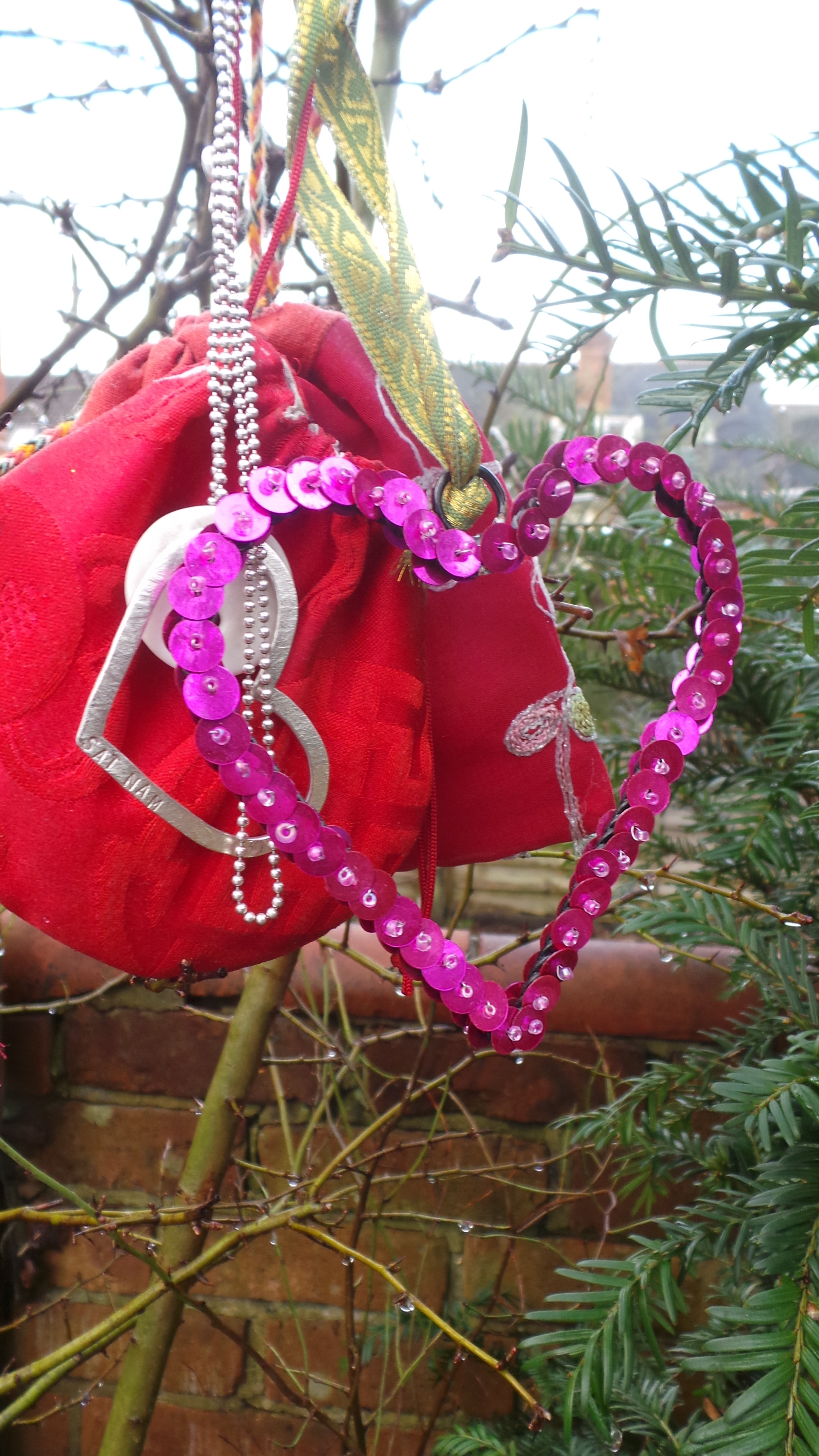
On a day when we charge the advocate of romantic love; St Valentine, who I am sure did much to win a place in heaven; I celebrate the love of less saintly figures. I give you, the love of strangers, work colleagues, friends, family, ships in the night, who rescue you and me from un-love, despair and hopelessness (on all sorts of levels); they drag us kicking and screaming to a place of comfort.
I, from a place of previous experience will fall again, so in anticipation send love and give thanks to the lesser saints
Friday’s Snapshot from the Library


While researching more closely for images by and information about Averil Mackenzie-Grieve I came across The Saturday Book. Number 11, one of a miscellany published each year from 1941-1975.
The Saturday Book provided literary and artistic commentary about life in Britain during the Second World War and after.
It covered the arts, including the performing arts. contributors, such as John Arlott, Averil Mackenzi-Grieve, Allison Uttley, Edward Arrizzone, H.E. Bates and more, published poems, essays, short stories and images.
According to Wikipedia ‘The very first volume totalled 444 pages, but, with paper in short supply, the length of the second was slashed to 274 pages. From the third to the 24th volumes the number fluctuated between 288 and 304 pages, but the remaining ten ran to no more than 256 pages each, with the last one dropping to 240 pages’
It doesn’t look as if we have every issue here at the University of Reading and those we have are doted about the different collections. It would be good to at least link them a little more usefully and perhaps ensure the contents notes are added to each item. I would guess that there are many notable authors, poets and artists and more important some lesser known persons that deserve some recognition. I feel a few more blog posts coming on and perhaps some filling of empty spaces.
Alphabe Thursday …. M is for Mount Snowdon

We have no mountains to climb in England and the highest point in the UK is Mount Snowdon in Wales due to its relative insignificance in the world its ‘mount’ bit is often forgotten ; but for this weeks contribution to Alphabe Thursday it has been rightfully attached.
When my youngest daughter was young we walked and cycled a lot; our weekends and holidays were spent exploring the English and Welsh countryside. We might rent a cottage, use youth hostels and we have camped a little. Our favourite haunt was Bala lake in north Wales we stayed in various abodes and walked around the lake a few times and on one occasion we sailed across. It was not a happy event as we capsized the boat but it didn’t spoil the holiday. The main event was to walk up Mount Snowdon more quickly than the time before. While we won’t find ourselves in the Guinness Book of Records there are many happy images images in the family album.

Wednesday’s Woman wood Engraver …


Here is another woman wood engraver of the early 20th century who exhibited at the Museum of Oxford in 1979. Averil Mackenzie-Grieve was a Wood engraver, illustrator and author (b. 1903) studied at Bideford Art School, and privately under John Wheatley, Rachel Mafori Savini of Florence. She wrote several books including her autobiography Time and chance. She illustrated books for the Golden Cockerel Press and a translation by her husband of the poems of Su Tung P’o.
Weekly Photo Challenge …. Scale


Over the last few years I have become more accomplished while buying items on the internet. I buy clothes, makeup, tea, music and of course books, with a few disappointments. However, I do sometimes get it wrong and this little teapot is a case in point. When I started drinking green tea I was given a very nice Chinese pot and some cups; all were well passed their sell by date; the pot without a lid and the cups chipped and beyond repair.
So when I looked for some replacements I got it a wrong; while it was not a financial disaster, I do feel silly.
Now it has proved a useful example when discussing the scale of teapots and cups! In my case even the smallest cups are bigger than the pot!
Just a blip!
I took a little detour from my path of printmaking at the weekend (I say ‘don’t worry’ to my lino cutting and wood engraving my friends; ‘It is just a blip I am now back on track!’)
I have a collection of letterpress that was taking up valuable space in my little studio.
Before I turfed it out, I decided to give it one last chance to earn some artistic credibility.
Although it was fun while it lasted … I am not sure it was a successful exercise.

Silent Sunday

Saturday and time to play


Today, I am off to my regular Open Access Printing session; to play with some letterpress. I began collecting these little ragamuffins before the advent of my printmaking. So, when I began creating ‘studio’ space in a corner of a spare bedroom they were removed. I had in mind they didn’t fit in with the new regime; I suppose as a printmaker they are a little of a copout.
It is my dream to be a serious lino cutter and wood engraver but do enjoy the element play involved in mixed media…
so let the play begin!
A snapshot from the library …


This week during a library meeting we discussed the way should treat any pressed flowers we find in rare books. To be honest I cannot remember the outcome; I will have to refer to the minutes. However, I didn’t expect to find an example quite so soon. This little book was on a the open shelves; although it is not particularly rare it does need a bit of protection. The leaves found inside will also be preserved. (if I can remember how) They were found between the pages for the Rowan tree. Whether they are Rowan I cannot tell … another failing on my part. Nonetheless ,they did bring joy this week in the library.
Alphabe Thursday L is for Richard Long
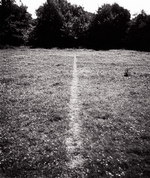
It was when I read about Richard Long that I decided to look more closely at walkers and the reasons why they do it. Richard Long (b. 1945) is an artist dedicated to walking as artistic medium. His early work called the Line made by walking of 1967 is a black and white photograph showing a path in the grass across a meadow towards some trees on the far side. Long had made the line with his foot steps. Unlike other pieces of art, so called conventional, Long’s work is not always appreciated directly art lovers. The line made by walking is merely documented in the photograph, with some text. Sometimes a map is used ; the route is marked, the pencil traces his steps as he walks in a straight line, squares, circles or spirals.
In a similar way,his sculptures in the landscape are made by rearranging the local rocks and sticks into lines and circles; they are evocative geometrics that appear say nothing.
One such sculpture is the Line of the straight walk from the bottom to the top of Silbury Hill. With boots dipped in mud he had walked the distance not in a straight line but a spiral on the gallery floor, the muddy path represented a route he had taken somewhere else.
In some ways Richards Long’s works resemble travel writing, but rather than tell us what he felt, what he ate and other such details, his brief texts and uninhabited images leave most of the journey up to the viewer’s imagination.
 Coat Hanger Doll's House