
Since beginning my preparations for Amy’s home coming from Brazil at Xmas, her return and then my subsequent visit in March, my Tibetan studies have lain dormant. While I have continued to study Sanskrit, I don’t regret my decision to take a break from Tibetan. However finding the time and motivation to continue will be difficult.
Amy in her wisdom preempted this downfall and bought me book that might help me gather up the threads and get me back on track. While the exercise will be long and slow I hope that Feminine ground : essays on women and Tibet edited by Janice Willis will help. Janice Willis also wrote Dreaming me : black, baptist and Buddhist one woman’s spiritual journey.
Janice Willis was born in 1948 to a Baptist minister and a steel worker in Birmingham, Alabama, the most segregated city America at that time. Undeterred by the Ku Klux Klan she went on to face racism in an Ivy League University, where she was recruited by the Black Panther Party. Instead she chose to travel India and Nepal where she met Lama Yeshe; a Tibetan monk who was to become one of the most influential Buddhist teachers in the west. Lama Yeshe encouraged her to continue her academic pursuits in the USA where she received a BA and MA in philosophy and PHD in Indic and Tibetan Studies. Janice Willis is a Professor of Religion at Wesleyan University where she teaches Sanskrit and Tibetan Buddhism.
Tibetn Buddhism. In 2000 she was named as one of the six spiritual innovators for the new millenium.

I am a woman – I have little power to resist danger.
Because of my inferior birth, everyone attacks m.
If I go as a beggar, dogs attack me.
If I have wealth and food, bandits attack me.
If I do nothing, gossips attack me.
What ever I do, I have no chance for happiness.
Because I am a woman, It is hard to follow the Dharma.
It is hard forme to stay alive!
This is a song sung by Yeshe Tsogyal (757-817) a tantric consort of Padmasambhava, quoted by Willis as a very sad song. However she goes on to say that the Guru publicly praised her as being a ‘Wonderful Yogini, practitioner of the secret teachings .. are you not the embodiment of bliss?
Now that you have achieved what you wanted for yourself,
Strive for the benefit of others’
This book written in 1987 goes some way to bring to the fore the achievements of women in Tibetan Buddhist religious life in a rich and positive way. I hope this little exercise will propel me a bit!
Weekly Photo Challenge
I am a new blogger and an even newer photographer. I am a old gardener who just loves to potter …. but I realise now you cannot potter with a camera and or with a blog; both need you undivided attention. Thanks for looking!!!
The Bike
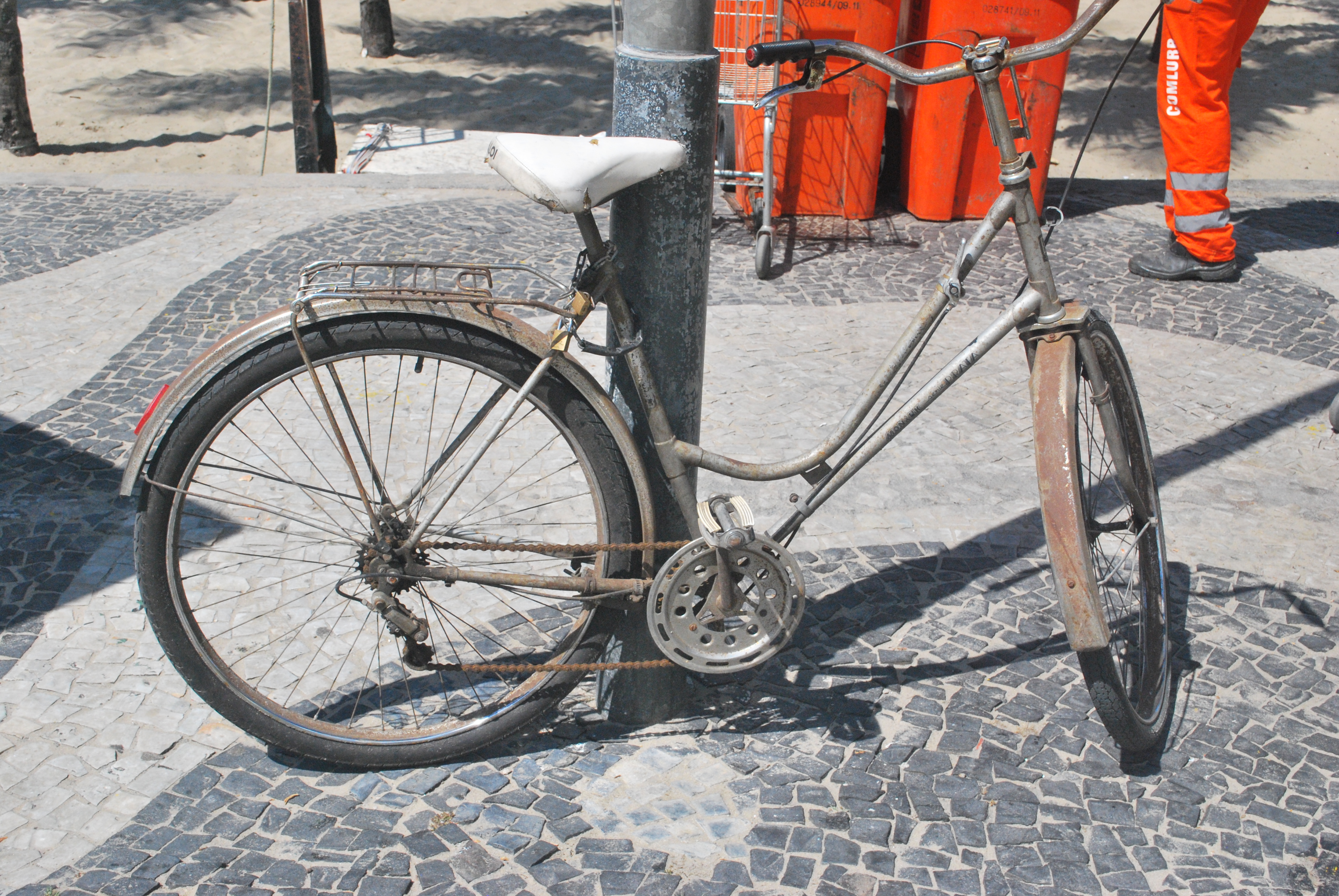
 The bicycle is a good mode of transport in Rio de Janeiro but not for the faint heart. The roads are fast and busy. Buses and taxis don’t seem to have a concept of traffic lanes, right or left and signalling. They do know however where the horn is! The bike in question and like many I have seen in Rio, is about 30 years old. It is a rusty rickety old thing with no gears or comfort. In the UK it would have been thrown away years ago; these old bone shakers are bought and sold for around thirty or forty pounds. I cycled to the local shopping mall to get internet connection. It is only by luck and an assortment of prayers I draw upon in such situations that I got there in one piece. I have ridden my daughter’s bike since being here but I will not repeat the experience again in a hurry; even though I am a competent cyclist. Sadly, my reluctance is not to do with my capacity as a biker. It is unseemly for a lady to cycle and also it is unsafe. In Rio like any big cities there is a growing number of thieves who will risk a prison sentence, not to feed a drug habit but to feed a family. The minimum wage in Rio is two hundred GB pounds a week and it costs around one thousand a month to provide for a small family it not surprising for most people in Rio their out goings exceed in the income. So the opportunity to make an easy few pounds from a ‘rich’ tourist, who might not miss it, is often grabbed. My few belongings pulled from my shoulder when sold will bring a few riais to buy rice to feed a child for a while. It is a real shame that I cannot ride a bike or walk in certain parts of the town alone without being at risk. It does make things simple- travelling without expensive accessories. It also removes the potential victim’s freedom – as we become prisoners of the thief.
Silent Sunday

Buttons
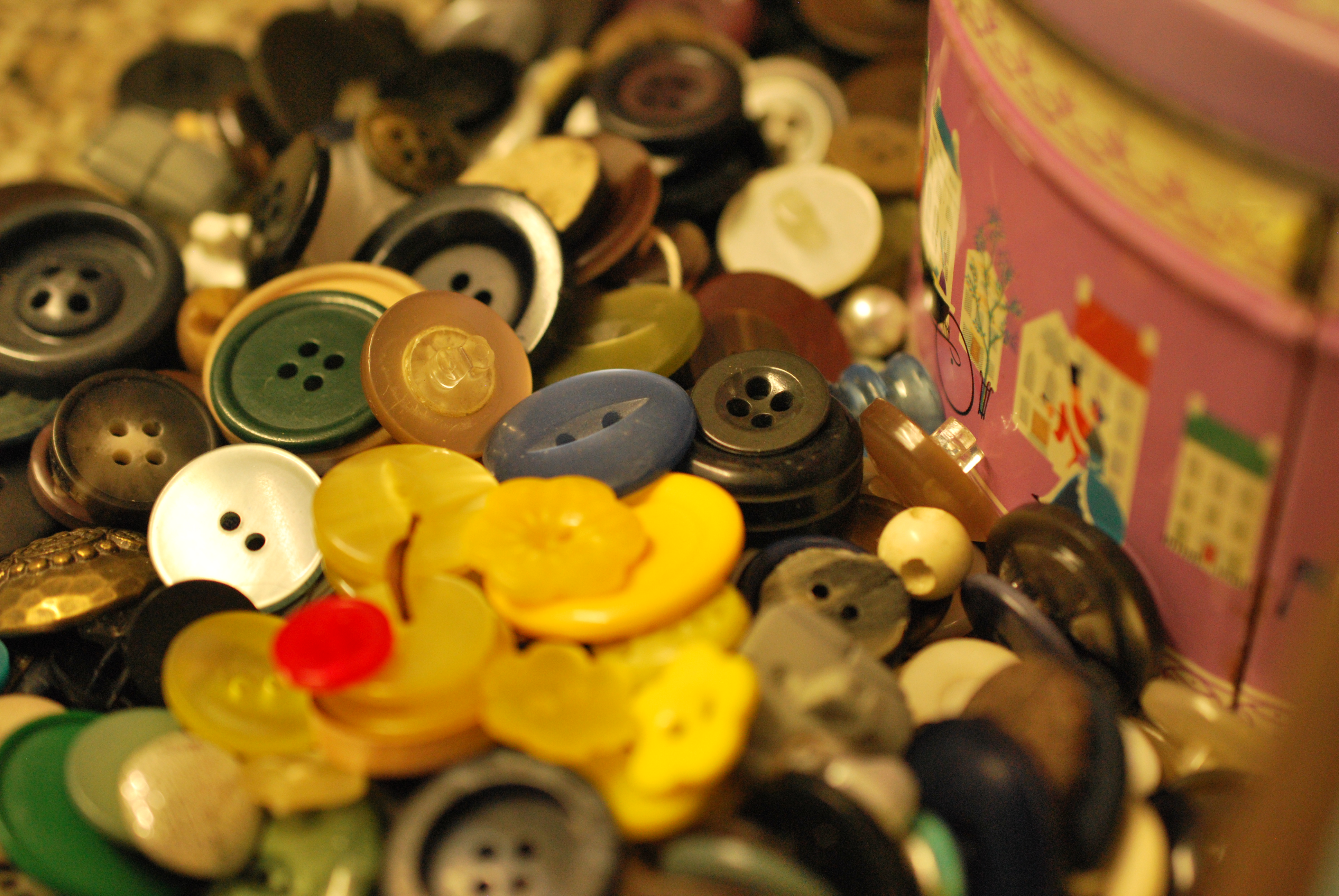
I have a collection of buttons in an old rusty Quality Street toffee tin. It reflects my life of dressmaking, mending and making do. My mother started when we were children, she would remove the buttons from dresses that we had out-grown become beyond repair. Also from shirts that had had their collars and cuffs turned enough! They were a constant resource in our childhood games and used when we too began to dress- make.
My collection has not been added to of late. I no longer make clothes, as it is not a cheap alternative to buying as it used to be. Also, it is a very time consuming hobby and preparations must be made well in advance if a particular outfit is required. Clothes no longer get repaired or altered to a changing shape. They are unceremoniously binned or recycled at the local charity shop so they are more desirable with the buttons left on.
However there has been a revival of vintage fashion and buttons have become big. I have received some beauties recently for birthday gifts. I have used them to replace those on a tired sweater or stitched to hat that needed a lift.
It has encouraged me to look at my buttons more closely and display them … not hid them away in a tarnished toffee tin.


Wednesday’s Wise Women … Rosario Castellanos

‘Writing has been, more than anything, explaining to myself the things I don’t understand” Rosarios Castellanos
Now back in the UK my little stash of memories are dwindling. However I have another Southern American woman who attracted my attention while I was in Rio.
Rosario Castellanos (1925-1974) a poet and novelist born in Mexico and grew up on her family’s farm in Comitan, Chiapas; which was the setting for much of her fiction.
Much like the other authors I have celebrated lately she chose to write because she was lonely, but this decision only compounded her isolation. She was the first woman in her community in Chiapas to write. It was considered shocking, and subversive. She was banished from her place of birth and because of this she could not expect to find a husband and have children.
In Latin America education for girls began in the mid 1800s, but it progressed very slowly and decent married women remained hemmed in the domestic walls until much later. Very few women were able to play leading roles in public life; those who did become famous in their own right did so in the literary world.
Gertrude Gomez de Avelaneda for example left her native Cuba at 22 to write her well known poetry and novels in Spain and her work was banned in Cuba.
Castellanos was born to a privileged upper class family but subordinated because she was female. Her only brother was favoured by her mother and then when he died as a child her mother was even more resentful towards her.The family moved to Mexico when she was 15 years old and a year later her parents were dead, she was left to fend for herself.
Not only did Castellanos write and teach, but she championed policies that prompted literacy in impoverished areas. One of the institutes was founded by President Cardenas ironically, who was responsible for the destruction of her family’s land. She also wrote a weekly column in the Excelsior a famous liberal Mexican newspaper that supported the Institutional Revolutionary Party.
Always faithful to her literary background Castellanos held several government posts and was appointed ambassador to Israel shortly before her death in 1971. At the age of 49 she died as a result of an electrical accident in Tel Aviv .
Castellanos who was not an indigenous Mexican but a Mestizo shows considerable campassion to the plight of the indigenous peoples paricularly of Mexico the her semi-biographical novel the Book of lamentations perhaps depicts this.
The death of Chico Ansisio

The day of the table was the day following the death of Chico Anisio, the famous Brazilian comedian and author. As we arrived in the Centro do Rio so we saw the mourners queuing outside the Municipal Theatre to see his resting body and share the grief of his wife and family. Had we not been on a mission I think my Dudu (my son-in-law) would have joined the queue to pay tribute to the well loved and respected man. From what little I understand Chico was a little like our Les Dawson, Ronnie Barker or perhaps Lenny Henry and able to impersonate men and woman in a very raw but humorous way.
I understand that Brazilians do grieve very publically for some celebrities. As we sat in a bar to wait for my Dudu’s return from delivering the table, the T.V. was alive with Chico’s honour. There was indeed a camera in the theatre watching the mourners file past the coffin and flowers.
That evening as we sat around the newly placed table Dudu read a short story by Chico Anisio called Tem aquela do … in Portuguese and then Amy proceeded to translate it for us; sentence by sentence. She was unfamiliar with the story, so it was a little wobbly to begin with. As the story opened she became more eloquent and the very funny story unfolded. It was about an Argentinean whisky taster who was able to recognise the name and blend of any whisky. He was able to entertain the crowds in this way; on one such occasion he was requested by a visitor to try the contents of a glass he was holding. Rather than do his usual tasting ritual he spat it on the floor and shouted ‘This tastes like urine!’ ‘Yes, but whose?’ replied the stranger – putting the pompous show-off in his place.
The story was most entertaining and Dudu’s spontaneous action was a fitting way to end the day and honour the memory of a funny man.
Silent Sunday
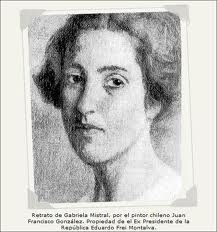
Wednesdays Wise Woman … Gabriela Mistral
Drops of gal / Gotas de heil
Don’t sing: your tongue
always remains bound to a song:
the one that should be surrendered
Don’t kiss: by a strange curse
the kiss that does not reach
the heart , remains
Pray, for prayer is sweet
but know that your greedy tongue
stumbles over the only ‘Our Father’
that might save you.
Don’t call death kind,
for within its immense white flesh
a live fragment will remain and feel
that stone that smothers you
and the voracious worm that unbraids your hair.
While I was away I hoped I could research Cecilia Meireles, unfortunately due to technical and a profound language barrier this didn’t happen. So my blog was a little half hearted. My daughter (and I) recognised a short fall here so she will in time use her skills and interest in the subject and attempt to translate at least one of her well known works and search out her archive should one exist. I in the meantime will research a little more in the UK; . I came across one book in English the Poem itself by Stanley Burnshaw. It is a collection of European and South American poets which includes a couple by Cecilia and only available in the States so I have ordered a copy. I am hoping it will have a good bibliography and some further reading.
Meanwhile I came across another woman who rose from humble beginnings and despair and found political acclaim and notoriety, writing poetry. Gabriela Mistral was born in Vicuna in northern Chile in 1889. Her parents were school teacher, her father left while she was very young so after she was tutored by her mother and step-sister who was also teacher at fourteen she became a teacher herself. Her career was successful in several notable high schools. In 1922, she and was seconded by the Mexican minister of education, José Vasconcelos to assist him in his reform program. The following year she became the Chilean ‘teacher of the year’
While Mistral was committed to diplomatic duties- she was an honorary consul in Madrid, Lisbon, Nice, Brazil, and Los Angeles. She travelled extensively throughout the Europe and Latin America as a representative to the League of Nations and the United Nations fighting for the rights of women and children.
Before and during this time Mistral, who was mixed Basque and Diagura read widely and wrote potent and personally sensitive poetry expressing her concerns for indigenous and mestizo and their place in Latin America .
In 1945 she was the first Latin American to win the Nobel Prize in literature
She died in New York of Pancreatic Cancer in 1957.
Table talk …
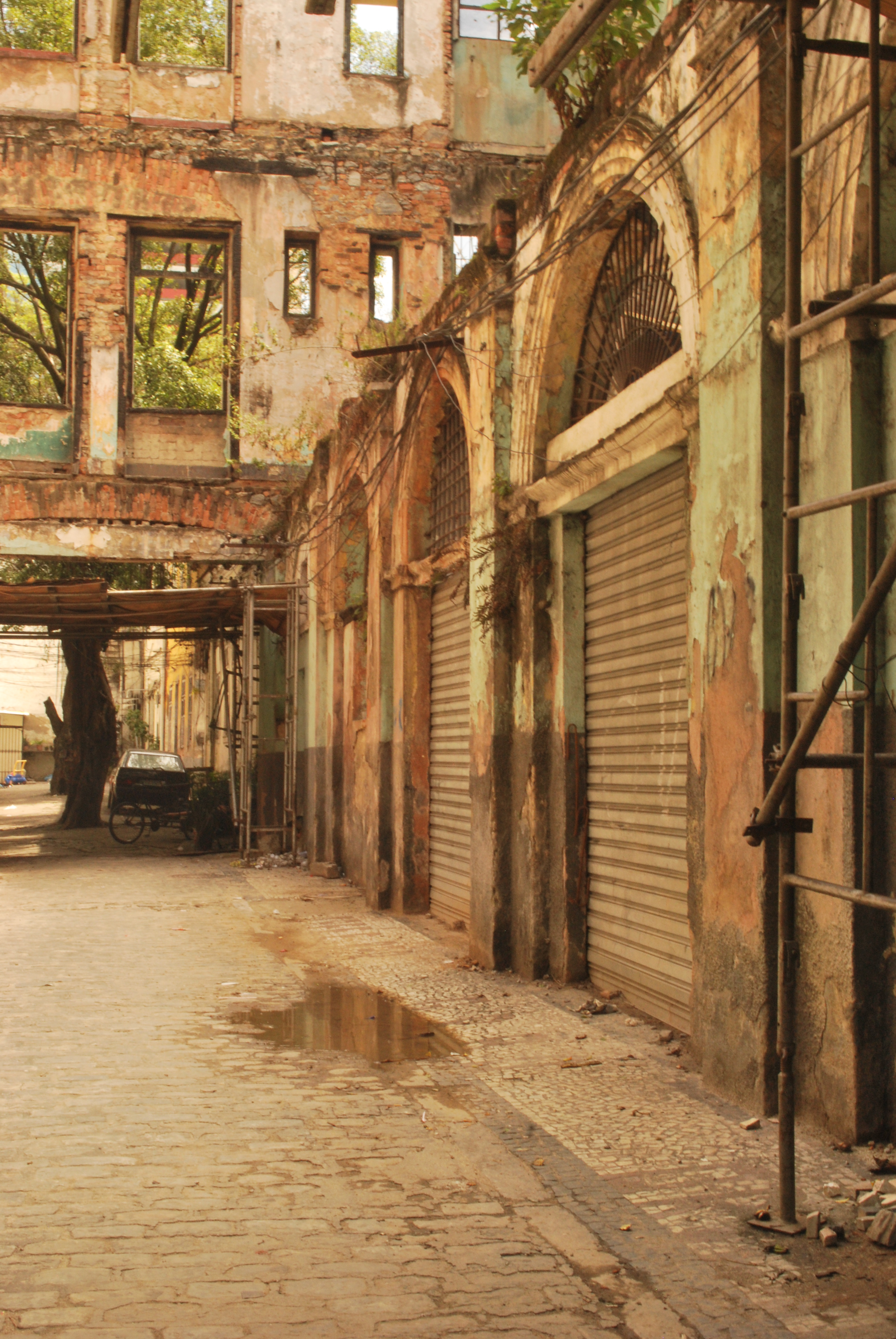
Today is Saturday. We are going to a Flea Market in Centro do Rio. We will walk fifteen minutes to the bus stop and then a short bus trip. We had originally planned it as a tourist jaunt looking for possible gifts, souvenirs and a teapot, – since sadly my daughter’s most treasured pot had broken in her recent move. We had been managing with a rather small substitute – sweet but socially inept!
The buying of daily requirements can be difficult here in a favela even for those with reasonable income and when planning to buy a basic need such as a dining table.However circumstances and overtaken us and it had become mission of need. Until recently ‘Amy and her partner had managed without a table using a suitably draped upturned box – uncomfortable and inappropriate when entertaining. Before this they had found table alongside a skip. It was in need of significant repair and for the boy without carpentry tools and skill this could only be temporary. He did do a temporary fix with some wire and the legs to keep it balanced at least.
Within six months and during our visit the table collapsed – this time beyond repair. So breakfast was served on the upturned box once again now with four of us it was squashed and uncomfortable – an experience not to be repeated.
I have learned since that the table about thirty years old was built of cheap pine in the traditional jacaranda Brazilian style, a folded semi circle that could open out to a circle when entertaining. It had a graceful turned centre leg and three elegant feet.
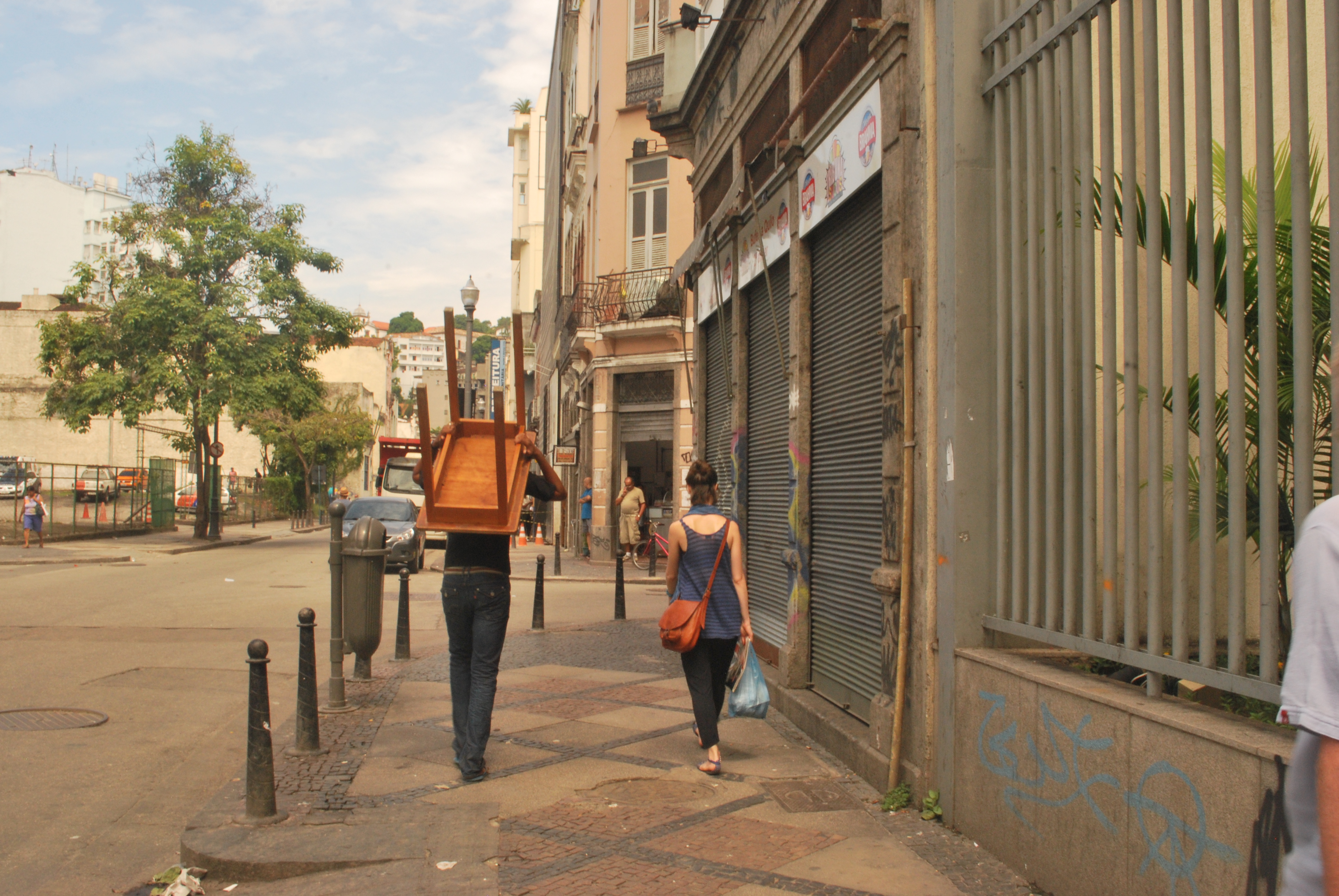
To replace the jacaranda replica; economically, was out of the question but there was more to consider; not only the bus journey home but the carrying of it up the hillside and through the paths and steps of the narrow alleyways of the favela.
And all before supper!
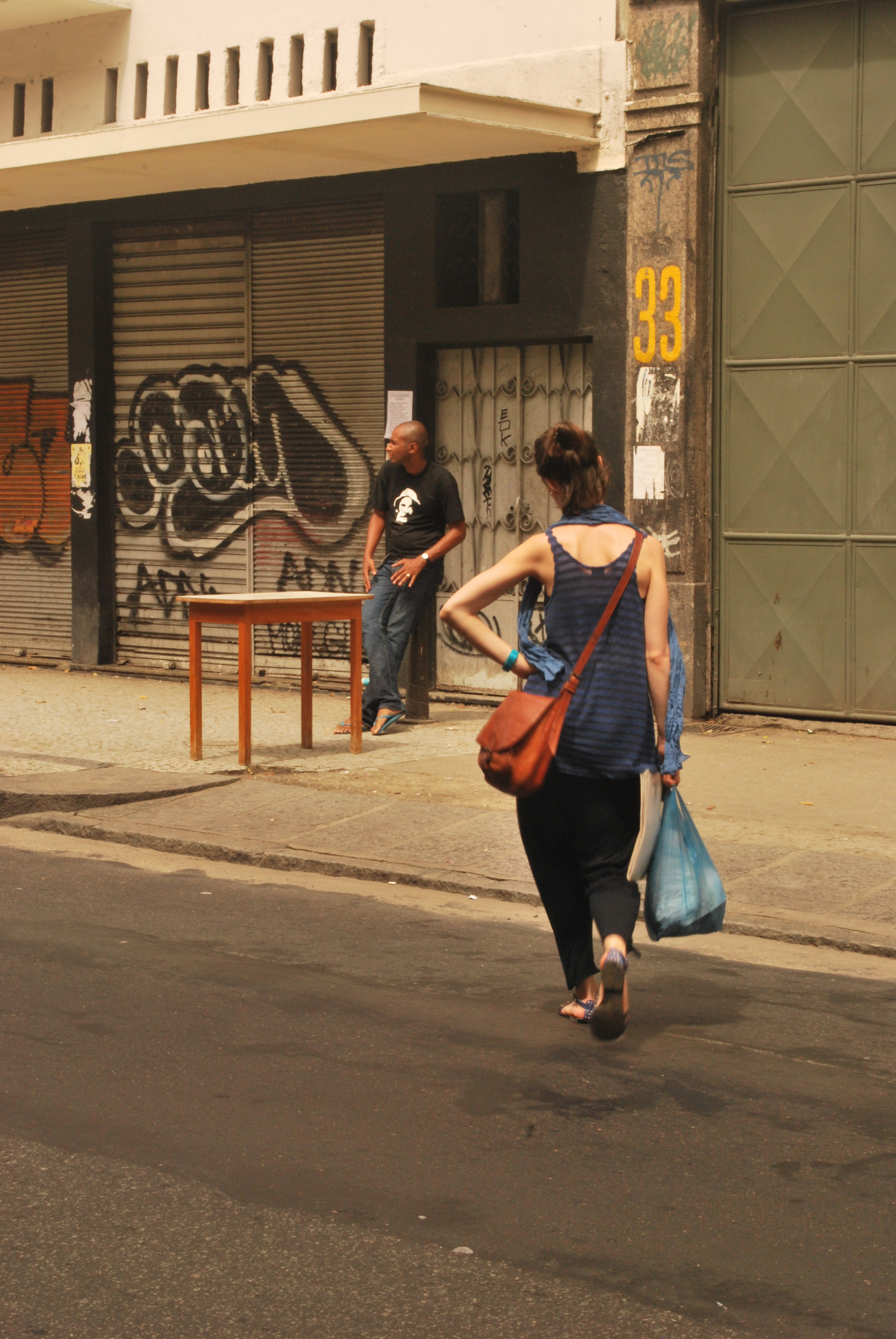
In the end we did find a table that fitted our needs and budget. After a short taxi journey to Lapa a beautiful area of Rio undergoing much regeneration; the main street was an avenue of fine antique and secondhand shops. However, unlike English shopkeeper’s Brazilian shop owners are not tied to an expensive franchise; so their shops are are not littered with advertisements -such as ‘tables are us.” Although there were a few pieces of furniture displayed on the pavement inside furniture was piled this way and that. It proved difficult to venture inside and more difficult not to be tempted by other delights.
We did discover that even secondhand furniture is expensive; the table, rather than a dining room table with fine turned legs is a kitchen table – robust and stable, that can be used in the kitchen when a more desirable piece comes along – cost over 100 pounds. Very expensive for a simple table; four legs and a top. This goes along way to explain why scavenging and making do is still the first option even amongst the up and coming.
Although now the temperature was around 34 degrees the table did get home on the bus and up the mountain side without a hitch. And soon the table was scrubbed and draped to give it a sophisticated air and set for supper. It will not be a feature of ‘Homes and Gardens’ but hope it will the centre of a happy home for a while and I will remember the day fondly.
 Coat Hanger Doll's House