Wednesday’s Wise Women of Acari.

Marilene Lima de Souza (1950-2012)
It was 1985 in Brazil when 21 years of military rule ended, it would seem that democracy has not brought an end to violence and it would seem that the victims are poor children and the perpetrators are death squads and police officers.
The minors who are murdered are from the favelas. The children and young people work on the streets to supplement their families overstretched income. Unfortunately it not always honest work; rather more prostitution, drug trafficking and petty theft. As the crime rate increases so the police are put under pressure to remove the undesirable street children and believe that they are doing a service to the community having no consideration to the mothers and the remaining family.
On the July 26th 1990, eleven young people including seven children from the favela at Acari in Rio were taken by the ‘police’ and held for ransom. While the negotiations were being carried out so the children were ‘disappeared’; and their bodies have never been found. The mothers began to search for the children and justice. They were known as the Mothers of Acari. Even the mothers in their struggle were subject to persecution, slander and death threats. One of the mothers Edmeira da Silva was murdered and there is evidence surrounding this that relates it to the Acari massacre.
Marilene Lima de Souza mother of Rosanna de Souza Santos one of the missing children pressed Amnesty International to ask that Brazilian State to relook at the inquest into the death of Edmeira da Silva. Although Rosanna didn’t live in Acari she was kidnapped among the others and her mother Marilene was one of the most active mothers and suffered as a result not just from the assaults previously mentioned but also from depression and anxiety. She remained active, with the Network against Violence; a project coordinated to provide psychological help to families of victims of state violence, until she died of a brain tumour in 2012.
Weekly Photo Challenge [with the] Change of Season
Frost tinged autumn leaves
marks of winter.
Will lift in spring.
Litter left


Last Week I learned that …

Last week I learned that I will never know what ‘green gold’ I will find next. The ‘green gold as described in Stephen Natchmanovitch’s book Free play ; the power of improvisation in life and the arts. ‘we take ordinary materials in our hands and turn them into new living matter – the green gold of the alchemist’
Last week I wrote a post on the history of a the candle and its making. Little is known about its origins but I learned much about the social history and the economics of the different substances used. I had not previously understood the importance of this vital commodity especially in northern Europe where the winters are long and dark.
So while for me it was very illuminating (forgive the pun) the resulting post was a tiny bit dull. Especially in the light of the other posts on the particular forum; where the contributions are far more creative.
However, to get back to my point; here I am with my new found knowledge I read Pauline Stainer’s poem called Reading by snowlight in a recent edition of the Mslexia; for women who write;
I want to take the weight
out of language
the way snowfall
on the red planet
vaporizes before settling
outside,
everything is moccasined,
the ground suddenly consecrated
as if something else
is said
the air smokeless
the pure-white candles
from the juniper
wonderfully annoymous
nothing within earshot
except voices
gentling each other
along the page
like silver foxes
Queer, this effect
of snow on the psyche,
words waiting to happen,
the snowfields beyond
untranslatable.
Now, for me reading poems is a new phenomenon; some no matter how many times I read; go right over my head. However, since discovering the intricacies of metaphors and similes, there is an improvement. This with my previous knowledge of sperm-ness and smokelessness … I think I got it!
Silent Sunday …

After many years of looking for my lost best friend; I will give up.
In primary school I had a friend; she was my best friend with whom I shared every intimate secret; we adventured together. Our backgrounds relatively speaking were poles apart. I came from a large family living like vagabonds in a houseboat on the edge of a river. My friend Pat was an only child living in a nearby village in a house. I was a brave adventurer of 8 years. Pat, almost the same age was more timid and very dependant on her parents. We were the perfect pair we spent the next few years like sisters but without the squabbles; no time for that! We discussed our fears, loves and living.For instance we would sit, side by side in the outside privy talking about our bodies as they changed shape and began to behave differently.
We sat together down the garden making loud burps, telling rude jokes discussing issues that were not spoken about beyond our realms; our secrets. We were devoted to each other … the little mutual admiration society.
Until I changed schools when I was eleven; Pat was a few months younger and stayed at primary school until the following year. This separation was as if I had had a limb sliced from me. Although I recovered it took a long time. I made new friends but they never filled the mighty hole. I remained adventuresome and found comrades as the need arose; but they were only associated with a certain aspect of my life or particular adventure. As my life went on I formed relationships with some of the ‘associates’ some more intimate than others. None filled the role of a best friend with whom I could discuss the shape of my left bosom or the life and times of Karl Marx.
I kept looking, always disappointed and sometimes it caused relationship problems. Of course, this has not been a serious issue as I have a husband and children who have been a constant delight over the last 40 years and remain so.
However, with my last child flying the nest a little beyond the bounds of normal to Brazil; I found myself with a huge void and the quest find my best friend began again.
Looking round at my associates and friends with whom I am especially fond I see none with whom I can share all my intimate dreams, hopes and fears … they would glaze over in five minutes flat and who could blame them? It is beyond the call of duty!
So I have decided the quest is over I will let things be.

Friday’s Library snapshot … Talwin Morris
This is indeed a snapshot; this image is from a six volume work in our library at the Museum of English Rural Life ; that is browsable by the public. As time passes some books become more vulnerable and precious, so they are given a bit more care. Although this item is not at worn or in disrepair its binding and illustrations are a fine example of their period and given a protected space; still accessible but a little more security. So I had a quick peek before I took it to the store.
The gardener’s assistant : a practical and scientific exposition of the art of gardening in all its branches by Robert Thompson.
It has the publisher’s full green cloth binding with decorated covers and spine designed by Talwin Morris (1865 – 1911] was a leading illustrator and book designer during the late 19th and early 20th who deserves a feature later.

Inside is a nice example of chromolithography ; which was the first true multi-color printing method. Before colour had been been applied by hand. It was the Godefroy Engelmann who developed the technique and used it commercially in the 1830s.
The process required stone slabs one for each colour so that the colours could be laid on after the other. So the the paper sheet was printed on several times before the print was finished.
The method was very intricate and before long as many as fifteen stones were used and some wonderful and highly artistic results obtained.
The Victorians loved this method of printing because of its rich colouring and many books were bound with chromolithographic prints. Many childrens’ books included this type of print. An important publication was of Queen Victoria’s Diamond Jubilee representing her reign from 1837 until the Diamond Jubilee in 1897 in which included several chromolithographed prints which were enhanced with gold or silver.

Alphabe Thursday C is for Candle

When I decide the word I will use each week I simply close and open my eyes ; and write about the first item I see with the the appropriate initial … this is on the shelf above my desk. I know nothing about candles. Except once I read that poor children in Dickensian times would gnaw on them to relieve hunger!! And that they were of course a vital commodity in the long dark winters of the Europe.
Candles have been used for more than 5000 years; but little is known about their origin. Ancient Egyptians used a form of a candle rather like a torch made of reeds soaked in animal fat. Without a wick it was not a true candle. In 3000 bc they were using a wicked candle but it was the Ancient Romans who were credited with their development The papyrus was dipped repeatedly into melted tallow or beeswax and used to light their homes,to aid travellers at night and for religious ceremonies.
Subsequent research shows that other civilizations made wicked candles using waxes made from other plants and insects. It is said that the Chinese made tubes from rice paper and filled them with wax made from insects and seeds. In Japan the wax was extracted from tree nuts. Indians boiled the fruit from the cinnamon tree.
Most early western cultures relied on candles made from animal wax (tallow). With the Middle Ages came a vast improvement; when beeswax was introduced in Europe. Beeswax burned cleanly without producing a smoky flame. It emitted a pleasant perfume rather than the foul acrid odour of tallow.
Unfortunately it was an expensive alternative; so while the church could afford to use beeswax candles, they were still not used in ordinary households.
By the 13th century in Europe the demand for wicked candles became so high so candle making became a guild craft. The candle-makers (chandlers) went from house to house making candles from waste animal fat saved for the purpose.
Candle making remained unchanged until the 18th century when it was discovered candles could be made from an oil present in the head cavity of sperm whales. One whale would yield one ton ton of spermaceti Like beeswax it didn’t burn with an unpleasant smell. Spermaceti burned with a brighter light. It produced a candle that was firmer than those made with beeswax and tallow and less likely to soften in the summer. It was to become the standard unit of light in photometry.
The next advancement came in the candle making industry in 1820 when the French chemist Michel Eugene Chevreul discovered a way in which to extract stearic acid from animal fatty acids to make stearin wax a durable, hard and clean burning product was to remain popular in Europe until now.
In 1834 the inventor Joseph Morgan created a machine that allowed continuous production of moulded candles that became an affordable commodity for the masses.

Paraffin wax come into use in the mid 19th century although odourless, clean and economically improved it had a low melting point. However when mixed with the harder stearin it became widely available until the lightbulb was introduced and candle making went into decline … to be continued
100 Word Challenge for Grown Ups – Week#69
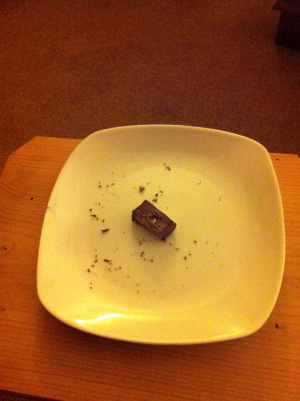
I can only imagine how that chocolate brownie might have tasted. The warm rich brownness and the bitter spicy taste that only plain chocolate has. The delicate crispness of that of that first bite; superseded by the squishiness as it oozes over the tongue, the increased flavour and the hesitant swallow. This sensual delight would have been repeated two or three times depending on the size of the brownie and of course the bite! The crispy top and the squishy middle that melts in the mouth; Yum Yum. I don’t want the dream to end … sadly I can only imagine.

Wednesday’s Wise Woman … Zuzu Angel
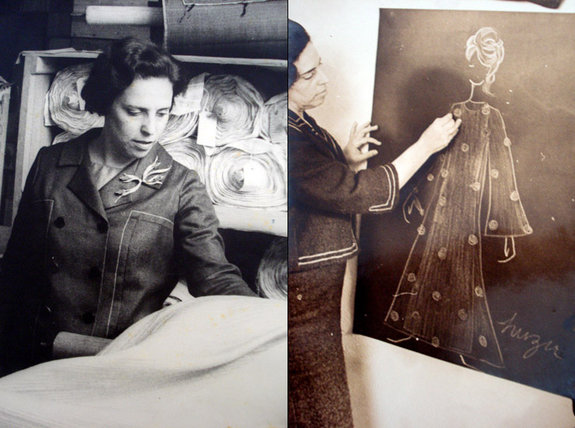
Zuzu Angel otherwise known as Zuleika Angel Jones (1921-1976) was a Brazilian/American fashion designer; who became famous for opposing the Brazilian military dictatorship after the forced disappearance of her son Stuart.
Zuzu as a child lived in Belo Horizonte and later moved to Bahia where the culture and colour influenced her early creations. She moved to Rio, Brazil’s cultural capital in 1947; where she worked as a dressmaker, making clothes for friends and family.
During the next 20 years she developed her style and opened a shop in Ipanema and was soon exhibiting her work on the American catwalks. While she made full use of the rich colour of Brazil she was able to become a name in the fashion world of her time.
Meanwhile in the 1970s her son Stuart who had become an activist against the military regime, was imprisoned and killed by the Military Agents (DOI-CODI). For the next 5 years until her untimely death in 1976 Zuzu waged war against the dictatorship for the recovery of her son’s body. The American Embassy were involved as her husband was an American. It was discovered later that the Brazilian State were responsible for her death. The tunnel that links Gavea and Sao Conrado where Zuzu’s car crashed was named after her.
In homage to Zuzu Angel and many other mothers who were unable to bury their sons, Chico Buarque wrote a song called Angelica in 1977.
Weekly Photo Challenge … Reflections
The camera; the third eye
cannot lie.
Sees the looker looking back,
with inner knowledge.
Truth, light, lustre
a reflection
nothing more.


 Coat Hanger Doll's House