Alphabe Thursday … E is for Egg Timer

This little egg timer has remained on my shelf unnoticed until recently when I began writing smallstones which are little poems of the moment. It is a skill I have yet to perfect as you can tell … what starts as a meaningful little snippet ends up as a big chunk of … here I am trying not to say waffle; but a big heap of little stones. Just look closely at a egg timer and wonder
It was the Egyptians who created the 24 hour day. The night was divided into 12 hours governed by the stars in the sky. The day was split into 10 hours; when a shadow clock was used. Leaving the twilight hours before dawn and after sunset. It was believed that the Ancient Chinese, Greeks, Romans and Babylonians were also using time telling instruments. Sundials were also used; but these had to be adapted when people realised that the sun rose and set at different times in summer and winter. Also the sun did not always take the same course. Of course sundials only worked during the day; at night it was not always convenient to ‘pop out’ to look at the stars to establish the time.
So an alternative was invented by an Egyptian prince who devised a water clock for the king using a complex system with a bucket and a conveniently place a hole in the bottom and marked with lines. This was not reliable as the water flow was not always consistent. Sand was considered more reliable and the hourglass was invented and continues to be used to this day.

100 Word Challenge for Grown Ups – Week#69 … Bah Humbug

Bah humbug is a phrase coined famously by Ebenezer Scrooge in the Christmas Carol by Charles Dickens. He declares to the Ghosts of Christmas, that the coming festival is a mere sweetie, a waste of time and fraudulent. Of course time has told us that he is correct. But it is also an occasion of good cheer, a pleasant well deserved holiday at the end of a busy time; an ironic bitter sweet twist to the tale. For me it is time that the emperor from another fairy story put on his cloths and allowed me to have a sherbet dab.


Wednesday’s Wise Woman … Alfonsina Storni

Alfonsina Storni (1892-1938) was born in Sala Capriasca, Switzerland; as a child she immigrated with her family to Argentina in 1896. When it became necessary for her to provide for her family she joined a travelling theatre and later became a schoolteacher in the rural areas of Argentina. Finding herself expecting a child and unmarried she moved to Buenos Aires where her son was born. Alfonsina continued to teach and work with young people in a theatre group. She formed friendships with the writers Horacio Quiroga and Juana de Ibarbourou. Her first book La inquietud del rosal (1916; “The Restless Rose Garden”) brought her recognition in literary circles but it was her next book El dulce daño (1918; “The Sweet Injury”) that won her popular acclaim. Although Alfonsina remained critical of men; referring to them as the enemy she fulfilled her heterosexual desires. She was able to to express the tension and passion of these irresolute feelings in her poetry. For a while in the 1920s Alfonsina concentrated more on journalistic articles and plays that were not so well received.
In the 1930s influenced by Garcia Lorca and other poets of the time Alfonsina returned to writing poetry. Sadly, now suffering from breast cancer and mourning the loss of her dear friend Quiroga who had recently committed suicide; her works reflected this; sophisticated and stylised quite unlike her simple and passionate earlier works. Alfonsina sent her last poem, Voy a dormir (“I’m going to sleep”) to La Nacion newspaper in October 1938. Soon after her body was found washed up on the beach; legend suggests that she walked slowly into the sea at La Perla beach in Mar del Plata until she drowned.
Her death inspired Ariel Ramirez and Felix Luna to compose the song Alfonsina y el Mar (Alfonsina and the sea) and it has been performed notably by Mercedes Sosa and Nana Mouskouri.
Also, fifty years after her death, she inspired the Latin American artist Aquino to incorporate her image into many of his paintings this aspect I know little of and would like to learn more about.

Weekly Photo Challenge … Delicate
Delicate dance of the atom
excited the electron jumps
forward and back
to spark the light photon.


This week I have decided that ….
This week I have decided not to celebrate the 25th of December and not wind myself up into knots for the next week or so. I have tried not to fall into the trap of commercial glory and fall foul of the tribal bullies for one day of feasting that will be over in a blink. Instead I honour these hyacinths: I have watched them daily for about six weeks; granted they were in a darken room for while but since ‘coming out’ they have given me daily joy and will for weeks after the 25th December.

Silent Sunday


Saturday’s Small Stone
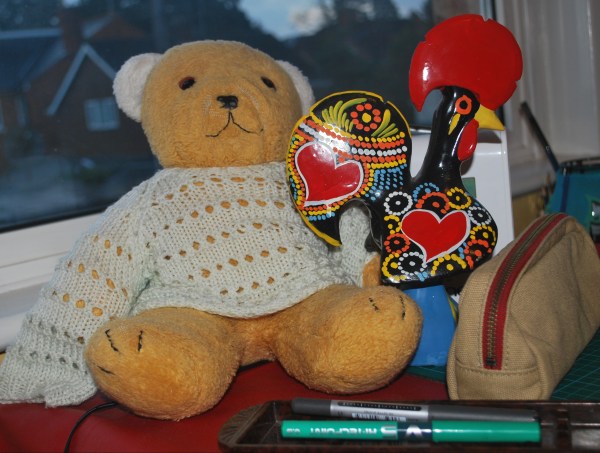
This, the season when our matrimonial bed becomes uncomfortable for two; ‘what with the the snoring situation and all that’
So I find myself in my daughter’s room; of 20 years before going to University and Brazil. It remains much the same; not for any sentimental reasons; but there is nowhere for it all to go.
So it has become a sort of a study-cum-bedroom. It is a pleasant sunny room where I spend many hours not just sleeping but writing. With today’s blog, my mind is full of words and memories… none of which is salvageable or even worthy of the page.
So a small stone inspired by 10cc I am not in love.
The migratory bird
leaves a mark as delicate as a feather
as tenacious as a talon
not ready to be hidden
Friday’s library snapshot … Talwin Morris continued.
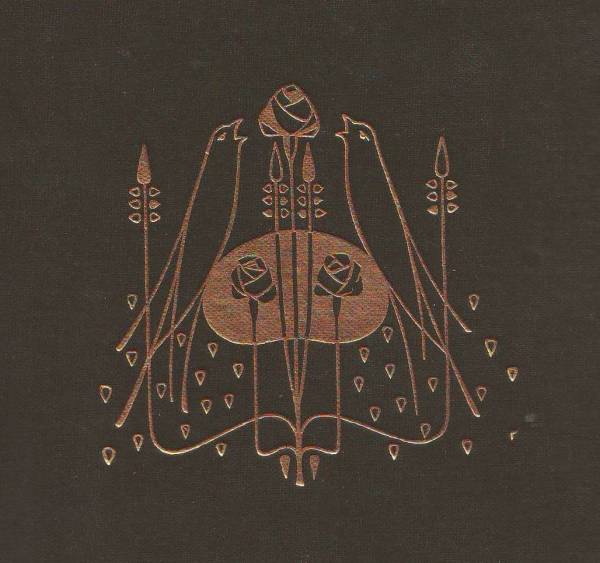
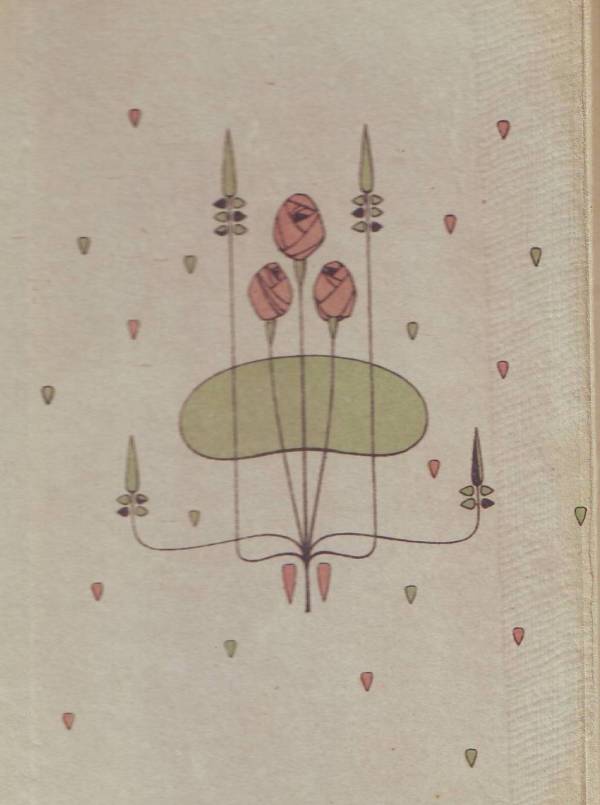
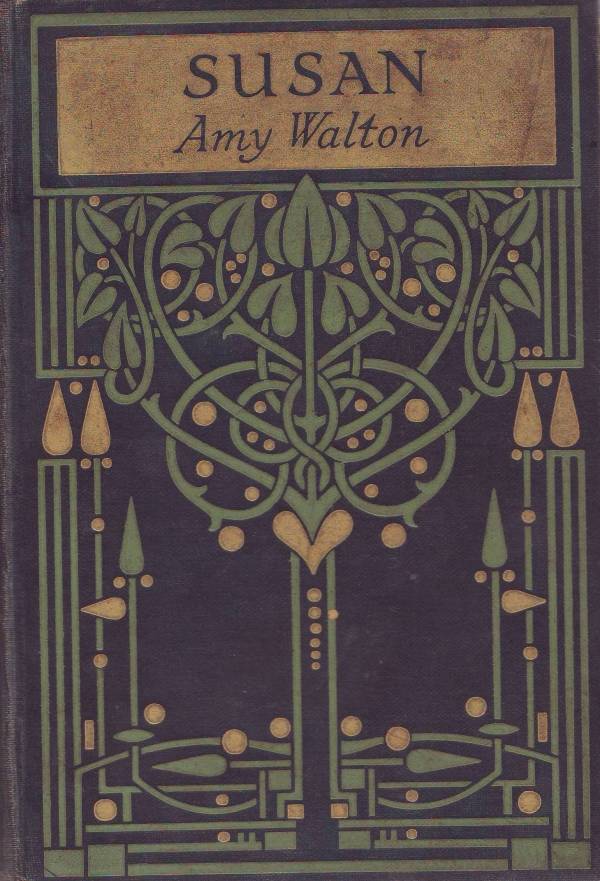
Talwin Morris (1865-1911) trained as an architect with his uncle in Reading. Then he worked on the London journal Black and White. In 1893 he applied successfully for the post of art director at the Scottish publishers Blackies. He was primarily a book designer ‘ prolific, able and original, his Art Nouveau book bindings foreshadow some of the most modern designs’ (The flowering of Art Nouveau graphics by Julia King)
Alphabe Thursday … D is for Goddess Demeter.

Demon (god) from the Greek daimon means allotter or divider and since the time of Homer it was the word used to describe the causer of the unexpected or the intrusive events in human life. For instance the change of season, good fortune or a disaster. The adjective daimonios means strange, uncanny or incomprehensible and adopted the idea of fate. Some authors introduced a new meaning and suggested that the spirits of those who died during the so called ‘Golden Age’ could have this daiminos and become guardians or protectors; they could accompany humans and bring luck or harm.
Demeter is a good example of this; her name is the most significant aspect of her identity; meter is the Greek word for mother and de is the word from olden times meaning earth. However, she was was not merely the Earth Mother she was also the Corn Goddess. These two aspects of her existence were presented in the Homeric Hymn to Demeter written between 700 and 550 BC.
One day, Demeter’s daughter Persephone was snatched, while picking flowers in a meadow, by Hades the god of the Underworld who carried her off to the bowels of the earth. For nine days with a blazing torch Demeter wander the world looking for her child. When Demeter learned that it was Hades who had stolen her daughter she was so distraught she left Mount Olympus and went to live with the human race.
She disguised herself as an old woman and found employment in the Palace of the king Celeus and his wife Metaneira, as a nurse the their only son Demophoon. She planned to make him immortal as the king and queen but not happy with this she agreed to give their son heroic honours after his death. However for their apparent faithlessness she made them build her grand temple where she retired, to mourn the loss of her child. Meanwhile she raised havoc, the human race suffered a dreadful famine and the gods too were becoming restless as there were no sacrifices being made.
Zeus sent dispatches to Demeter to persuade her to allow the ‘earth to sprout’ but she remained unmoved. It was Hermes who was able to insist that Hades released Persephone. Her daughter was able to return to the human world for 2/3 of the year; Demeter made the land teem once more with vegetation until her daughter returned to Hades and the land died again.
Festivals of Demeter and Persephone were very common in ancient Greece; linked to the important stages of the farmer’s year.

Demeter and Persephone with Triptolemus, who is about to take corn to the human race. Athenian red-figure skyphos attributed to Makron, c480 BC

100 Word Challenge for Grown Ups – Week#68
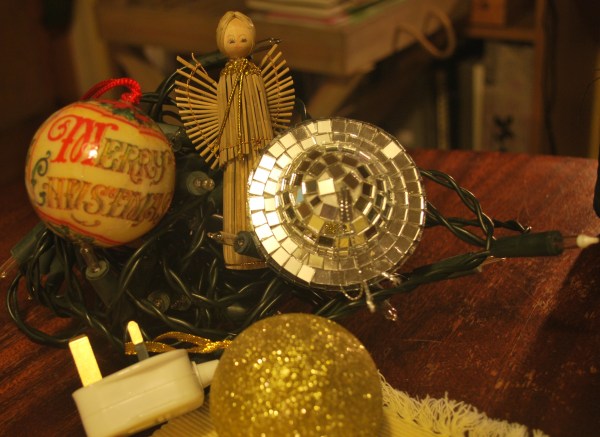
The decorations are not coming out this year.
While they worked when I put them away;
lights, baubles and the angels,
They will be redundant with the faux fir.
They have glistened,
made a valid contribution for years .
Not always behaved as they should.
They are prone to the deadly disease,
inbuilt obsolescence
Just when we needed them most.
Occasionally they would get entangled
with spiky star shaped individuals.
Or found themselves draped, still functioning brightly
beyond the 12 days of Christmas
Perhaps borrowed and left to hung without dignity and grace in a university abode
Now superseded by good taste and design
The tarts I’ll miss them

 Coat Hanger Doll's House