Wednesday’s women bookbinders


I was most surprised to find that there is little information about women bookbinders before 1900s; although women were possibly employed for mending and sewing books; particularly after the pages had been folded and sections ‘gathered’ or put together in sequence. This absence of tradeswomen in this growing trade was, it seems orchestrated by the Unions and the employers. They conveniently believed that women were not capable of some of the tasks
However, it does seem that a handful of talented women workers were able to make a career out of their labours, for example Miss Woolrich, Miss Philpot, Miss MacColl, Miss Alice Pattinson, and Miss Maude Nathan.
It was not until the late 19th and early 20th century that women were seen working as bookbinders. Whilst there was the opportunity to study bookbinding and have private tuition it was a costly option.
Some women were able to earn a living while learning ‘on the job’ ; therefore getting a more rounded experience. Although within certain limits; especially in small workshops .where there may only be one or two binders able to give training for a limited time. Nonetheless the women would see a variety of work. They would learn to work quickly, using tools and materials effectively with one eye on the profitable return.
Sarah Prideaux suggests in Modern Bookbinding ; their design and decoration that woman must be strong enough to undertake the long hours stood at the bench, also be able to concentrate and have sureness of hand. Besides which, she should have imagination and good taste; a note of individuality but without eccentricity.
Prideaux goes on to say some properly trained women can do as well as men in the workplace. But adds that there is no room in the marketplace for poorly trained workers; male or female. Therefore a woman looking for a lucrative and stable employment must be sure of her ability.
She says however if a woman needs only to make a small addition to the family income and is willing to incur the cost of training, plant and realise the experimental nature of the undertaking, then binding may be recommended as a sufficiently pleasant occupation.
I hoped to find some bindings in our collections undertaken by a woman bookbinder but unfortunately unless a binding is signed then we have no way of telling who the binder is; male or female. Fortunately I did come accross this work by Sarah Prideaux who was a bookbinder, teacher, writer, and collector of fine bindings that gives me a platform to learn from. I would value any more information about women in the the book binding business.
Trifecta: Week Seventy-Three
On to the one-word Trifecta Weekly Challenge we were asked for a 33-333 word response to the third definition of a the word Colour using the meaning
- Complexion tint
- Characteristic of good health
- Blush [natural bloom] … I believe leather has this more human quality.
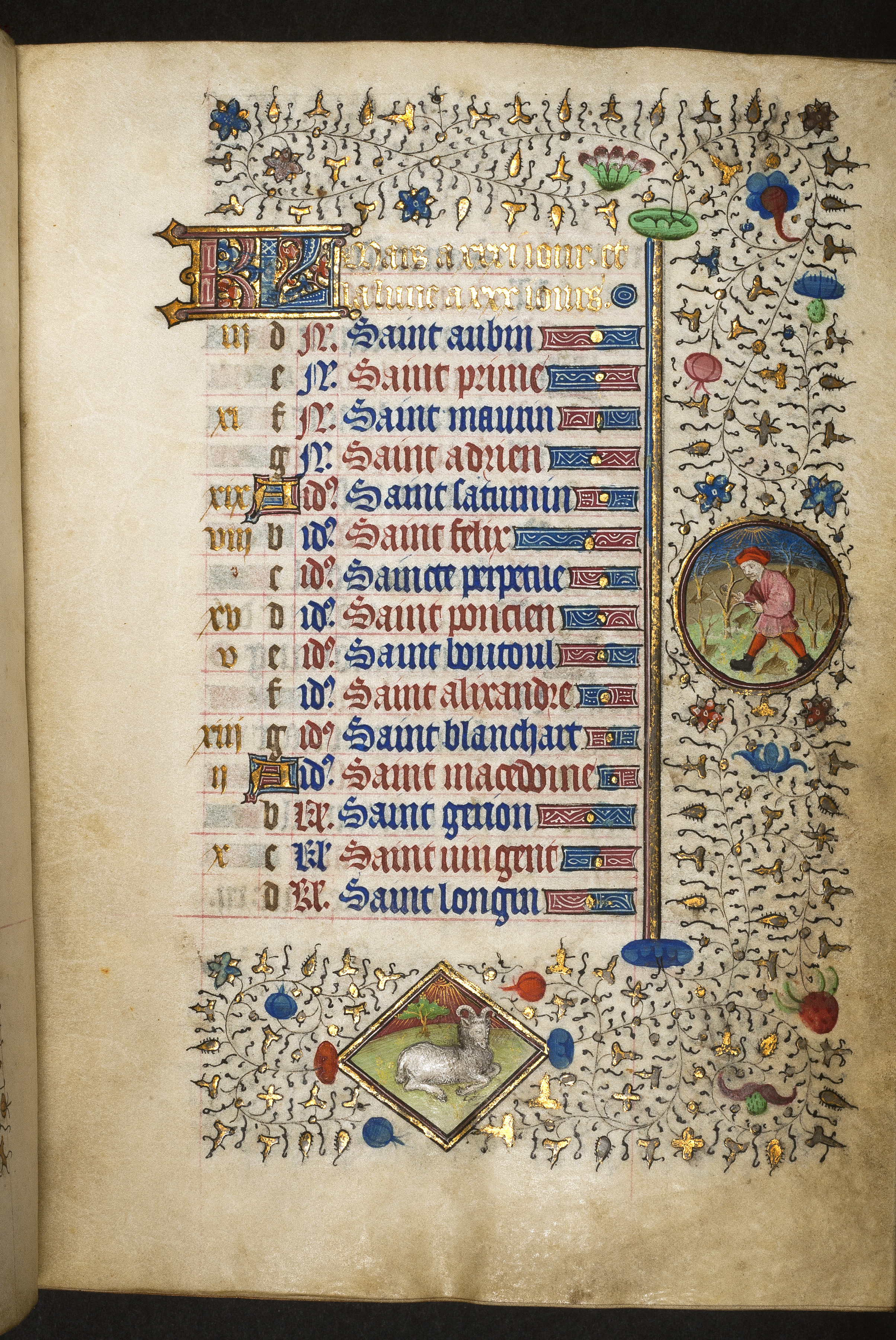
While the elderly manuscript with its finely tooled leather bindery had lost its rich colour of Moroccan tanned calf hide; its pale vellum leaves, richly illuminated, sparkled as new, nearly five centuries later.

Weekly Photo Challenge … Change


There are many stark differences in Rio de Janeiro as in all cities, clearly, between rich and poor, old and young, culture, weather and the seasons etc. It is just life and how it is. No matter how unfair these subtle changes/differences, they appear to go unnoticed.
Nonetheless I am not a seasoned traveller and certainly not seen the world but even I notice that change in Rio is happening before my eyes.

While on holiday I …


On the day before we left Brazil we revisited a favourite place from last year; the Northeastern Fair. Which is situated in the North Zone of Rio, Sao Cristovao in an arena originally used for exhibitions and special events. It is now renamed the Cento Luiz Gonzaga de Tradiciones Nordestinas. Named after the man known for the traditional music used to dance the forró that was brought to the southeast by Northeastern migrants who operate one of the most lively and interesting markets in Rio.
Although it functions throughout the week with restaurants, small shops and market stalls; on Friday, Saturday and Sunday it is party time or forró. While the shops, market stalls and restaurants are full to capacity; selling traditional wines, beers, spirits, clothes, food, crafts and medicine. It is the dance floor and stage that comes to life
I am not an expert and will not pretend otherwise; but from what I understand the Forró lyrics have changed with time and moved from being purely North-Eastern music to being popular across Brazil. Traditionally, the lyrics were about life in the rural North-East; such as concerns about droughts, migration to look for work and thus about longing or homesickness.
Although I did notice on a small and lower stage there were some traditional singers with a drum, accordion and a triangle and I was reliably informed they were singers from the North-East performing the cordels. Nearby was a bookshop and a booth selling the books with their evocative; ‘stories, bindings and wood cuts’
Here I bought some samples with view to study more closely later.
Silent Sunday


Trifextra: Week Sixty-Three
This weekend Trifecta Challenge is asking for 33 of own words inspired by the following quote
“It’s the possibility of having a dream come true that makes life interesting.” Paulo Coelho
Even the most deadly task wrapped in a veil of dream can manifest beyond the realms of nightmare. So a glimmer of hope, tinge of fantasy and inflamed passion must intensify the result.
Saturday Memory from Brazil …. and a wish


During the final week of our stay in Rio, we visited the National Museum of Folklore and Popular Culture. Of course I was at a loss without the language but I was able to look and imagine for a while and consider research more fully later.
Meanwhile I will share this visual delight; dating back to the end of the 19th century the museum presents 1400 objects organised in five themes;- life, crafts, religion, feasts and arts. The exhibition tells the history of the Brazilian Man in a warm, colourful and dynamic way;it is pure entertainment!
No one could not fail to be excited by the costumes of the carnival and the puppets; but I was drawn by something else; a little more discreet but for me no less exciting.
A display of works by the engraver and cordelista José Francisco Borges (1935-) better known as J. Borges. As a child he worked with his father would sold books of cordels at fairs and markets. At the age of 29 he decided to write his own but could not afford to pay an illustrator so he taught himself to carve wood blocks, His cuts, illustrated stories of the people of Northeast Brazil and the everyday lives of the poor farmers and families, highwaymen, love, punishment, mysteries, miracles, crime and corruption. During his life he wrote and illustrated over 200 cordels.
In the 1970s, not only were his works collected and exhibited in Europe and the United States but there was academic interest. Also, at that time his stories and poems were being recited, sung and recorded, allowing further exposure on the radio and television.
J Borges was awarded the Order of Merit by President Fernando Henrique Cardosa and the UNESCO in Action (Educational/Cultural) Award. In 2002 he was one 13 artists chosen to illustrate the annual calendar of the United Nations; his woodcut Life in the Forest opens the year. In 2006 in the New York Times the writer Aniano Suassuna considers Borges to be the best writer of the Northeast.
It is my wish to translate some of the stories and try to copy some of his printing techniques.
I would value any more information about this form of ‘publication’ as all I have found so far is in Portuguese (why would it not be so?) unfortunately my translation skills are limited.
Friday’s Library Snapshot …


Gwen Raverat (1885-1957), print maker and illustrator was also the wife of the French artist Jacques Raverat, daughter of George Darwin, Professor of Astronomy at Cambridge and grand-daughter of the naturalist Charles Darwin. She studied at the Slade for three years from 1908 under the supervision of Henry Tonks, influenced by the Impressionists and Post-Impressionists but soon developed her own style. As described by Herbert Furst in The Modern Woodcut ‘when she became interested in wood-cuts it was with an inborn dexterity … Mrs Raverat’s work is distinguished by that rare quality, creative imagination combined with a craftsmanship of originality and unusual skill. Whether she works with a knife or a graver, on soft or on hard wood, her technique is always in deep and instinctive sympathy with the material. Her cuts are never drawings transferred to wood but seem to have been produced, as Rodin said he produced his sculpture, by merely removing irrelevant matter from the block so revealing what was already in it. Her imagination ranges from the representation of the beauty of light in nature to the realisation of profound emotion and soaring fantasy’.
Gwen also illustrated a number of books including her classic childhood memoir Period Piece with line drawings.
Images from :-
Period piece : a Cambridge Childhood br Gwen Raverat
Gwendolen Raverat ; signed artist’s proofs; woodcuts by Mrs Raverat.
The London Bookbinders 1780-1806 with wood engraving by Gwendolen Raverat
by Ellic Howe
Mustard pepper and salt by Alison Uttley illustrated by Gwen Raverat.
Farmer’s glory by A.G. Street with decoration by Gwendolen Raverat
Trifecta: Week Seventy-Two
For this week’s Trifecta Challenge the prompt is Alchemy …
- a medieval chemical science and speculative philosophy aiming to achieve the transmutation of the base metals into gold, the discovery of a universal cure for disease, and the discovery of a means of indefinitely prolonging life
- a power or process of transforming something common into something special
- an inexplicable or mysterious transmuting
I will use 33 words …
‘Careful words are alchemy as they wash over the truth gilding it to fine prose to delight and energise. Subversively, they encrust it with a gross canker that stifles its living breath’.
Alphabe Thursday U is for Umbrella

When one comes to Brazil and the home of the tropical rain storm, one cannot expect less than much heavy rain. However it doesn’t always require the use of a raincoat; in fact one feels not only out of place but also uncomfortable wearing one.
Also rain is ‘expected’ I am not sure how. In Britain we know rain comes whether it is forecast or not; but we are never prepared for a change of weather no matter what.
While I was in Brazil I learned that even my daughter a resident for a very few years can decide the need for an umbrella with an uncanny accuracy.
So it is the collapsible brolly that comes out immediately after applying the sun protection …
So while no unwitting Carioca will be seen in the rain without an umbrella; there is a time and a place when a hapless tourist finds himself without. These three umbrellas hung in an open air cafe in Saint Teresa, will be used if the rain falls and it does without warning accept of course to those who are in the know!

 Coat Hanger Doll's House