Friday’s Library Snapshot … Edward O’Rourke Dickey


Edward O’Rourke Dickey (1894-1977) was a wood engraver and the least well known of the founder members of the Society of Wood Engravers. He contributed regularly to their exhibitions until 1924.
He only illustrated a few books and this one by Richard Rowley is notable. His single prints, display and modernist feel, with stark black and white areas with purposeful tool effects; parallel lines, dots and patterns. Dickey, with careful use of light and emotional hints shows his sense of drama; particularly in the Machinery where the woman hides her face from the grim spectacle as the ghost-like figure come into the room carrying a coffin. Even the powerful image on the front cover gives a glimpse into the social history of contemporary wood-engraved illustration.
I would value details of Edward O’Rourke Dickey’s later work and his life in general.
Alphabe Thursday W is for Wagons


I didn’t have to go far this week to find a ‘W’ these beauties are even hung from the ceilings. They are a constant delight to all; young old, boys, girls. Although they are primarily an academic resource, and represent the rich and rural history of England to me they are colourful, shapely and a joy.
In the Museum of English Rural Life we have over 20 wagons and carts, all of which are on display. Each one has a distinctive regional design and colour, reflecting local ways of life. The earliest example dates from 1780 and comes from Horseheath, Cambridgeshire – it is the earliest dated wagon in the UK.
Wednesday’s Woman … Tirzah Garwood


Tirzah Garwood (1908-1951) was one of Ravilious’ pupils at the Eastbourne School of Art. Although she was considered one of his most talented wood engravers, she gave up printing five years later. During this time she produced single prints or ephemeral pieces that appeared in journals and other publications, such as the libretto of a oratorio of Pilgrims Progress for the tercentenary of John Bunyan’s birth and line-drawings for the Listener. She also exhibited in four of the Society of Wood Engravers’ annual exhibitions. Although they were favourably received at the time they have neglected by historians since.
It is said that although she was influenced by Ravilious; she formulated her own personal style consisting of large rectangular scenes, dominated with robust characters with equally powerful backdrop; detailed with highly decorated wallpaper, carpets and curtains.
Joanna Selborne in the British wood-engraved book illustration, 1904-1940 : a break with tradition tells us that Tirzah shared with Ravilious a wry sense of humour ready to poke fun at the domestic and social scene. She was drawn to oddities in her subjects ‘like herself, unpredictable, delightful and a little dotty’ She cared for animals especially cats and dogs; so they featured much in her work. Tirzah’s characters generally were depicted with detailed expressions; she was careful to reveal their personalities.
It was her marriage to Eric Ravilious in 1930 that marked the end of her career in wood-engraving. Although she did one or two more, for instance The Big Man was published in 1931.
In 1932 she began to work in oils and watercolour, also making paper models and marbled paper and continued until her untimely death in 1951.
Referring to experts at the time Selborne says that “ Tirzah had a streak of Ravilious’ trickiness, with much irony of her own. She goes on to say that ‘his influence was far outweighed by the individuality of her style and her penetrating and quirky observations of contemporary life which was quite unlike those of any of her contemporaries and sadly short-lived
Weekly Photo Challenge … Up


As I left the library yesterday at around 5.30 the dark clouds gathered and the wind became quite gusty. I pointed my camera up among the trees that surround the bike shed. This change in weather was a bit disappointing as the day had been quite pleasant and still. It was difficult focusing on the the swaying branches in the fading light.

Last week I learned that …


Last week I learned a little about women bookbinders and exposed this inadequacy to the WWW. I have learned a little more since reading Women Bookbinders, 1880-1920 by Marianne Tidcombe. Although it was a little expensive for my book budget it has already proved to be a rich source of social history that would have gone unnoticed. (by me)
It seems that bookbinding was not an artistic craft as it is enjoyed today; it was a trade. As such only boys were able to become apprentices and work up to become a bookbinder. When bookbinding classes began in the late 19th century it was only tradesmen who could attend.
So I was mistaken about this previously, it was not the Trades Union that exempted women from the shop floor, they were never allowed there in the first place. The Unions were just not in a hurry to get the regulations changed.
As I said before women were employed to do the folding and stitching but never worked beside the men. Also there was no way to progress higher or to get promotion. So many women spent their lives confined to folding and stitching, on a small salary only to be sacked when they became too old and unable to keep up the standards expected of them.
Middle class ladies could not work; it was considered unseemly. However as time went on so there were opportunities for young women to attend the new art colleges. At the same time John Ruskin and William Morris were actively involved in a handicrafts revival and encouraging women who were confined to the home not only to explore more creative ways to express themselves but to consider training in art and design.
Also as mentioned before some bookbinders were prepared, for a considerable investment to train would be female bookbinders.
While some women excelled and were recognised for good workmanship others were dismissed and made fools of.
However the ‘revival’ worked and women from ‘Bloomsbury to Scotland,’ from all walks of life became interested in the craft of bookbinding.
Some took it seriously such as Sarah Prideaux, Katherine Adams and Sybil Pye and those who set up the Guild of Women Binders.
According to Marianne, there were some women who took up the trade as a stopgap like Enid Bagnold who was set up in business as binder by her father when her love affair with Frank Harris ended.
Marianne Tidcombe suggests those who did best in the business of bookbinding were those who committed their whole life to the trade; if not unmarried certainly without children.
The so called revival in bookbinding was at its peak in the late 19th and early 20th century and went into a decline at the start of the first World War. Marianne goes on to say that while women were able to master all the various skills,they were not all considered the best craftswomen. However some women were able to produce much innovative and interesting works and went to become influential not only in the short lived Guild of Women Binders but in the teaching of binding and design. Sometimes even the very average young women produced fresh and appealing designs far superior to that of some established tradesmen; women such as Katherine Adams and Sybil Pye.
While Marianne Tidcombe says in her preface that her work is not a social history, Women Bookbinders 1880 -1920 has given me an insight into the history and given be a better understanding of why women were [unfairly] excluded from industry and particularly bookbinding and how in a relatively short time made in roads into the male domain.
Also I thank a kindly colleague who helped me with this post and I understand had at least one female apprentice in his bookbindery.
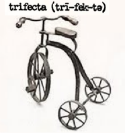
Trifextra: Week Sixty-Four
- charge
- century
- lost

Last century, a little generator stood on the jetty beside our houseboat. Chugging away to charge a battery that powered the wireless, ensuring all communication was not lost; especially that with Radio Luxembourg for my delight.
Silent Sunday


Saturday Supplication


I have been back in the UK from Brazil nearly two weeks now: it has been a difficult transition, I didn’t expect otherwise, although I did go (I thought) to great lengths to lighten the intensity of the grief One thing I thought was important, not to have a big plan for when I returned. Last time I came back with a list as long as my arm; a huge project. While it did soften the blow; it was hands-on, busy and not particularly pleasant. Sorting out the loft and decorating etc was not that great; however with hindsight it was the lesser of two evils.
This time I decided to just keep the tender picture of my time in Brazil in my mind and not have a big and clumsy plan. Except I did have an idea that I might write a book, not a novel, more of a picture book; no name or theme I just knew I would begin. I hoped that the inspiration would come … or so I thought
Sadly it hasn’t happened as I hoped … yet. The separation from my daughter has left me grieve stricken and bereft of any warm feelings about life back here in UK. Worse, the book still has pristine pages and my drawing board is empty; even from any rudimentary attempts at artwork.
So I begin this weekend with a prayer and a heartfelt plea to that creative goddess who tempted me so attractively prior to my trip to Brazil; ‘May she come back, so that my pen and pencils will be put to good use.’
Library Snapshot … Marcia Lane Foster


I came across this book of engravings during a recent collections reshuffle.The merrie tales of Jacques Tournebroche by Anatole France ; translated by Alfred Allinson ; illustrated with sixteen woodcuts by Marcia Lane Foster. Although not lost, it was languishing in a abyss of the unknown without an adequate record on the data base. So now although I still know little about the author etc. the book is in a kind environment and available for research.
I did not find much biographical information about Marcia Lane Foster (1897-) except that she studied at St John’s Wood Art School where she was awarded a silver medal for figure painting in 1921.
She was one of Noel Rooke’s wood engraving students. As a result of his encouragement, she was one of the first of her generation of wood engravers to be published commercially. Much of Foster’s later work in the 1950s and 60s was line drawing, mainly for illustrations in children’s books and advertising.
Alphabe Thursday … V is for Vegetable Baskets
Am I the only one who struggles to find an original post using letters at this end of the alphabet? Am I the only one who resorts to cheating? Or making new rules as I go along?
Some of these baskets were used when collecting potatoes before farming became so mechanised. Potatoes are vegetables aren’t they? So could some of these be considered vegetable baskets? I hope so! However it was a fun way to spend a lunch break and look a little more closely at our collections.


These baskets are from the collections of the Museum of English Rural Life. Images copyright Museum of English Rural Life, University of Reading (2013)


