Last week I learned that …

Last week I learned a little about Annie Kenney and wrote about her way into the the Trade Union Movement when she was about 20 years old. I came across her Memories of a militant written in 1924; in the library when it was in need a of a slight repair. I spent the next day or so dipping in and became hooked. So much so that I thought I would buy myself a copy and read it more fully. Unfortunately, the book has not been reprinted and the original copy is over five hundred GBP and well out of my price range. If I want to write more I will have to wait until the opportunity arises and working at Special Collection. Meanwhile without the ‘memories’ I have discovered that Annie was born in Saddleworth in Yorkshire (1879) the 4th daughter of 12 children. From the age of 10, Annie worked part-time in a local cotton mill; while going to school as well. She began full- time employment three years later. Working from six in the morning to six at night. She was employed as a weaver’s assistant as a ‘tenter’ she was expected to ensure that the bobbins were kept turning and repair the threads if they broke. This was a hazardous operation and as result Annie lost a finger to a spinning bobbin.
Annie worked in the mill for the next fifteen years until she became active in the Trade Union Movement. During this time she attended evening classes so that she could further her education. Annie diligently promoted the study of literature among her fellow workers.
It would seem her prime motivation, after her obvious dissatisfaction in working conditions in the mill, was Robert Blatchford the social campaigner and journalist who launched a weekly newspaper The Clarion (1891) where he published articles about socialism. He also wrote a book called Merrie England and an influential work inspired by William Morris.
Back to Annie who I also learned was a regular churchgoer described by Hannah Mitchell in the Hard way up as the Lancashire mill girl who ‘flung herself into te struggle with all the fervour of a religious crusader’.
I have a feeling that have much to learn
Silent Sunday …


Saturday Solace …


Saturday morning has come round again. What a busy week! I have been a little more motivated and productive. Also the weather has been kind. The garden looks a picture and there is a long weekend ahead.
It seems that perhaps life post Brazil has settled down a bit. Although Rio still holds a little of my heart , memories and attachments are strong and the feeling of separation not always comfortable.
However, it is not sensible to dwell on the ‘What ifs? and the ‘If onlys’.
Even though such grief cannot be overlooked continuously; we can find some respite and hope.
So, today I go to a Printmaking Workshop; I will share my creations at some point.
Meanwhile a wish ‘May all beings especially those separated from loved ones or otherwise, find solace and hope … togetherness is just a word and we can find love even when we cannot touch …
If only I could believe that!
Friday’s Library Snapshot … Lynton Lamb


Lynton Lamb was born in Nizamabad, India in 1907, but returned to England with his family when he was child. When his father died suddenly he left school to work in an estate agent’s office. He was able to attend night school classes to study art and a year later he became a full-time student at the Central School of Arts and Craft his teachers included Noel Rooke (1928-1930). From there be began a varied career in which he maintained a balance between; painting, illustration and other forms of design.
In 1930 he joined Oxford University Press as a production adviser; his first project was to design the bindings of its prayer books and bibles. He soon graduated to the design of book jackets for the World’s classic series and numerous other works. Soon he was able to use this experience to become a teacher of book production. Meanwhile he continued to paint and held his first solo show the Storran Gallery and published a books one named the Purpose of painting.
During the Second World War he was drafted into the army where he worked for six years as a camouflage staff officer.
After the war he returned to Oxford University Press; as an art editor where he was able to employ a variety of techniques for the illustrations of works, such as the Oxford Illustrated Trollope, for example wood engraving, pen and ink, chalk drawn directly onto lithographic stones and chalk on zinc plates.
Lamb was the head of lithography at Slade School of Art 1950-1971, at the Royal Collage of Art and also taught in the Ruskin School in Oxford.
He was involved in commercial art including stamp designs. Lamb was the president of the Society of Industrial Artists and Designers. (1951-1953) He received many honours during his lifetime including election to the Society of wood Engravers, the fellowship of the Society of Industrial Arts and the Royal Society od Arts. In 1974 he was named Royal Designer to Industry. He died in 1977 after a succession of strokes.
Images from
Foxy-boy by David Severn with illustrations by Lynton Lamb
The friend with a secret by Angela Bull illustrated by Lynton Lamb
The quiet spirit ; an anthology compiled by Frank Eyre drawings by Lynton Lamb
The apple trees ; four reminiscences by Hugh Walpole with wood-engravings by Lynton Lamb
Our exploits at West Poley by Thomas Hardy illustrated by Lynton Lamb
Further reading Lynton Lamb ; Illustrator a selection oh his work arranged and introduced by George Mackie.
Alphabe Thursday … X is for Celtic Crosses
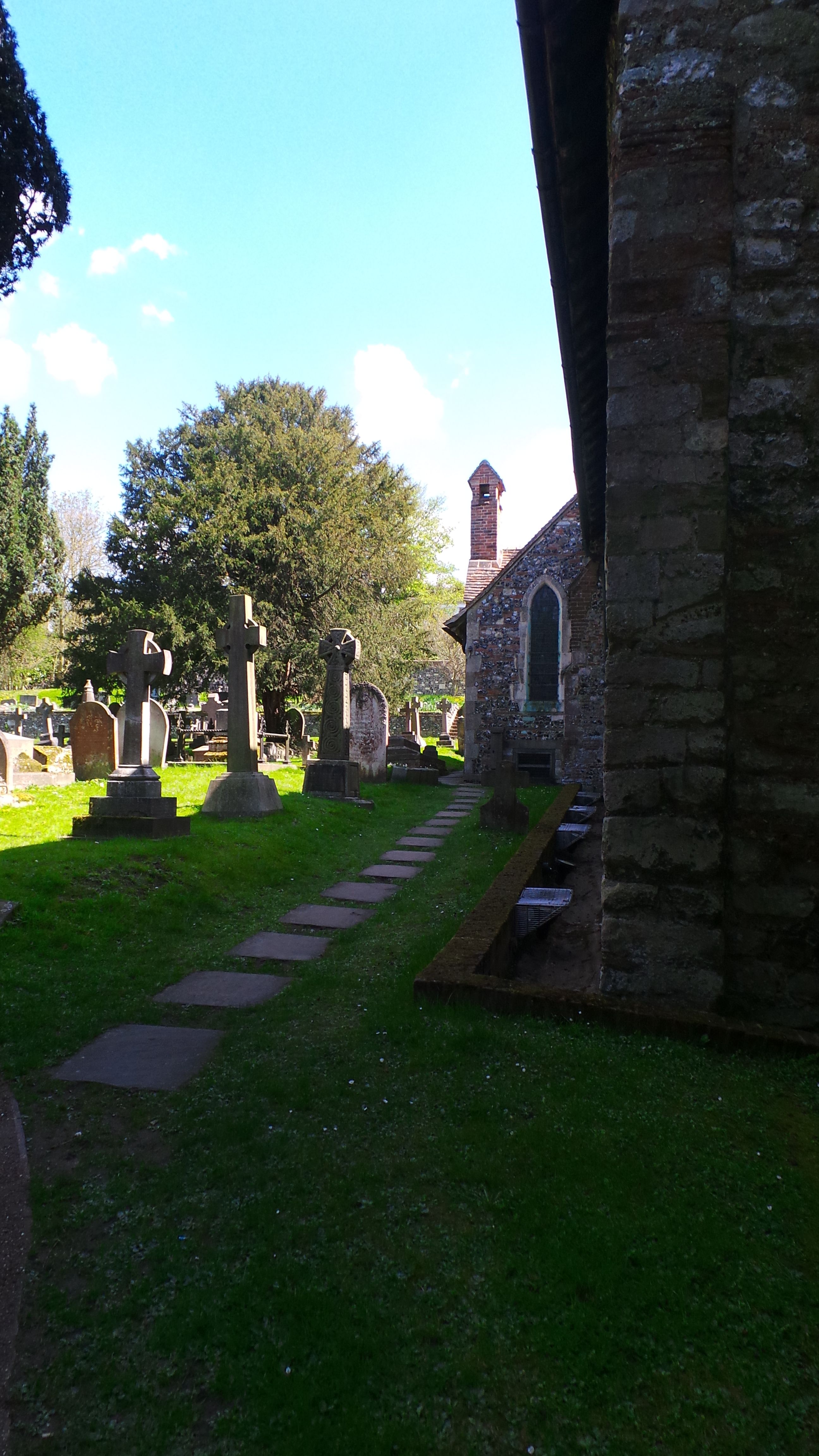
These Celtic crosses stand in the graveyard of St Martin’s church in Canterbury, I understand it is the oldest church in England and has held regular Sunday Services since 1658. It was the private chapel of Queen Bertha in 550. She was a Christian and as such must practice her religion outside the city walls. Her husband, King Ethelbert on the other hand not yet converted from Paganism; (St Augustine had not yet arrived from Rome, and begun converting the heathens) would practice his rituals at home.
There is a sweet story that says; each Sunday morning his wife would leave the ‘palace’ for her regular prayer. Meanwhile when the King had finished his service he would walk to the city gate and wait for his wife to return home … I wonder if he had put the dinner in the oven?

Wednesday’s Woman … Annie Kenney


Annie Kenney (1879-1953) was an English working class suffragette who become a leading figure in the Women’s Social and Political Union. Annie become friends with Christabel Pankhurst in 1904 the year her mother had died. In a bid to find companionship Annie joined a choir. The members of the Oldham Clarion Vocal Union seemed to share her values (Memories of a militant by Annie Kenney). She soon made friends with another member, Jane Ogden who was also a member of the Oldham Trades Council. The Council had invited Miss Christabel Pankhurst and Teresa Billington to speak on Women’s Suffrage and Jane asked Annie along as her guest. Although Annie had never heard about ‘Votes for Women’ she not even interested in politics. She had never read a newspaper except for the Clarion. The name Pankhurst meant nothing to her; she went to the meeting perhaps not wishing to be impolite in refusing.
She listened to the women speak and was suitably impressed with Miss Pankhurst although Annie says in her Memories of a militant that she was a little hesitant and more nervous than Miss Billington and that she was measured and full of zeal. While Miss Billington ‘used a sledge-hammer logic and cold reason. Annie liked Christabel Pankhurst but was afraid of Theresa Billington.
Annie was not sure about the questions and answers concerning ‘Limited Suffrage’ but stayed after the talk to speak with the guests. As she watched she was amused by the way the audience were drawn to one or other of the speakers. Thinking about those who were drawn to the cold logic of Miss Billington and the others who preferred ‘human side of Miss Pankhurst.
Before long Annie had arranged a meeting for Miss Pankhurst among the factory women of Oldham and Lees and she walked with her to the station. Miss Pankhurst invited Annie to spend the following Saturday at her home in Manchester. It was at Christabel’s home where she meet Mrs Pankhurst and were able to make plans for the forthcoming meeting. Annie arranged to have some handbills made and the choirmaster agreed to allow the choir to sing. Annie and her sister Jessie distributed the handbills in Oldham. Although the meeting did not attract the crowds they hoped for; it did mark the beginning of a strong friendship between Christabel and Annie.
Annie began making public speeches in fair grounds in the towns around Manchester. At such a meeting Annie began as usual by saying she was a factory – girl and a Trade Unionist afterwards she was approached by a local Union official who asked her to give them a couple of weeks organising the girls to join the Trade Union.
When Annie asked her manager at work the following day for the time off; he did take a lot of persuading but eventually did give his consent … to be continued.
Weekly Photo Challenge … Culture


I live in Reading a large provincial town; crowded with immigrants and migrants (of whom I am one) working in the university, hospital, railway and silicone Thames Valley. They all bring a rich and diverse culture to a rather dull and ordinary town,
This mural painted in 1999, is a symbol to strong multi-cultural community. It features Black icons side-by-side with figures from Reading’s own Black community. Sadly it is always noticed unless one is stuck in traffic on the Inner distribution road that goes through Reading.
It was painted by a group of artists and representatives of Central Club,on the wall of Central Reading Youth Provision. While it depicts local and global aspects of Black History.it was created in memory of peaceful anti-apartheid demonstrators who were massacred in Soweto by the South African regime during the uprising in 1976.
Last week I learned that …
Last week I learned that maybe I would not be able to translate poems from the Portuguese to the English (or indeed the other way at anytime). Even with much electronic help my attempt will be clumsy and best left to the experts.
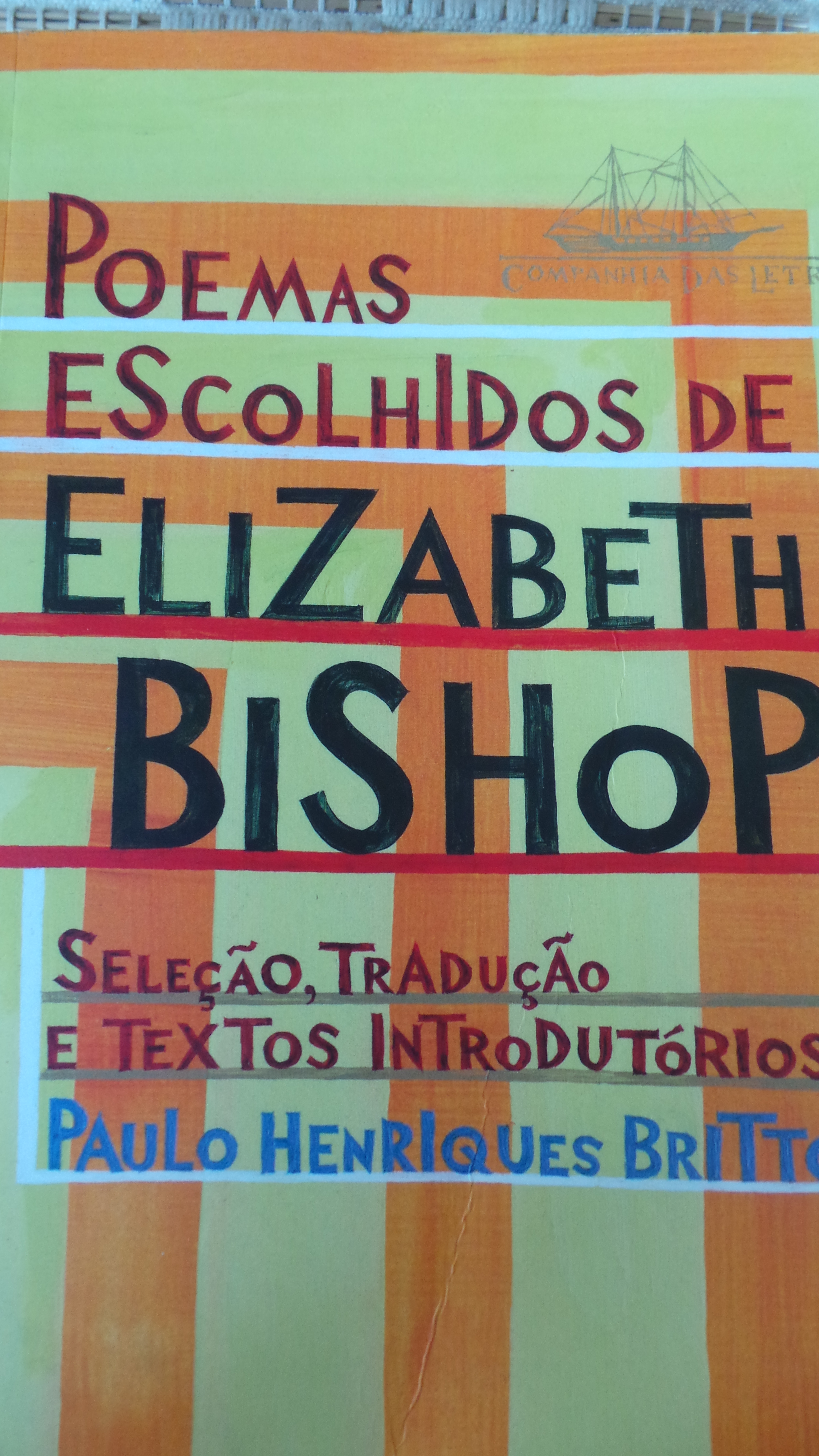
Still this week I have been reading Poemas escolhidos de Elizabeth Bishop, a Portuguese publication with the original English text and Portuguese translation.
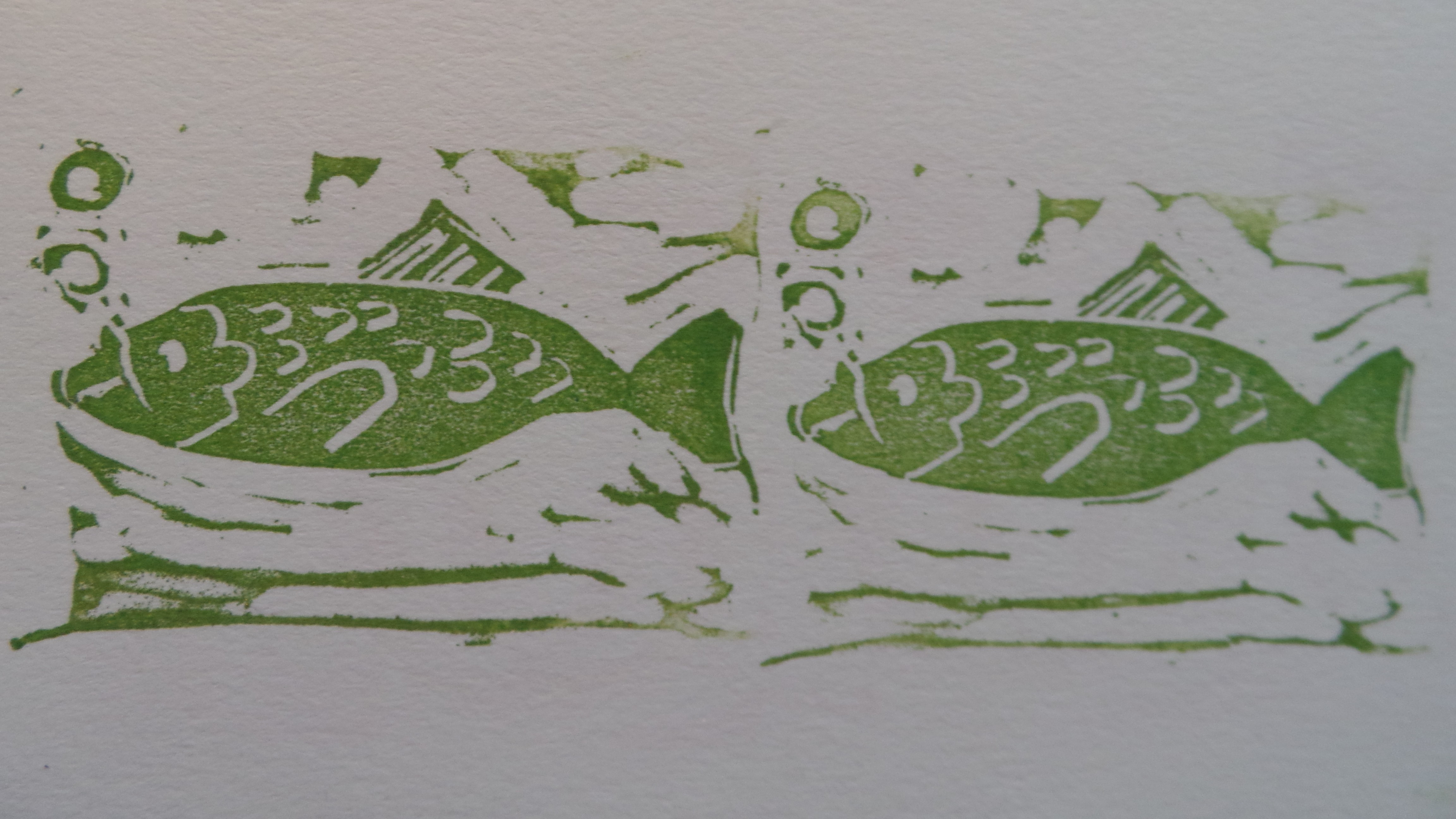
There are one or two poems I particularly enjoyed and perhaps one day I will unravel the translation. However, until then I have made a little print; a bit of a cop-out as the fish in the poem described by the fisherman was ‘tremendo peixe’ who has over its long life time survived at least 5 ‘catchings’ and had the scars to prove it.
The Fish O Peixe
‘… I admired his sullen face,
the mechanism of his jaw,
and then I saw
that from his lower lip
-if you can call it a lip –
grim, wet and weaponlike,
hung, five old pieces of fish-line ,
or four and a wire leader
with a swivel still attached,
with all their five big hooks grown firmly in his mouth.
A greenline, frayed the end
where he broke it, two heavier lines,
and a fine black thread
still crimped from the strain and snap
when it broke and he got away.
Like medals with their ribbons
frayed and wavering, a five-haired beard of wisdom
trailing from his aching jaw’
My rather insignificant attempt to represent this bearded wise old man made me smile at the end of a week when some of the lessons learned were painful and best left unmentioned.
Silent Sunday
Saturday and a step along the way …


Saying goodbye to my daughter as she began her new life in Brazil was no mean feat. Although the departure was sad, it was the anticipation and the emotional aftermath that proved most difficult to me.
However, it pales into insignificance when compared with the trauma of clearing her room. Had my daughter left home to live in this country there would not have been a problem. Her belongings accumulated since a tiny girl would have be sorted and taken or not.
Not so for Brazil; first there was the luggage restriction, climate and new life. Winter clothes and heavy ’baggage’ such as piano, flute, books, cameras etc etc were left behind for later consideration.
We were not in any particular need for the space at first it was a convenient space for the aged PC used only occasionally and turned on from time time to update Mcafee.
So the time has come to make proper use of the room and find secure homes for these redundant items until she returns (or not).
It is this experience that has proved more emotionally disturbing and energy draining. Each item catalogued and packed away until an unknown time.It seems as if we have cleansed her exsistence from her home.
We have almost finished; in a week or two the PC will be replaced with a Laptop, posters and their aging blue tack will be removed. Then, the sunshine yellow walls will be painted away with a coat of Farrow and Ball’s Elephant’s Breath.
However, a few things have remained including all the books; I couldn’t bring myself to remove such a huge part of my daughters life. The room will be put to good use in her absence not a empty shell or a shrine of regret but rich and lively celebration of my girl whether she returns home or not.

