Alphabe Thursday … Z is for Zero
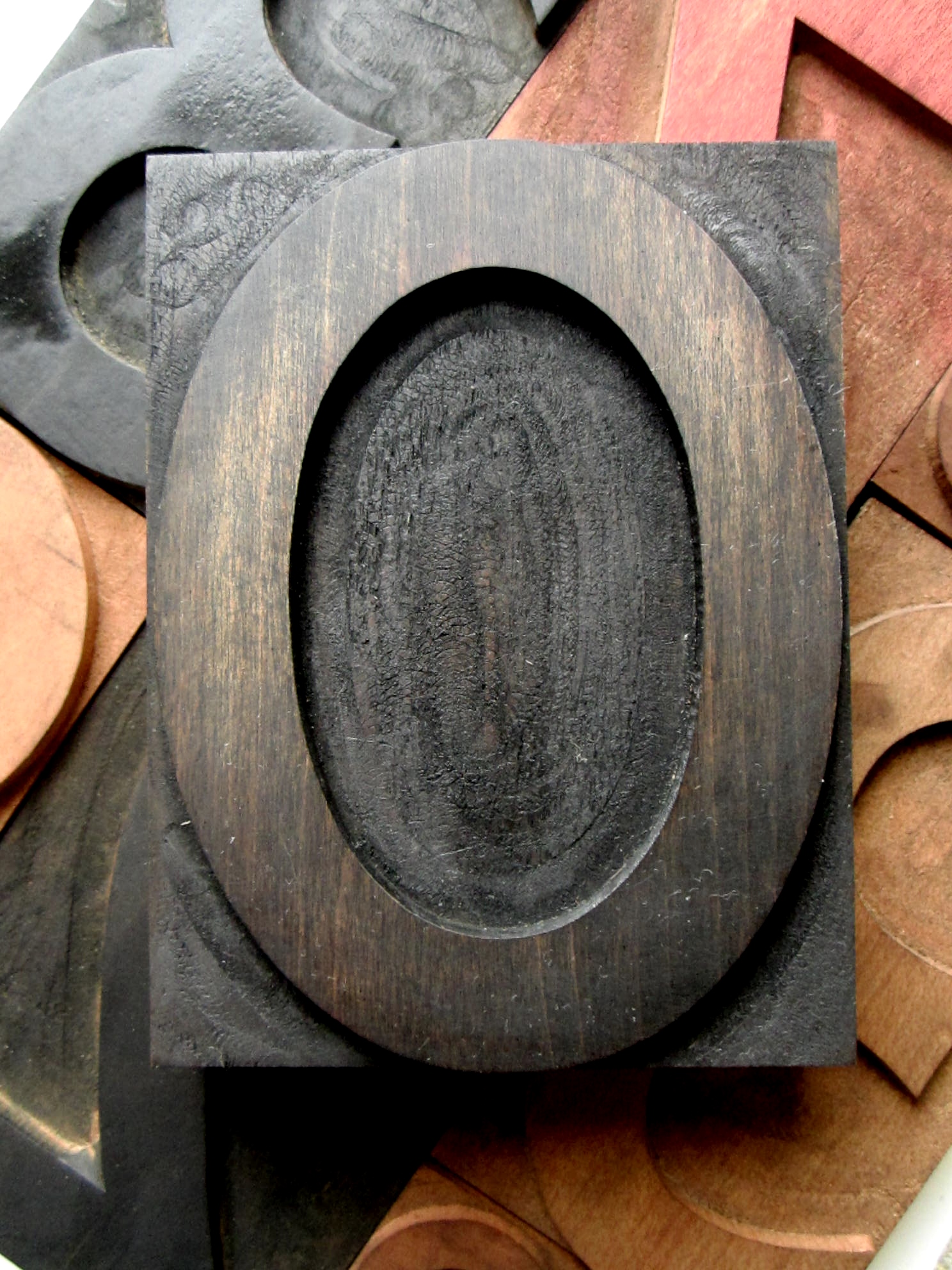
Since I did not study mathematics beyond ‘O” level in 1966; I think I can be forgiven for not knowing too much about the relatively new mathematical sign ‘0.’
Zero did not appear in the European understanding until it became necessary in the 14th century. According to Brian Rotman in Signifying nothing : the semiotics of Zero; the sign for nothing originated in Central India and was established by the 10th century as the ‘distinguishing element’ in the now familiar Hindu system of numerals. By the 1300s the Arab merchants had adopted it readily in their culture. Meanwhile the Christians of Europe dismissed its use as it was incomprehensible and unnecessary.
Numbers, were until then were bound to the confines of the church; the educated clerks remained devoted to the holy Latin orders. While the merchants, artisans and architects; speakers of the local languages needed to become familiar with the arithmetic of trade and technology. It was important for them to understand the Arab mathematics and in particular Hindu numerals
It was the need for accuracy and the zero balance for double entry book-keeping that broke down any barriers to the ‘infidel symbol’ of zero. By the end of the 17th century the Hindu numerals had completely replaced the holy Roman ones and became the dominant mode for recording and manipulating numbers throughout Europe.
Please note the letter press image was provided by Diana Milne

Wednesday’s Wise Woman … Elizabeth Catlett


Images from:- Elizabeth Catlett ; an American artist in Mexico by Melanie Anne Herzog and Lift every voice and sing by James Weldon Johnson ; illustrations by Elizabeth Catlett.
I came across Elizabeth Catlett, the sculptor and print -maker when I was researching Angela Davis and learned that she was involved in the international movement to free the Black Nationalist activist when she was in prison. Catlette with other African American women in Mexico City organised the Comte Mexicano Provisional de Solidaridad con Angela Davis, she produced leaflets and posters to publicise the cause. So when I came across this book some months later with my ‘illustration and printmaking hat on I was really pleased.
Elizabeth Catlett (1915-2012) was born in Washington DC; her parents were teachers. Her grandparents were slaves and their parents were brought from Africa to the United States on slaves ships. Elizabeth began her education at the Lucretia Mott Elementary School and Dunbar High School; then the Howard University where she studied design. printmaking and drawing. Elizabeth was best known for her black, expressionistic sculptures, that she produced in the 1960s and 70s. She was described by Anne Herzog as a ‘politically and socially engaged artist.’
She worked as a teacher in North Carolina for two years but Elizabeth was actively discouraged by the low salary for black teachers.
In 1940 Elizabeth became the first student to receive a Master of Fine Arts in sculpture at the University of Iowa School of Art and Art History. While she was there she was influenced by Grant Wood the American landscape artist, who encouraged his students to work with subjects they knew best. For Elizabeth this meant black people and particularly black women.
This transition in 1939 was marked by her piece the Mother and Child sculpted in lime stone for her thesis that won first prize in the American Negro Exposition in Chicago in 1940.
Elizabeth studied ceramics at the Art Institute (1941) and Lithography at the Art Students League in 1942-1943 and with the sculptor Ossip Zadkine in New York.
She became the ‘promotional director’ of the George Washington Carver School in Harlem. In 1946 Elizabeth received a Rosenwald Fund Fellowship that allow her to travel to Mexico; where she studied wood carving and ceramic sculpture. Later she moved there and married the Mexican artist Francisco Moro and had three sons. In Mexico she worked with the Taller de Gracita Popular People’s Graphic Arts Workshop, a group of printmakers who formed in 1937 and were dedicated to using their art to promote social change. They created a series of linocuts featuring black heros; tat were made into posters, leaflets, textbooks and illustrations to promote the building of schools and to eradicate illiteracy in Mexico.
Elizabeth became the first female professor of sculpture and head of the sculpture department at the National Autonomous University of Mexico, School of Fine Arts, San Carlos in Mexico City in 1958. and taught there until retiring in 1975. She remained active in the art community and died in 2012 aged 96.
Weekly Photo Challenge … Pattern
On Sunday I decided to visit and explore Broughton Castle near Banbury which is the family seat of Celia Fiennes [the elder] and Celia Fiennes [the younger}. I had been researching both ladies and the result so far has been scant. I hoped that I would find some new and interesting information, but I was to be disappointed. There was certainly no examples of Celia’s (the artist and printmaker) work. There was copy of Celia’s (the traveller) book in the gift shop but it was a rather overpriced paperback.
Unfortunately, the weather was unseasonably cold and wet, not conducive to the strolling round a stately home; especially as there were many others who had a the same idea.
However on a more cheerful note I did find a few images that I feel do meet the requirements for this weeks Photo Challenge … so all was not lost.


Last Week I learned that …

Last week I learned that Noel Rooke; the artist and engraver had a wife; no real surprise there I suppose. Celia Mary Twisleton-Wykeham-Fiennes (1902-1998) better known as Celia Fiennes was a former student, artist and wood engraver. She was among the engravers chosen by Robert Gibbings to illustrate Golden Cockerel Press books from 1918 to 1938. For him, Celia illustrated Aesop’s Fables in 1926.
Celia, sometimes known as Molly studied with Rooke and they married in 1932. In 1960, a few years after Rooke’s death she moved to Culworth in Oxfordshire where she continued her own work and worked occasionally as a guide in her family home Broughton Castle. Its seems that not only was she a successful artist in her own right she was also a direct descendant to Celia Fiennes (1692-1741) the English traveller who never married and travelled around England on horseback between 1684 and 1703 “to regain my health by variety and change of aire and exercise”
She was considered then as an exceptional women traveller, long before travelling for its own sake became the norm. Sometimes she traveled with relatives but usually it was with only the company of one or two servants. Her travels less frequently continued until 1711 and took her throughout England.
I would like to believe the nursery rhyme
‘Ride a cock-horse to Banbury Cross,
To see a fine lady upon a white horse;
Rings on her fingers and bells on her toes,
And she shall have music wherever she goes’
did refer to the Fiennes lady from Broughton Castle but this is not proven.
Silent Sunday

Saturday … and some questions
Saturday is here; after a week of ups and downs; heightened by its shortness! Then slightly lowered by a clumsy fall up a step resulting in a bruised knee and a very sore wrist.
I had enjoyed the previous prolonged weekend with pleasant weather and an opportunity to get the chores done. Anyone working full-time usually spends the weekend catching up with unfinished tasks from the previous weekend or just stuff from the week; washing, cleaning and ironing etc.
Then the working week was broken up nicely with a welcome invitation to Canterbury and a friend’s inaugural speech in celebration to his recent promotion to professor; with all the added accoutrements; afternoon tea, champagne supper an overnight stay in a posh hotel. Also, the little gift swapping and the usual positive banter that goes a long way to lift one’s spirits from the previous week’s doldrums.
Even the return journey that in the past has been as long as four hours was surprisingly quick at a little under two hours. Also, without trauma, even though there was more than our fair share of road works.
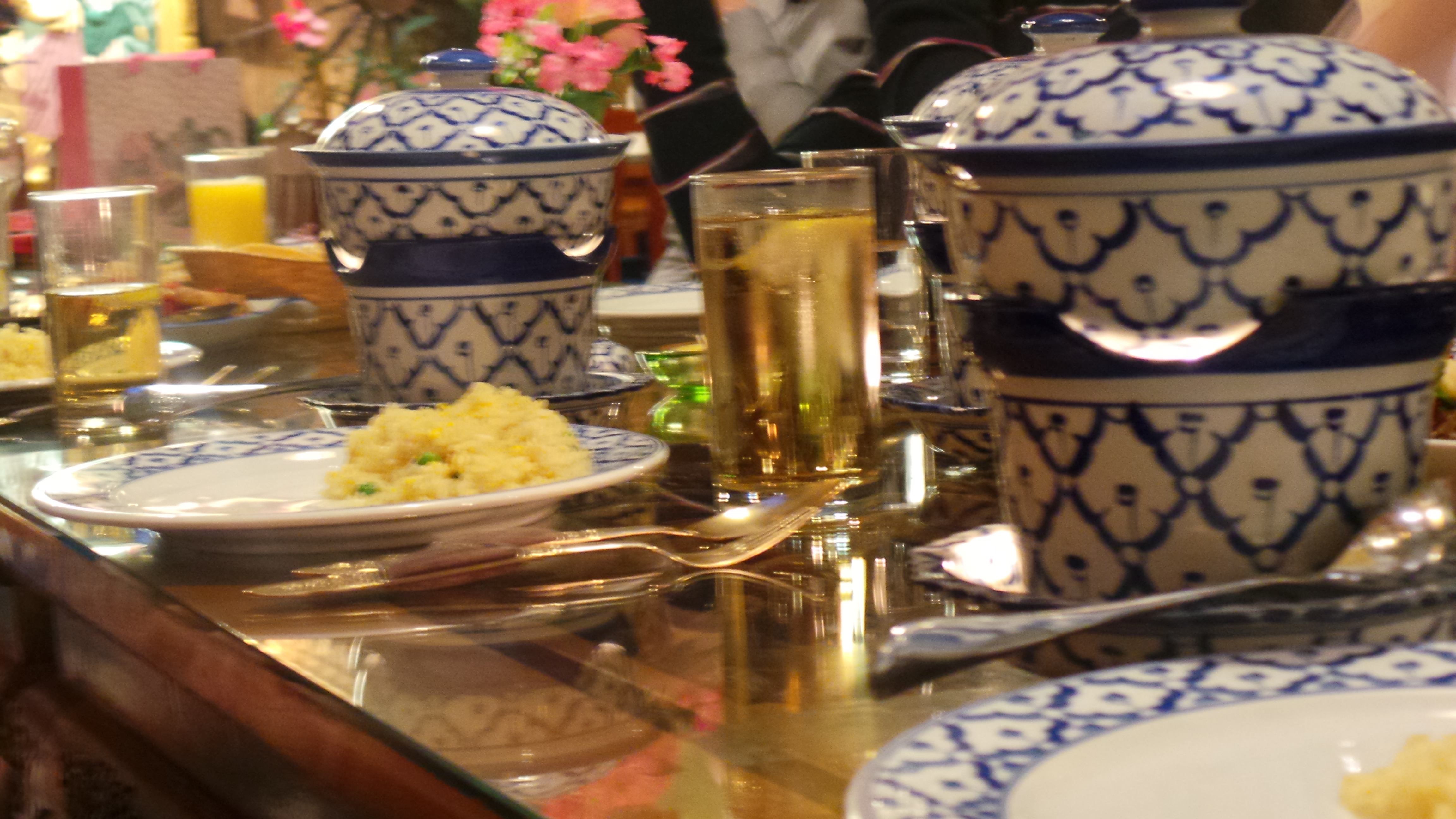
To lengthen the day we enjoyed a late lunch in the Global Cafe now quiet after the lunchtime rush; a wander round the book and gift shop; always a joy but today more so with less of a rush and a day off!
Sadly, the afternoon was marred by a stumble up a step and a trip to A&E .
Nonetheless these last few days have been a delight.
I wonder what caused this phenomenon? After several weeks of depression, despair and heartache; where did this change come from?
Was it the sun?
Is the treatment working?
I say treatment; this is taking many forms; if so which one?
Having a day or two off; is that all it takes?
Is it the divine intervention I carelessly joke about from time to time?
Is it serendipity; a word we banded so liberally in the seventies ?
Or synchronicity?
How long will it last?
At the moment I don’t care …
Friday’s Library Snapshot … Noel Rooke


I have written about several wood engravers over the last year or so. I have lost count about the times I have seen the name Noel Rooke (1881-1953) mentioned; in relation to motivation, inspiration and instruction. Yet, I was unable to find much in the way of autobiographical information either in the library or on the WWW.
Even though he was an engraver and artist it was his teaching and ideas that lead to the revival of wood engraving in Britain in the 20th century.
Rooke was born in Acton, London and remained there for the rest of his life. His father an artist in his own right was a studio assistant to Edward Bourne-Jones the British artist and designer closely associated with the later stage of the Pre-Raphaelite movement and William Morris. Rooke studied in France at the Lycée de Chartres and then at the Godolphin School in Hammersmith, London. He completed his education at the Slade and the Central School of Arts and Crafts. He was first employed by William Letherby the architect and architectural historian to make drawings of the Chapter House at Westminster Abbey. This was the beginning a a rich association as Letherby was to become the first principle of the Central School of Arts and Crafts and he was determined for the Central School of Arts and Crafts to be to design as the Slade and Royal Academy are to fine art.
In 1899 when Rooke attended the Central School as a student his teacher was Edward Johnson the noteable ‘father’ of modern calligraphy and among the others in his class were Eric Gill and T.J. Cobden Sanderson. Before long Gill and Rooke were teaching one another; Rooke teaching wood engraving and Gill teaching stone engraving and inscription.
In 1905 Rooke became employed at the Central School teaching book illustration, wood engraving and poster design. This was obstructed by Letherby at the time; as he didn’t see wood engraving as any more than a reproductive medium.
It was not until Letherby left the college on 1911 that Rooke was able to introduce a class of lettering and wood engraving. In 1914 Rooke became the head of the School of Book Production a post he held until 19246.
Rooke was an important member of a group artists whose ideas set the tone of the early years at the Central School. Notable illustrators, painters, designers, draftsmen and architects were ‘breaking barriers’, ‘cross fertilising’ and ‘broadening horizon’s.
They and particularly Rooke reacted against the reproductive wood engravings of the 19th century where the artist and the engraver were separate. He suggested that ‘the designer and the engraver must be the same person.’
Images from
Writing & illuminating, & lettering by Edward Johnson : with diagrams & illustrations by the author and Noel Rooke.
English wood-engraving 1900-1950 by Thomas Balston
Flowers of marsh & stream by Iolo A. Williams
The birth of Christ from the Gospel according to Saint Luke
Alphabe Thursday … Y is for Yellow
I didn’t have to go far to find Yellow and especially this Bank Holiday when I went for a walk along Thames. Before we left, I went to post letter and noticed some yellow brick work often seen in Reading. Although most of the Victorian houses locally are built in the traditional red Reading brick, sometimes yellow bricks were used decoratively. Along the Thames a few miles, I remember the William Morris house at Hammersmith built with local London yellow bricks. The next examples need no explanation I think; the buoy in the Thames and the flowers in the Fulham Palace Garden.


Wednesday’s Woman … Gertrude Hermes
Gertrude Hermes (1901 -1963) was born in Bickley, Kent to German-born parents. Her father was a designer and manufacturer of textiles and her mother a painter. She studied for a while at Beckenham School of Art and later spent some time in Munich; before studying at Leon Underwood’s Brook Green school of Painting and Sculpture. In in 1925 she won the Prix de Rome. She was well known for the range and diversity of her work but it is for her lino and wood prints that I know of her.
However, I know little about her; but understand that her influences on her work included artists such as Brancusi, Gaudier-Brzeska and Leon Underwood, the tensions in her life and the natural world about her, such as plants, fish and birds). Many of her engravings were used to illustrate expensive volumes published by private presses; such as the one i have shown here.


Images from The Alban goes out by Naomi Mitchison ; with wood-engravings by Gertrude Hermes
English wood-engraving 1900-1950 by Thomas Balston
Weekly Photo Challenge … from above
Always when I face the Weekly Photo Challenge, I panic. First that I might misunderstand the concept and make a fool of myself. Then, I reflect on recent images that might fit the bill; certainly I have photographs from Brazil that would be alright. However, while I have wonderful memories of my recent stay, as far as the blog and this challenge they are old hat. Which means another panic and a sortie to find something new and fresh, in keeping with the weekly challenge of spontaneity.
So while I was at an art class on Saturday afternoon I came across these images I hope they meet the requirements of this week’s challenge ‘from above’


