Silent Sunday

Saturday’s vision and a prayer!
Until this week I was blissfully unaware of ‘vision boards.’ A day or two ago Bodhisattva in training a dear follower ‘popped up or in’ with post that explained the concept .
It seemed like fun and a nice way in which to mark and celebrate my second anniversary of blogging.
When began 2 years ago I had not written a word creatively since leaving school 50 years ago. I was even less experienced in ‘social media’ or indeed blogging.
I hit the floor running and began a virtual journey of a lifetime, woven with a turbulent psychological excursion and real-time passages to Brazil and Europe, not forgetting a full-time career and family commitments with grandchildren and aging parents. So posting each day has been a mean challenge.
Over the last few weeks especially since returning from Brazil I have struggled most days not with ideas or indeed the blog in general; just a nagging fear that at some point I would run out of steam and the blog would die. It became a recurring nightmare and I was getting anxious until each day when I pressed ‘publish’ and then the nagging doubt would begin to bubble up again,
However the fear seemed to subside and a sense peace came back. Nonetheless, with this time of uncertainty and then the relative calm I began to consider making some changes to the blog. It has always been my dream to be a little more creative. I have even dabbled in poetry and added some of my own illustrations as a relieve from photographs.
This might be time when I take a leap in faith and perhaps have a weekly ‘creation’
So here is my attempt to demonstrate a vision board with my dreams of the moment and a prayer.


May this Vision board resemble my hopes and dreams, that one day soon my posts will become more creative and imaginative.
Thank you Readers have good day and please comment!
Friday’s Library Snapshot … a flower or two!!
As the Chelsea Flower Show continues this week I thought I would find one or two images that be a suitable tribute a very English event. They need no explanation … just to say there will be no prizes for guessing my favourite … which is yours?


Our country’s flowers and how to know them ; being a complete guide to the flowers and ferns of Britain by W.J. Gordon ; illustrated by John Allen.
Our wild flowers familiarly described and illustrated by Louisa Anne Twamley
The children’s book of wild-flowers and the story of their names by Gareth H. Browning illustrated by M.C. Pollard
The Wright encyclopedia of gardening by Walter P. Wright ; frontispiece and title page by Robert Gibbings.
Common wayside flowers by Thomas Miller with Birket Foster
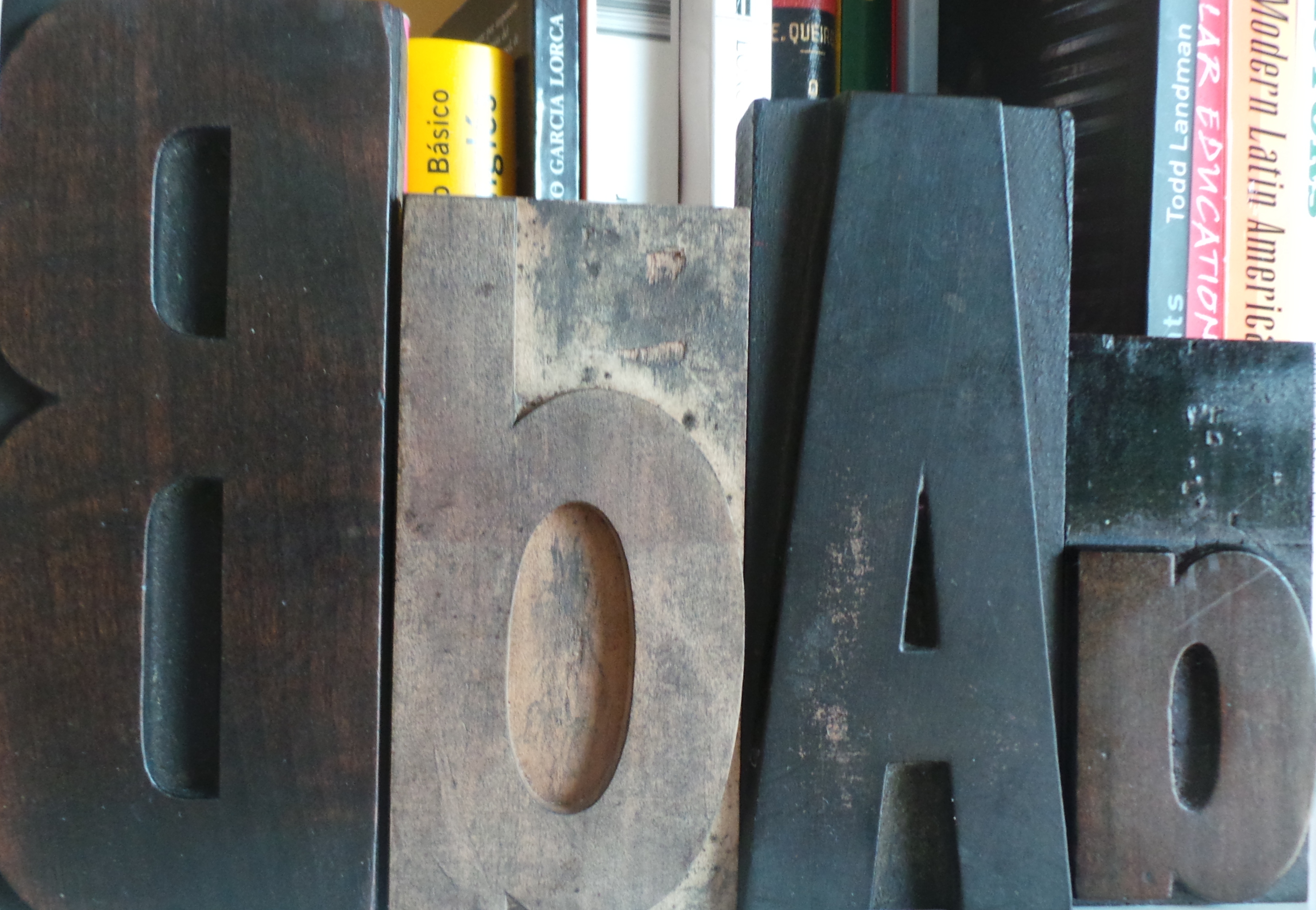
Alphabe Thursday … A is for Alphabet and A.
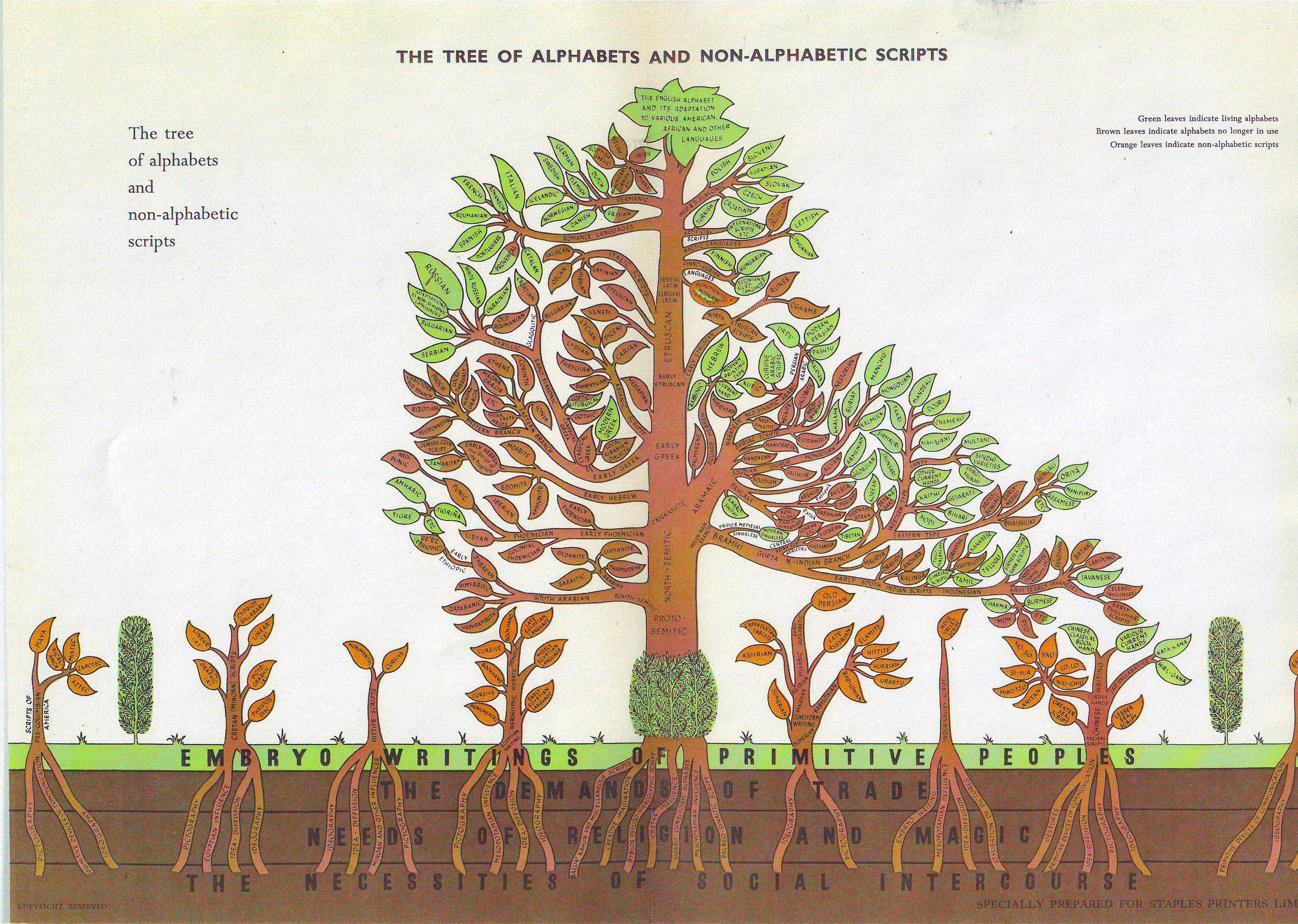
One of the earliest forms a written language was the ‘picture writing’ of the Sumerians who roamed the then-fertile valleys of the Tigris and the Euphrates. (c. 3500 – 6 B.C.) It was written by pressing small wedge-shaped marks into clay, however over time the symbol lost any resemblance to the object it was supposed to represent.
As language is made up of syllables it seemed easier to develop a writing in which a character stood for a syllable and not an idea. Syllable-characters can be interchanged and used for other languages, such as Assyrian, Chaldean or Babylonian, as each civilization fell under a new invader.
It is suggested that, it was the Phoenicians who made the complete break from the ideogram and invented the phonetic alphabet. Inscriptions have been found in the Sinai Peninsula and dated around 1800 BC.
The Greeks acquired the alphabet from the Phoenicians between 11th and 7th century, although it took a long time for the Greek capital letters to form, as we know them today. The cursive smaller letters like the Roman lower case were a later development.
They did not hesitate to adapt unnecessary letters or invent a new sound. Also some characters from ancient Greek were later discarded.
Phoenician, like Hebrew and Arabic was written from right to left, then there was a period of ‘boustrophedonic’ writing; back and forth, literally as the ‘ox turns in ploughing’ Finally the Greeks and the Latins settled down writing from the left to right . The Greeks with their strong sense of design replaced the careless sprawling Phoenician style to a more regular form.
The Romans acquired the alphabet from the Greeks via the Etruscans; they adapted it easily to the sounds their own tongues made. The Latin alphabet was developing while the Greek was in its formative state. The Latins did not need the theta and one or two other characters changed use and sound slightly.
The ‘A’ has remained the head of the alphabet during the whole of its history. It was known by the Semites as Aleph, not a vowel but a consonant, and sounding like a soft breath. It became the the vowel alpha, which provided the first part of our modern word ‘alphabet’
The letter passed from the Greeks to the Etruscans then the Romans and is retained as a capital letter in most modern alphabets. The letter ‘a’ took a bit of time to evolve through the uncials and then the Caroline form, until we have the Venetian miniscule or italics and the Northern Italian minuscule known as the Roman type that we know now.

Wednesday’s Wise Woman … Hannah Mitchell
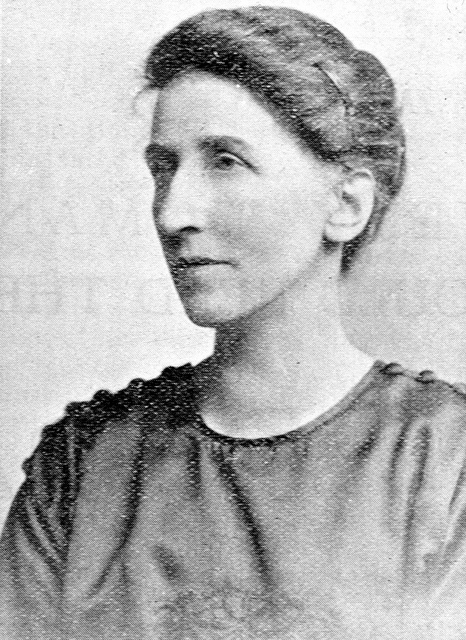
Hannah Mitchell (born Hannah Webster 18721-1956) was an English suffragette and socialist. She lived with her family at Alport Castles Farm in the Peak District of Derbyshire; it still stands, a mile north of the A57 on the Snake Pass that links Manchester with Sheffield and crosses one of the wildest parts of the south Pennines. In her autobiography The hard way up.the descriptions of her childhood home are a rich source of rural memories and remained for her a much enjoyed place of refuge away from the anxieties of modern life. Well into her 70s she continued to walk the moorland paths even those she would have taken when she ran away from home as a teenager.
Life on the farm was poor and isolated; however, she was able to go Derwent, a village nearby for a little freedom and a limited education.Hannah’s main difficulty was her mother and her scolding tongue. She only got a fortnight’s schooling in her whole life. Hannah, unlike her siblings was keen to learn. After some persuasion Hannah’s mother allowed her to attend the local school with her sister. After two weeks the weather became so harsh the girls were not able to make the journey. When the weather improved the sister returned to school but for Hannah the opportunity didn’t arise again.
Her mother was vehemently aggressive; physically and mentally towards her daughter’s aspirations for improvement. Education, even basic schooling was not for girls. Hannah suffered terribly as she struggled against the social restraints of the time.
Her Uncle was sympathetic to the situation and came to the rescue; he bought her some exercise books and set her some lines to copy ‘Procrastination is the thief of time’ and ‘Never put off til tomorrow what you can do today’. Although these moral lessons were not needed; the exercises did give Hannah the chance to improve her handwriting.
Hannah didn’t have a dictionary so when she did come across a word she didn’t understand or couldn’t pronounce properly she copied it and listened carefully to the preacher at the chapel until she heard the use the ‘doubtful’ word. Often they would mispronounce it ; after all they were only lay preachers, farmers or shepherds, with no more education than her father or uncle. Hannah went on to say in her book that she took every opportunity to talk about books and reading to visitors and passers by. This, the mother overhearing; saw as a slur on her character and would beat her. Hannah, not wishing to waste a valuable lesson’ soon learned to be discreet.
So with this continued cruelty, and non-existent education and the bleak isolation of the farm; Hannah had no alternative if she wanted to ‘better herself’ so she ran away from home. First to Glossop and then Bolton; described by her grandson; ‘she moved from Wuthering Heights’ to the ‘Coketown’ of Charles Dickens’s Hard times. She endured great poverty and strong friendships.. From here she married and had her only son. It was early in her relationship with her would-be husband that she decided against a marriage as held by her brothers. By now, in a strong mining community and surrounded by socialists there was much talk about marriage as comradeship. There was the idea that limiting population as a means of reducing poverty. She says that ‘I soon came to believe that although birth control was not the perfect solution to social problems it was one of the first and simplest ways at present for poor to help themselves and the surest way for women to obtain a measure of freedom’ … to be continued.
Weekly Photo Challenge … Escape


Those of us who live in Reading, Berkshire either love the town or hate it, people escape to Reading and many escape from it.
We moved here in the early 1980s from north London; we were pleased to escape from semi-detached suburbia to somewhere where we might find work and affordable rent and a subsequent mortgage.
Little did we know that we had moved to the home of the Reading Rock Festival. To where every teenager in the UK and further escape to; very August Bank Holiday; when all the locals escape from, to avoid the noise and violation.( this in my opinion is unfounded)
However, it was Reading Prison that came t mind when I read this week’s Photo Challenge; It is not the most visually pleasing of buildings. It does have at least one ‘romantic’ connection; it was the ‘home’ of Oscar Wilde for a time and where he wrote the Ballad of Reading Gaol.
I understand from a recent visitor (not an inmate I hasten to add) that the cell where he was imprisoned is marked accordingly. But, It does beg the question, does anyone actually care about this ridiculous fact?
The prison is relatively new, built in 1840 and described in the Illustrated London News as
‘Standing, as it does on the rising ground at the entrance of Reading, and close to the site of the venerable abbey, this new prison is from every side the most conspicuous building, and, architecturally, by far the greatest ornament to the town’
It is the largest of the town’s public buildings and before the other buildings had encroached the surrounding walls then it would have looked very imposing. It is built of red Tilehurst brick with decorative quoins of Bath stone, the turrets and crenulations give an impression of a 15th century castle. Nonetheless I am sure each prisoner would plan to escape such a vile environment.

Last week I learned that …
I was very pleased that last week I picked up my Sanskrit translation. When I went to Brazil I took a break from my weekly sessions and it has taken me far too long to back into the routine again
I translate a few verses each week and then I meet up with another student and over a cup of tea we compare notes and come up with fair translation … I am not sure that that Professor Deshpande would agree but it gives me a lot of joy and pleased I am back on the road of reading Sanskrit.
We are reading the Bhagavad Gita which is one of the most studied and translated texts in the history of world literature. Coming from the post-Vedic India and considered to be the standard and universal work of the Hindu tradition and renowned as the jewel of India’s spiritual wisdom.


Silent Sunday

Saturday … On the campus!


Unashamed late blooms
not wearied by late harsh winds
the brazen hussies!!


Aesop’s Fables are a collection of stories credited to Aesop; a slave and story teller who lived in Greece in 5th Century BCE. It was at the time of the first enlightenment when scholars, slaves and singing bards where beginning to question their existence and the notion of good and evil. Long before the words were recorded so the tales and songs were memorised and passed down through the ages.
The fables have been compared with Buddhist Jataka Tales and the Hindu Panchatantra; as some of the tales are similar. There is some debate over who actually began the tradition. Although Buddha and Aesop were contemporaries; the stories would have not been written down until centuries later and no scholar is interested enough to take a stand either way. This particular book was reprinted (1926) from a 1692 edition translated by Sir Roger L’Estrange (1616-1704) and the wood engravings are by Celia Fiennes.
 Coat Hanger Doll's House