Some words about wood on Wednesday …
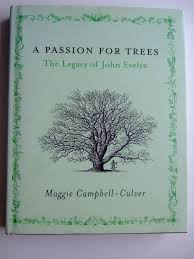
Yesterday, while sitting in the Reading Room a little lethargic after a rather extended lunch break … I spied a nice book …
For a little less than a year I have, for a day each week worked with a volunteer. She, in a bid to get some work experience and for me help in some interesting projects. It was worked well, but like all good things has come to an end when she did get a graduate trainee post at Cambridge and I completed some tasks that were long overdue. Today we all had a lunch out to wish her well.
… So, I feeling a little lazy enjoyed browsing an item in our new books display; called A passion for trees ; a legacy of John Evelyn by Maggie Campbell-Culver. As the name suggests it is not academic tome but more as the fly leaf says ‘ celebration of our trees with John Evelyn’ He is described as a ‘luminary of the 17th century.’ Not only was he the founder of the Royal Society, but a gardener and Royal advisor and more important an author of several exceptional horticultural works. The most notable is the Sylva discourse of forest trees published in 1664. It was written during a time when the nation needed trees. (for shipbuilding perhaps?) Sylva was among the first books in England to show an appreciation of the decorative value of trees and the benefits of planting trees to shape the landscape.
He mentions the Caesalpinia sappan is a species of flowering tree in the legume family, Fabaceae, native to southeast Asia and Malaysia. Its common names include Sappanwood which belongs to the same genus as Brazilwood (C echinata) and originally called brezel wood in Europe and later the timber was imported from South America. In A passion for trees the legacy of John Evelyn; the author tells us of its coloured wood being ‘in demand for decoration and marquetry.The plant has many other uses for example medicinal with its antibacterial and anticoagulant properties. It is also produces a valued reddish dye called brazilin, used for dyeing fabrics and for making paints and ink.
In Colour ; making and using dyes and pigments I learned later that Brazil owes its name to this rich source of dye. In 1500 the Portuguese navigator Pedro Alvares Cabral visited the land then called by the Europeans Terra de Vera Cruz. He was struck by the abundance of valuable brazilwood he found there and renamed the country Brazil.
Perhaps I should get back to work before going of to find ‘our’ copy of Sylva by John Evelyn.
Weekly photo challenge … Fresh


This very fresh strawberry reminds me that as children in early 1960s my mother had to do seasonal work in the local strawberry fields; to make ends meet. Although the season was short, the sun was hot and relentless. It was not heavy work but crawling continually up and down the rows was undignified and back breaking. Even the thought of eating the round red fat things soon became not so desirable.
The payment too was not the best, each tray picked (12 punnets) would have a return of under 5 shillings (25p) an experienced picker might pick 2 trays or more in an hour; speed was of the essence the ‘shelf’ life of a fresh strawberry is only hours. So the grower has to get the fruit at its peak and on the train to the city as quickly as possible. There must be no delay; a fresh ripe strawberry soon becomes less so and worthless.
To add insult to injury these fruits were destined for ‘posh’ hotels in London and Wimbledon where they would fetch around £1 a punnet or in a bowl with cream. Of course, the grower as no part of this ‘mark up’ he has to eke out his meagre return for the rest of the year.
So, here in my garden I enjoy a beautiful fresh ripe and warmed by the sun – strawberry. The only way in my opinion; a strawberry served chilled is not a strawberry… give a me a raspberry … Yum.

Yesterday I …


Today (yesterday) I walked as usual around the lake, but detoured slightly in a westerly direction. The Harris Garden my favourite haunt is easterly. During the week I have feasted my eyes and nose on the lavender beds that border the other departments a short walk away from the Library.While the perfume was wonderful, the bright sunlight we have enjoyed the last few days made it difficult to photograph. So I promised myself a visit when the light was kinder. and the perfume no less powerful.
It was a good opportunity to look more closely at the other formal gardens that grace the schools nearby while the campus is quiet.
Until a security guard did the rounds in his van ; curious, I suppose, to see a lady wandering around at 6am in what might be considered PJs … surely not?
Silent Sunday …

Sew the seed …
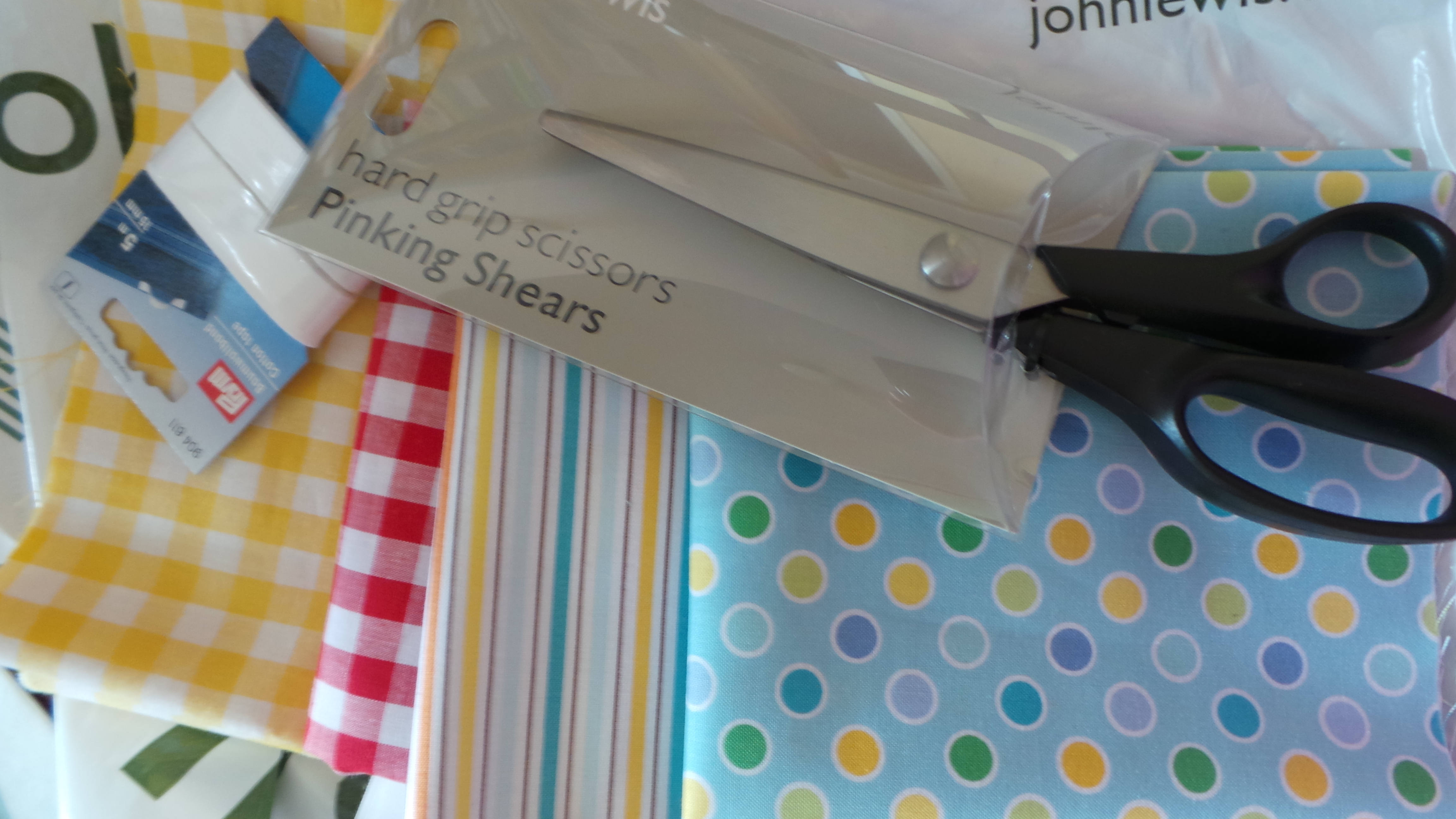
Can boys learn to dress-make?
Yes! they can.
carefully fabricated!
This afternoon I am visiting my elderly mother who is very poorly in hospital …
Meanwhile I am preparing to visit my daughter and her family in a week or two. I intend to give my grandsons their first ‘dressmaking’ lesson.
Both these events require a degree of preparation; emotionally, mentally and physically. I send good wishes to all those who also spend weekends preparing and planning ‘stuff’
Friday Library Snapshot …


I am a fool for Alphabet books I have a small collection. They never cease to amaze me. I am compiling one of my own and it is surprisingly difficult; especially if one wants to keep to a theme.
When I found this one in the Reading Room to be returned to the archive store; I laughed out loud. This is outrageous behaviour is not encouraged, so I had to stifle my giggles until later when I was alone.
Bertrand Russell believed that this book supplies a ‘lacuna’ which has long disgraced our education system’ he recommends it should be experienced in the ‘earlier stages of the pedagogical process’ as an ABC; it is the gateway to all wisdom and should be ‘adopted in scholastic institutions’
He say also of those who have read it, some have thought it wise, some foolish, others subversive … but all have gone on to have an ‘impeccable knowledge of the alphabet’.
… for me I am glad to hear that ‘nincompoop’ is a real word!
The good citizen’s alphabet by Bertrand Russell drawings by Franciszka Themerson 1989
Alphabe Thursday … I is for Indigo


The production of indigo dates back to beyond classical times. The word ‘indigo’ comes from the Greek indikon, latinised indicum, meaning the substance from India; showing that indigo pigment was imported into the Graeco-Roman world.
The Sanskrit word nila, meaning dark blue, spread from India eastwards into Southwest Asia and westwards to the Near and Middle East, probably both through pre-Islamic trading routes and later during the Islamic era.
The Arabs conveyed their word nil, or an-nil (with the definite article), further west in the course of their conquests across northern Africa and into southern Spain. Soon the Spanish and Portuguese transmitted the words anil and anilera to Central and South America in the sixteenth century. During the reign of Queen Elizabeth I, a British Act of Parliament referred to indigo and nele, alias blew Inde, while European travellers’ and merchants’ report interchange neel/anyle with indico. In the seventeenth century indigo became the common name, but indigo’s etymological history survives into modern times with the word ‘aniline’ so called because indigo formed the basis of dyes when chemically synthesised.
Aniline is an oily liquid compound, colourless when pure. It was isolated in 1826 by distilling natural indigo with lime and discovered in coal tar in 1834. In 1841 it was discovered that it could be obtained by heating caustic potash with indigo and then it received its name as suggested from the Sanskrit nila and Arabic an-nil. In 1856 William Henry Perkins revolutionised the dyeing industry by using aniline to produce the first synthetic dye ‘mauveine.’ Obtained from coal tar derivatives it provides the chemical base of many modern synthetic dyes.
Indigo a strong blue dye produced largely from the leaves of the Indigofera tinctoria; it has been extracted from an estimated forty plant species worldwide. The term anil was wisely used for many indigo plants.
The dye is produced as a powder or a cake by a lengthy process of steeping and stirring. To apply the dye to cloth indigo must be rendered soluble in an alkaline liquid containing a reducing agent. This process of ‘reduction dyeing’ is called vatting and in this state the indigo transforms to a ‘white’ form. Dyeing is carried out in the ‘white’ vat liquid and, after dying , is converted back to blue state by exposure to atmospheric oxygen. The colourant in indigo is the same as that in woad.
Further reading Dyeing and dyestuffs by Su Grierson
Indigo by Jenny Balfour-Paul

Wednesday Wisdom …
For some time you know I have struggled with the word ‘wisdom’ and its application to particular women. Most women including myself would not always be comfortable with being called ‘wise’ because most of the time our actions are from necessity. Sometimes the need is increased when faced with adversity and protecting our young charges. There are women who have run out of peaceful ways to defend their already meagre rights. Women like the suffragettes and those tied into the cruel slave trade who had to result to militant behaviour. Long before we had organisations like Amnesty International to wield a more hefty but peaceful arm of the law.
In the light of my attitude to women and also my interest in illustration my daughter sent me this image from a magazine she discovered this week.

As you know my daughter lives in a favela in Rio de Janeiro. As an outsider I have to deal with the propaganda that comes my way and temper it to the truthful stance my daughter and her partner hold or the facts I too am learning. ‘People’ without such information can chuck out well meaning but nonetheless thoughtless half-truths from the media and say things like ‘Why do I allow my daughter to live in such an unsafe place?’ etc.etc. They question as I do my ‘wisdom’
So with this cockeyed view I look at this picture and suggest that this image could reflect the anguish of citizens in any city in the world at this moment.
I hope that the woman brandishing the guitar is wise and will contemplate before she strikes anyone and in my heart I believe she will … because she wants her children to be safe and happy and she will do what needs to be done.
Weekly Photo Challenge … Golden Hour
I have not heard of the golden hour and its relationship to the coming and going of the sun. I only associated its going with lighting up time and end of the day. Even though I wake just about sunrise there is never any real significance beyond ‘its morning.’
I have of course some romantic connections with the sun and its going down. For instance I can remember during family holidays in Cornwall, the most westerly point of England watching a huge golden globe dip into the Atlantic Ocean and the chill breeze from the sea almost immediately after. Also, in southwest Turkey sitting on the rocks; in the warm air, rich in the perfume of sage and pine seeing the rosy mass slide into the turquoise Mediterranean Sea; welcoming the cool breeze that followed.
More recently while in Rio, strolling along the beach at Ipanema where the holiday makers gather on the beach every day at sundown facing westward and giving a standing ovation to the sun as she drops like a mighty fire-stone into the Atlantic Ocean this time the darkness didn’t bring a night chill.
However for the prompt I did some research as regards the so called golden hour. While my images are only the result of one evening and the following morning and may not be considered valid; there is a degree of gold-ness even those taken from my back garden as the sun came up over the Thames Valley. I smiled at the Egyptian Goose or Duck as it bared its bronzed chest eastwards to catch the sun’s warm rays.


Yesterday I …


A little after 5 am yesterday morning I rolled of bed wearing; as described previously, PJs that can be compared favourably with day clothes. Sadly, a time saving strategy would be shoes that could be worn in bed for a quick getaway. This perhaps is not such a pretty option. So I found quick pull on pumps, drink, camera, front door key … sorted!
Not long into the stroll I had my first disappointment. I am always up very early, reading, yoga or doing my blog. Each morning I hear pigeons, magpies and crows. The pigeons and magpies I know roost in the sycamores behind our house. The crows I imagined made their ‘noise’ in some distant pine grove. I say distant because it sounds vaguely romantic and almost believable. Really, I have no idea until this morning when I saw the noisy blighter cawing from a TV aerial just out of view of my bedroom window; this spoiled my dream a bit.
Nonetheless the walk unfolded nicely as the sun came up; bright and warming the cool air. There was no breeze and the woodland perfume didn’t fail to delight.
Strangely this week, the summer flowers that had bloomed in swathes now were almost faded . and the seeds were beginning to ripen after a few days of hot sun. The grass seed heads were glinting gold in the rising sun.
I was sad that we had missed so much of the spring nd early summer to such inclement weather. Maybe that was number two disappointment. However, the herbaceous border in the Harris garden quickly raised my spirits; the swags and bags of dramatic glory didn’t show any signs of fading. Even the sweet peas by the potting shed paled in comparison But, their perfume was perfection.
This was a pleasant interlude as I head off towards the lake and home. On the bank the Canada geese are beginning to move; some nibbling at the tender dew moistened grass shoots before dropping into the glassy pool and glide off. Not before grumbling at me in case I came too near their very precious brood. (which incidentally is a record 31 this year)
They need not have worried, after negotiating a few puddles of ‘droppings’ I had grown tired of nature and was heading back for a cup of tea.
 Coat Hanger Doll's House