Alphabe Thursday N is for Paul Nash and Nonesuch Press


Oh dear, I had problems with ‘N’ last time around and was beginning to worry that maybe I would not have an entry. However I needn’t have worried; help was at hand. I am as you know interested in illustrating and illustrators and small private publishers. So this week entry fits the bill nicely.
Paul Nash (1889-1946) was one of the most outstanding British artists of the 20th century. He was an official war artist in both World Wars. His knowledge of European avant-garde movements and his links with other artists and writers placed him in the forefront of the Modern Movement in Britain.
Meanwhile this and his love of the mystical the English and his strong connection with Samuel Palmer and the Pre- Raphaelites proved to be a rich combination. This would be contradiction found expression in oils, watercolour and wood engraving kept him busy as a painter within the figurative tradition.
His interest in the abstract form and modern materials found their way into designs, for book jackets, textiles, ceramics and glass.
He taught at the Royal college of art in the 1920s, and Bawden, Ravilious and Enid Marx were among his students.
We have in our collections a book illustrated by Paul Nash and published by Nonsuch Publishers; which was a private press founded in 1922 in London by Francis Meynell, his wife Vera and David Garnett.
Although Meynell didn’t have any particular interest in printing during his schooldays he did receive excellent training from his father Wilfrid Meynell (1852-1848) who was responsible for the Westminster Press, a London printing house where according to Francis the style of typography and care of detail exceeded that of any other commercial press of the time.
Francis Meynell’s progression from his abandoned studies at Trinity College Dublin to founding Nonsuch is a good read; almost cinematic!
The Nonesuch Press thrived in the 1920s and 1930s and remained busy until 1960s. It was quite different from other private presses, because it used a small hand press to design the books, but then sent them to a commercial publisher to be printed. This method ensured that the result had the appearance of a well designed book for a wider audience at reduced costs. Meynell believed that the ‘mechanical’ means justified the fine end, he goes on to say that ‘the production of well designed and produced books was not the preserve of private presses such as William Morris’s Kelmscott Press who often expounded the virtues of the hand-pressed book.

A woman on Wednesday


Last week I spoke about how Rose Mead had influenced Sybil Andrews; and she, is indeed worth a mention this week before going on with Sybil when I return from my holiday. Rose Mead (1867-1947) was a born in Bury St Edmunds. Although, she was primarily a portrait painter exhibiting often in the Royal Academy Summer Show; she also work in other fields such as landscapes, still lifes and flower studies using oil on canvas and watercolour on paper. I understand that she also was a costume designer but I have no reference to this.
Rose Mead did not begin any formal artistic lessons until she was 20, when she attended Lincoln School of Art. In 1892 she left there to study at the Westminster School of Art Her teacher was Frederick Brown; soon after this be became a Professor at the Slade School of Fine art.
During this time she painted a self portrait as she was cooking at a stove. A company who made similar cookers offered her a considerable sum to add their name to the work of art she refused not wishing she explained ‘ to prostitute’ her art.
Sadly her time at Westminster was cut short as her father was unwell; so she returned to Bury St Edmunds to nurse him until he died.
After this she studied under Auguste-Joseph Delecluse in Paris. In 1897 Rose Mead returned to Bury St Edmunds and did not leave again except for a rare holiday. She nursed her mother until her death in 1919. To make a living she painted pictures commissioned by local dignitaries. She also took every opportunity to persuade local girls sitters/posers not to get married; instead urged them to find a career.
It is said that Rose Mead didn’t achieve the promise shown at the start of her career; because she had taken extended career breaks when her parents had needed care. She didn’t resume her practice until she was 52; and she was found dead at the bottom of her stairs aged 78.
Weekly photo challenge … Carefree
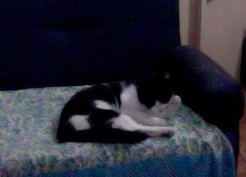
Mmmm … another difficult prompt; in the light of the recent ‘foreshadow’ I wonder what image can really project ‘carefreeness’. I, for instance can spy a ‘carefree’ moment and as sure as eggs are eggs, I am without a camera. Or, with a camera I grab the moment and walk into a lamp post.
So, I am using an image sent to me on Friday by my daughter; not a work of art, but conveniently and in a perfect carefree pose … and with no harm to me.
My daughter lives as you know in a Favela in Rio de Janeiro. Her home is not likely to feature in ‘Your house has style’ but it is a wonderful and happy home.
However, like any young person, nearby or abroad setting up a home, she has had her teething problems. Some more easily remedied than others. Poor girl, emails me with her latest tale of woe; I am not sure if she requires help or just an opportunity to unload.
As I said, her plight is not unusual, I too have set up home and even in the most comfortable surroundings things go wrong in quick succession. So my most well used retort is ‘I know’ a quote from Sybil, the long suffering wife of Basil in Fawlty Towers.
However, her most recent problem, that even she is familiar with since living in some dodgy student accommodation, is an unwelcome visitor, with unpleasant habits. My daughter and her partner have gone to great lengths to ensure it doesn’t return.
Meanwhile they have had another visitor; rather larger and better cared for than the last. The jury is out as regards its habits, so far they have been purely social; dropping by for a snack, a doze and a wash. Making him more welcome than the other visitor is discriminatory; and a bad move in my opinion. Nonetheless, later he wanders off to find another gullible fool … without a care!

Monday …


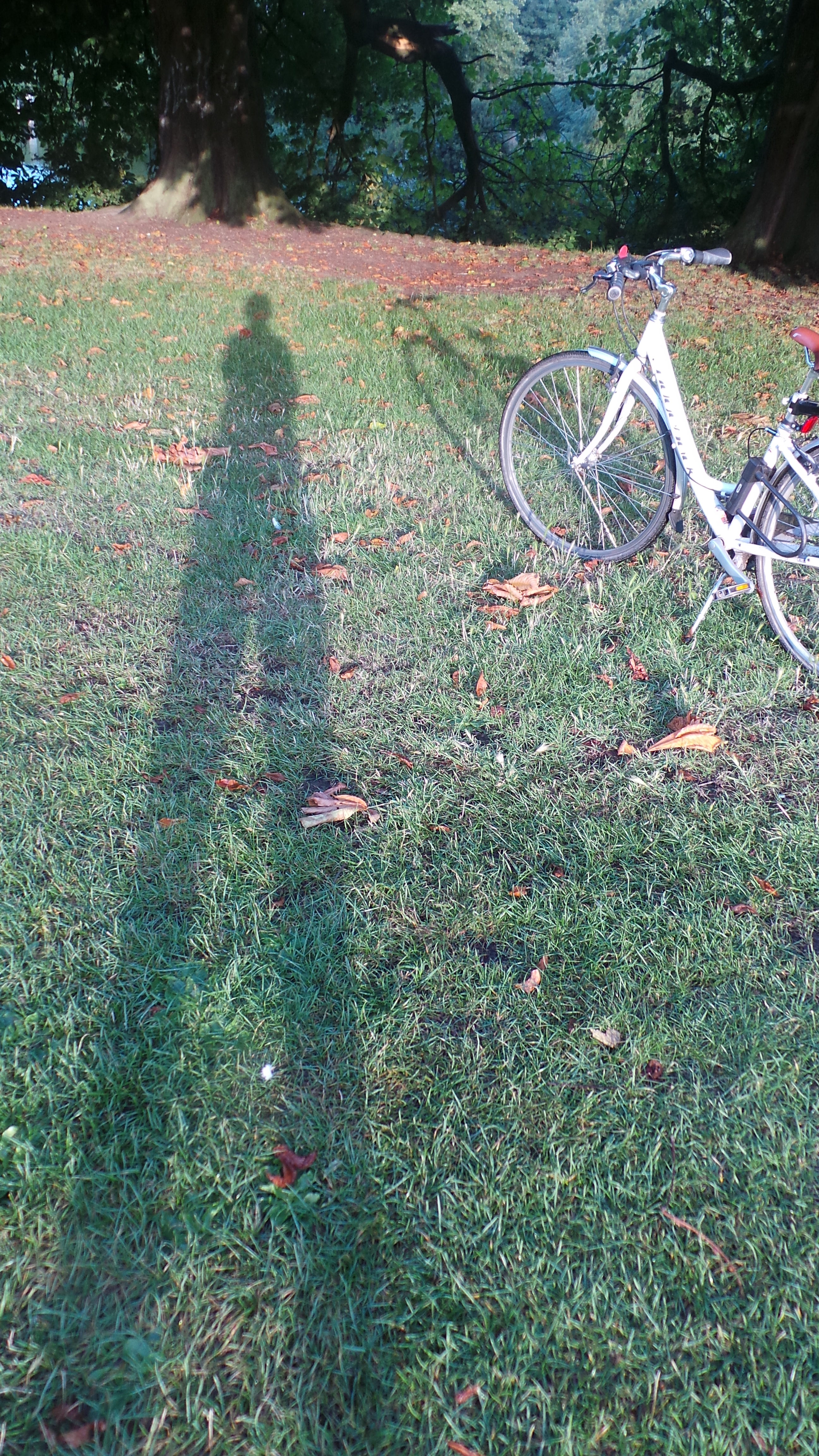
Yesterday’s walk began in darkness; I wondered if it would be the last of my Sunday morning strolls. Although it was not raining it felt as though it might soon. However, within the hour the sun was up and the cloud dispersed. I extended my walk a little further by cycling to where the Thames meets the River Kennet and walked along the towpath to Caversham. I have cycled this route often as it is a quick way from North Reading to East Reading where I live. So it was nice to wander and enjoy the space. Although even at 6 in the morning, it seem, a few others had the same idea. Still there was a certain calm and freshness since the recent rain and I hoped that the ‘walks’ would continue for a week or two at least.
Silent Sunday …

Saturday grumble or not?


I ended last week bemoaning my inadequacies in the technical department. That remains pretty much unchanged. However, my Laptop problems have been solved; thanks to the god of computers and his loyal pupil. On my behalf I have downloaded iTunes and now ‘Home Sharing’ thanks to the the instructions of the above mentioned …
So the week proceeded quite nicely after that; with no reason to grumble. Until Thursday when I posted a piece about Milk; an innocuous post in relation to ‘M’ in the alphabet. No reason to moan except that I don’t like milk and the teacher forced me to drink it.
But it did set me wondering what happened to free school milk? ( I do know actually). But would it perhaps be a useful thing for a school in a deprived area to ‘opt’ for; where some some children are not being so well cared for at home. I KNOW this is just sticking plaster and the care of children will not be rectified by a cup of milk! But as a child of post war rationing and potentially malnourished even that little drop of milk helped when the last meal I had was perhaps a day away and the next not for a few hours.
Then the lost doorstep pinta; while the Supermarkets can have cheap milk, sugar and tea as a ‘lost leader’ in the far corner of the store … local dairies and shops are going out of business.
Oh dear what do I know about things?
Back to ‘blog land’ where all is rosy!
I enjoyed my post on Friday about Penguin Kings. They are lovely and we have the complete display at the library. They have been collected over the years, bought in second hand bookshops and some donated. They hardback and the size of Ladybird books, but with an illustrated jacket, stylish binding and sophisticated subject matter.
For instance Tulipomania took my fancy; I didn’t think there was so much to say about tulips; in my opinion inclined to be blousy. There are different types, colour, shapes and size. I was taken with a little geometric design from some Turkish fabric of the 17th century; thinking I might replicate the design in a stamp.
I haven’t quite master the geometrics and appear to have adopted the rather ‘blousey’ look …
Ah well back to drawing board.
Friday’s Library Snapshot
The first two King Penguin Book s; British Birds and the the Book of Roses were published in 1939 and sold for one shilling (5p). In 1959 due to rising production costs; the Sculpture of the Parthenon bought the series to an end.
Allen Lane inspired by illustrated works produced by the German publisher Insel, he said the aim of King Penguin is different. It was not to be connected with the public’s growing appreciation of art; but more to appeal to the general liking of illustrated keepsakes of special interest. Pursuing, niche subjects like the Bayeux Tapestry, Ballooning, a Book of lilies, etc.
It would seem that his vision was not unfounded; King Penguins remain very collectible and and readily available still at good prices


Alphabe Thursday … M is for Milk


I am not quite old enough to remember milk churns. But I do remember milk being delivered to our doorstep each day with double on Saturday so the milk man could have a lay in on Sunday.
Having said that I did not see a milkman and his traditional milk float until I was 10 years old and moved into a house and lived on dry land.
Until 1960 my family and I lived in a houseboat on the banks of the Hamble. The milk did of course deliver milk daily but left it in a box at the end of the lane where it met the river bank where many other boats were moored. We lived a little way away from the other boats; so my sisters and I were charged with the milk collecting duty everyday.
Milk featured in school life also; each morning a tiny bottle of milk was distributed among the pupils at my school.It tasted horrible; either warmed by the sun while left in the schoolyard or warmed by the stove if the milk man felt the need to bring it in while he warmed his hands in winter.
I have a dairy allergy now but as a child I loathed milk. The teacher with a haughty smile wanted us to believe that the milk was a gift from her and or from god and would stand over me until every drop was gone,
So while these images bring back some sunshine memories others are not good.
Wednesday’s Women of wisdom


Last week I spoke a little about Sybil Andrews; by the time she was twenty three she was already an accomplished artist and organised her first public show. The exhibition opened for a week and comprised of works by Andrews and Powers; some watercolours and pastels of local scenes. They may not have seemed particularly radical by today’s standards but in comparison with the work of some of their contemporaries for example Rose Mead (1867-1946) who painted similar views, there was a profound difference. Rose Mead was a local artist primarily a costume designer but also a watercolour artist painting and selling theatrical scenes. She encouraged young artists particularly Andrews, who said ‘she was kind and helpful in her early art struggle’.
Rose Mead was something of a feminist and particularly keen that young women should adopt a profession rather than becoming a housewife and mother. These strongly held views went a long way to influence the young woman already eager to become a professional artist.
The show was reviewed by a local newspaper reporter who said that the artists ‘belonged to a modern school of painting’ perhaps a little revolutionary and difficult for ordinary people to appreciate. He went on however, to praise the work for creating its own vision rather than attempting to record the scene; as with a camera. Suggesting that the artists present Bury and its environment in a ‘new guise, emphasising the beauties of lighting and composition’ not always realised by passersby.
Soon after the exhibition Andrews moved to a small village out of town, where she experienced the countryside, traditional farming with cart horses and hard labour that ruled people’s lives. These memories stayed with her long after she left Suffolk and showed up in her linocuts often.
With Power’s encouragement Andrews moved to London to advance her academic training. Here, living with her mother in Russell Square, she attended Heatherly’s School of Fine Art(1922) She worked hard and met William Kermode; a visiting tutor who taught her woodblock printing in black and white. Andrews immediately responded to the medium. For inspiration she turned to the the museums of London, where she found a wealth of powerful images, ancient and modern, Russian icons, Celtic art and the new poster designs of E. McKnight Kauffer etc.
Even after her year’s tuition and setting up her own studio Andrews continued to broaden her printing techniques.
Also to supplement her income she became a secretary at the newly established Grosvener School of Modern Art. It was here that she met Claude Flight (1881-1955) whose novel method of colour linocut was to provide Andrews with a vehicle for her self expression.
Flight was inspired by the work of the Italian Futurists; he was determined to reflect Man in the Machine Age that was to become the source of inspiration for the new British Linocut School.
Andrews already fascinated by rhythm, movement of machinery and the men involved in hard labour and similar subject matter included them in some of her best linocuts.
Weekly Photo Challenge … One Shot, Two Ways.
I live in a tiny house that overlooks a smaller garden; across which a strand of Tibetan Prayer flags straddle. They can be seen from the kitchen window but are also reflected in strategically placed mirrors and a glass kitchen cupboard. These flags of rainbow colours are used in Tibet to bring blessings to the neighbourhood. For me, I can hope that it does have some effect in my street; while being very pretty. However, more important they are a constant and gentle reminder of life and its fragility not just in Tibet but in the world in general.


 Coat Hanger Doll's House