Friday’s library snapshot …


I came across this little book of stories and wood cuts called Nursery lays of nursery days while research nursery rhymes and hoped to feature it on a Thursday but the opportunity didn’t come up. Instead, today seemed a good time. I know nothing of the author Madeleine Nightingale and Charles T. Nightingale who created the script and woodcuts.
If anyone can enlighten me I will be pleased.
Alphabe Thursday Q is for Queen of Hearts


On the morning after my 30 something wedding anniversary I discover I know nothing about this nursery rhyme. Only that dates back at least until 1782; when the poem was 4 stanzas long, dealing with each of the other suits … there is no explanation as why the other verses have ‘dropped off’.
I did find some nice images by Randolph Caldecott, so it is just as well.
The Queen of Hearts
She made some tarts,
All on a summer’s day:
The Knave of Hearts
He stole the tarts,
And took them clean away.
The King of Hearts
Called for the tarts,
And beat the knave full sore;
The Knave of Hearts
He bought back the tarts,
And vowed he’d steal no more.
Wednesday’s women engravers ….


Last week I spoke about Eliza Thompson, being part of a family of successful wood-engravers but being recognised severally. She was not alone, in the William Morris and Edward Bourne circle and those involved in the Arts and Crafts movement, and the revival of the art of wood engraving there were anonymous ladies illustrating books with black line images and wood cut prints. As seen in the illustrations above both designed by Edward Burne-Jones but engraved by women.
It would seem that women of the period were happy to support their fathers or husbands with technical support without pay and recognition.
It wasn’t until much later in the 19th century when women emerged as notable artist-engravers …
Weekly photo challenge … adventure


This might not look like an adventure; but believe me it is. I have always enjoyed art but I gave it up seriously when I was not prepared to explore the life of an artist and took up a more comfortable career.
So when I decided to returned to up my childhood dream, it did seem like an adventure. Buying paper and paints was like eating forbidden fruit. When I started printmaking a step away from drawing and painting it was even more exciting.
While I was in Brazil I was given the opportunity to try wood cutting. Although it is much like lino cutting and wood engraving there are some differences that proved to be a challenge.
Print makers in Brazil make use of reclaimed wood; such a school desks made of Canela Wood (cinnamon)
I was given a little pile of materials one is canela but the others are unknown. My next step is to learn a little more about them and prepare them for engraving.
The tools the engravers use in Brazil are fairly traditional but some are made of recycled materials like umbrella spokes. Also, the paper and ink are affected by the climate in Brazil so care has to taken when using them. While I don’t have these problems here in UK; I do have a lot to learn and it does have a feel of an adventure into unknown territory.
Last week I …
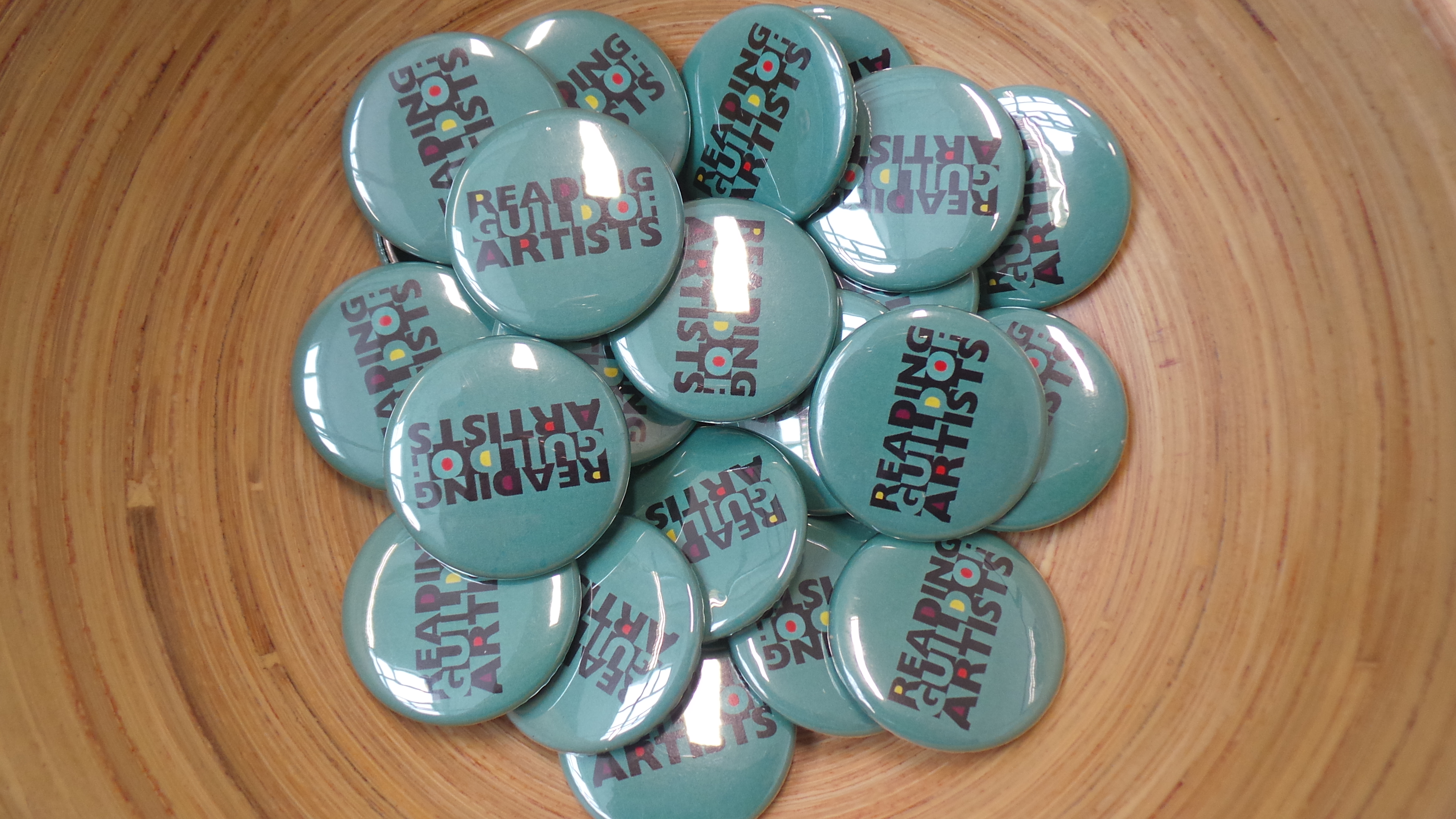
Last week I helped out at a local Art Show. I recently joined the Reading Guild of Artists and am keen to become a part of the local artists who meet at the University, where I work.
This seemed like a good way to begin and it was. I was invited to the opening night, where I could wander around the exhibits and meet other members with a glass of wine.
Then at the weekend I did a stint at ‘front of house’ welcoming visitors and directing them to the works.
I am not yet an exhibiting member but I hope that soon I will have a portfolio and opportunity to show my work in a year or so.
Silent Sunday


Saturday … Fish?
Well! it has been a good week; I have much to be grateful for. My ‘day off was a joy’ especially as I found time to have my nails painted. Monday evening, I began [an] oil painting. The previous lesson I spent by the Thames making preliminary sketches that could be used for future works.
I began to think about fish and how they might appear on paper, as they were undoubtedly, unseen lurking in the shadows. I went on to consider how one paints a fish in ‘life.’ Unless, I put a few dead ones on a plate? The thoughts ended.
But the week progressed; almost forgetting I had a haircut. Funny, how the regular hairdressing has continued as the hair has now become almost nonexistent and even more strange the pleasant effect after also remains unchanged.
On Wednesday I attended the opening night of the Reading Guild of Artists’ September Show, which was a wonderful event (to be discussed later) It was another first for me in many ways but mainly without or very little hair, my nicely coiffeured tuft had, sadly already gone. It was not easy, especially as my beautifully manicured nails were a little worse for wear after my oil painting lesson.
Nonetheless it was a good week … some imagined fish while the masterpiece in oil remains in progress!


Friday’s Snapshot from the library …
These snapshots really are glimpses of my work in Special Collections; little joys in the my day. First a jacket separated from it’s book reading to be repaired and reunited. Then a pamphlet one of many I am classifying in the Mark Longman Library. The content is fairly ordinary but the design on the cover, of the Roman ‘ten’ by Lynton Lamb is a delight.


Alphabe Thursday P is for Peter Piper

Peter Piper picked a peck of pickled pepper:
A peck of pickled pepper Peter Piper picked;
If Peter Piper picked a peck of pickled pepper;
Where’s the peck of pickled pepper pick?
I come from Hampshire where the accent is slurred and lazy; we would drop ‘H’ and do not sound our consonants. Our teachers and my mother were strict about pronunciation and would make us recite this tongue twister when we dropped into lazy language.
Pupils in drama school too would use the poem as an exercise in articulation and rather cruelly the teacher would insist they added ‘off a pewter plate’ at the end of each line . You could be sure they were speaking the Queen’s English after that!
The practice is not new. In the Literary Leisure, or the recreations of Solomon Saunter (1802), the satirist Hewson Clarke (b. 1787) said that ‘Peter Piper was a particular favourite with me’ , should be rehearsed ‘three times without drawing a breath’ which ‘renders it an useful lesson in the art of elocution’.
I have heard that in Our village Mary Russell Mitford (1787 – 1855) remembers how her French mistress insisted that they translated Peter Piper into Gallic’ Now that is cruel!

Wednesday’s woman Engraver


According to Patricia Jaffe in Woman Engravers, one female name to come to the fore early in the 19th century in the history of wood engraving was Eliza Thompson. She was not a pupil of the Female School of Design but the daughter of the famous John Thompson (1785–1866). Who was an an artist and wood engraver and noted for his illustrations in William Yarrell’s History of British Birds. John Thompson taught his sons and daughter and she undoubtedly helped her father on commissions. Some of the illustrations in the Yarrell’s book are inscribed with ‘T. DEL.ET.SC. this suggests that all the family members were involved with the work. In the preface Yarrell only thanks John Thompson and his sons; Eliza seems to have gone off the radar.
Apparently several of the pretty vignettes have the monogram that appears to be that of John Thompson but they could easily been her works and they are indeed quite a different style to the birds.
But Patricia Jaffe only speculates … but I like the idea!
Further reading Woman Engravers by Patricia Jaffe.
 Coat Hanger Doll's House