Be careful what you pray for …

I have had a very busy summer, particularly when I took my studio from home and Jelly Reading to reside in the Turbine House at Blakes Lock in the town centre. I had been planning it for many months understanding that a residency means … just that. I had to up every stick of my practice and take it to a redundant Turbine House, on the edge of and extending over a furious weir on the Kennet and Avon Canal. Here I lived and worked from 10am ‘til 6pm for 7 days. There was no plumbing or living accommodation, so I went home each night. It was a most extraordinary experience and beyond explanation. I hope the results of which will be revealed next spring when I return. As I said, I was prepared with 13 characters and the bones of a story, but I wasn’t confident that my skills would portray them fully. The story was far too bony and my skills negligible. In my trepidation I gazed into the seemingly purposeful waves of the weir and prayed …
The Turbine House is a museum and open to the public and popular with sightseers especially during the school holidays. So, while I pleaded for inspiration, I got visitors, not exactly what I needed but they proved to be my saving grace. Especially ‘the man with a camera’ about whom I will talk more fully later, he, like the interested visitors kindly prodded and poked exposing my raw unknowingness. Providing vital questions that while I was able to answer immediately (because I was somewhat prepared) but more importantly I was able to address them more fully later and since, when time and space allowed. I was able to imagine and write more complex stories for my flawed yet well intentioned dolls, or superheroes as they had become in my stories and little films in their home beside the canal where it mets the Thames.
Being an artist-in-residence …

Next week I take up an artist’s residency for a week in the Turbine Room, at Blakes Lock. A very challenging opportunity in more ways than one. Being an artist is one thing. Transporting my studio from home and my space at The Jelly at first looks straight forward but may be tortuous as regards its volume and transport across town. I am organised so hope I won’t forget the vital mechanics or items of structure. The dolls are ready to go but the other materials I require are another kettle of fish. I will be in situ from 10 until 6, for 7 days that requires a lot of useful equipment to fill the time between visitors and filmmaking and is proving a logistical nightmare. It is the ‘residency’ bit and my personal requirements is bag of worms … a poor metaphor. I will be going home at 6 o’clock but I function best with regular meals and while I am sure the Bel and Dragon nearby has a menu of delights it will be expensive and not compatible with my particular diet. Liquid refreshment is important too, but I only drink Chinese tea until gin o’clock and that needs careful brewing. So, each day I will be bring a hamper of goodies to sustain me fully until a gin and tonic at home time.
Meanwhile, due a medical condition, visits to WC are frequent and not always planned and often urgent. Therefore, being out of my comfort zone takes on another meaning and requires decisive action. Transporting all home facilities is not an option, nonetheless after years of experience of this malady, I have learned to cope.
On a lighter note … there is my apparel, I won’t be dragging my wardrobe on the bus that won’t be required. However, those who know me will understand, even with all the previous mentioned constraints, my outfits including hats and shoes with have to ready for all weather and all eventualities and considered as carefully as those for my dolls.
So while being an artist-in-residence seemed and remains a good idea there is so much more to think about …
… new beginning …
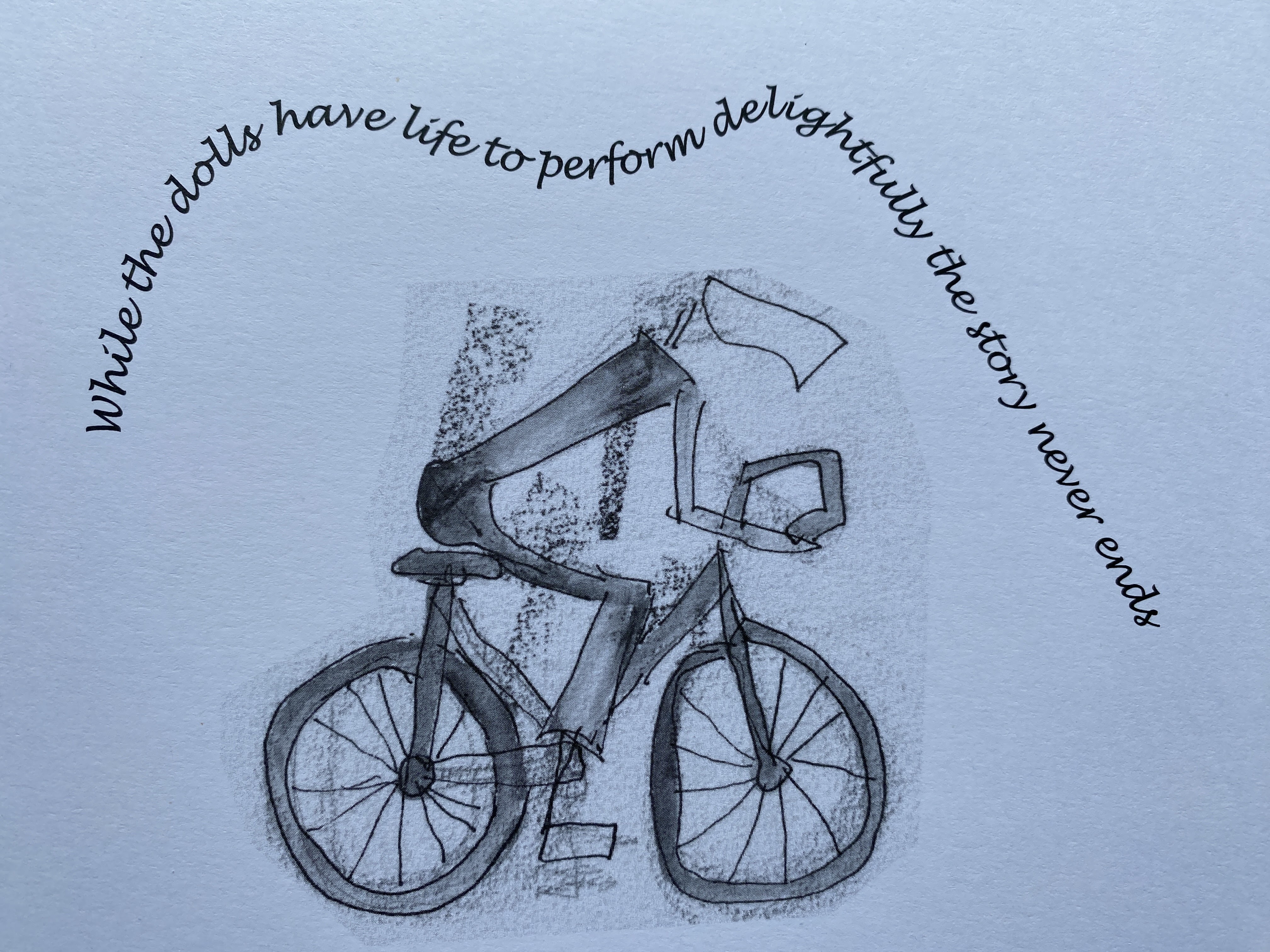
Yesterday I received my books, from the publisher who had very recently received them from the printer, bound and beautifully presented. This delightful event, shared with friends, marked the end of 6 month long and steep curve of drawing, poem writing and learning to design a book. However, that joy, pales into insignificance when I consider the lifetime’s experience enveloped in this little wire bound booklet so it marks the beginning and not the end ….
All is not lost …

For a few weeks I have be unwell, both mentally and physically and having to undergo tests and some treatment. Sadly, the medication for depression I have been taking previous to this recent malady has become ineffective and due to the other condition (s) changing that is not an option.
For some this may be a little too much information but my friends I hope will understand.
I have tried to continue my creative journey although that has somewhat thwarted. I have cancelled my part in a group venture planned for September/ October this year.
However, on the plus side I have managed with help to ‘write’ an illustrated poetry book that is currently being published. Furthermore, I have been invited with a friend and filmmaker to take up an art residency in the Turbine Room in Reading for a week. While this is happening very soon the plans are not fully made. I am hoping it will evolve into a beautiful event that will sooth my trouble soul and strengthen my resolve for the rest of my journey and whatever that entails.
Hilda …
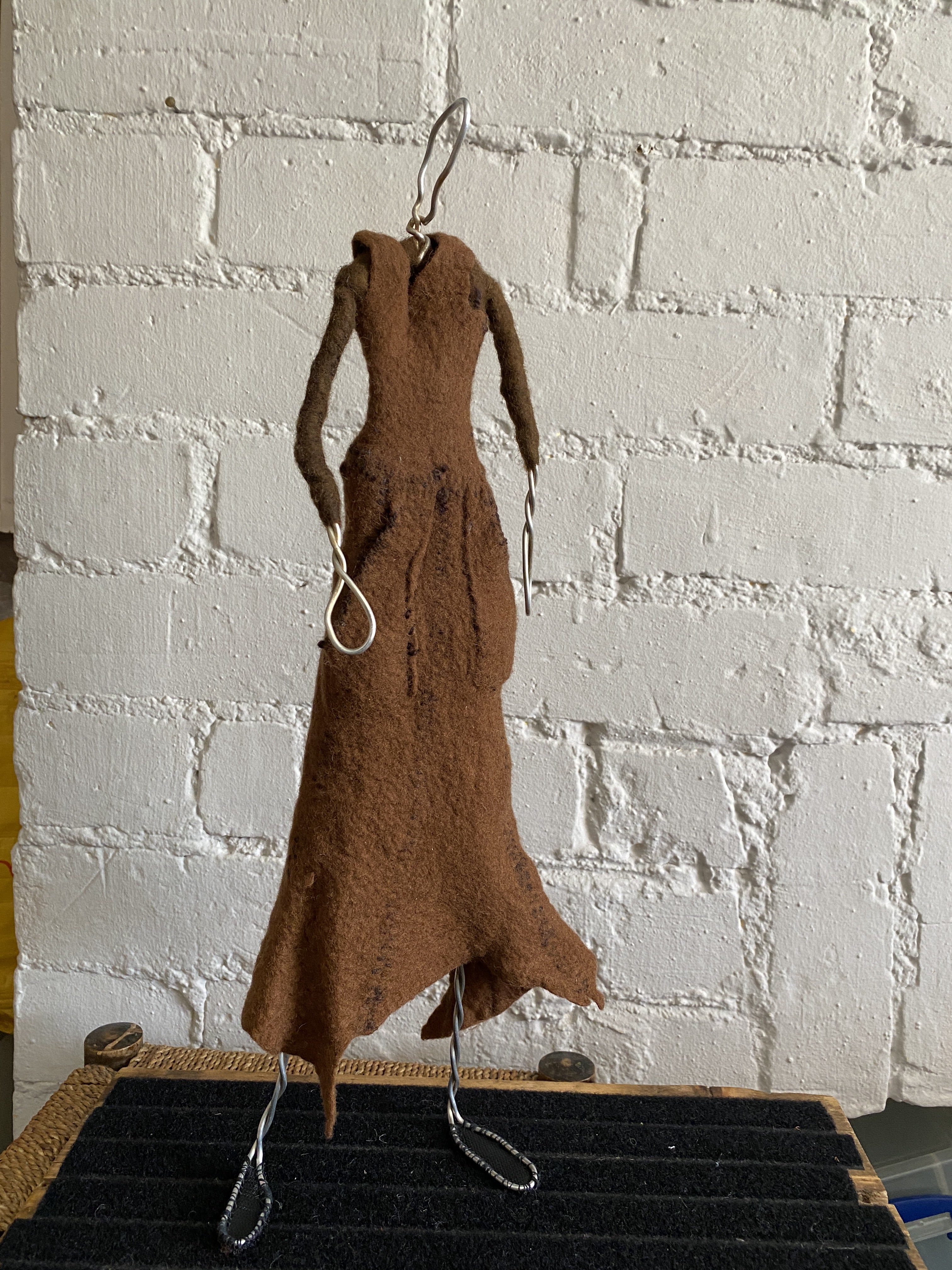
Hilda is Bea’s 5th daughter and lives with her paternal granny in a tenement building on the north bank of the Kennet opposite Blakes Quay. Although it is far from comfortable, it is convenient to her workplace in Hosier Street in the town centre. Hilda now 16 is one of a twin, her brother was still born, and she dearly misses her sibling. Becoming increasing withdrawn and uncomfortable in the busy home and constant reminders, she moved in with her granny and her uncle who were both too old and unfit for farmwork and no longer entitled to a tied cottage, when council or social housing was not yet available, had to find rooms elsewhere.
In cramped conditions without sanitation and shared cooking facilities it seems no more comfortable than her home, but she was able to look after her granny who was still well enough to undertake small mending tasks for her neighbours and earn a few pence. Her uncle, who was badly injured in a farming accident, after having a leg amputated, he could no longer plough the fields. He was able to earn enough for his tobacco and a beer or two by helping at the wharf.
The three of them were reliant on the money that Hilda earned at a stocking shop in Hosier Street. Here she is a trainee, and her main task is to repair stockings. Her customers are quite different from those she grew up with and those she shared her home with now. In the country not everyone had a pair of shoes and those who did, the shoes were ‘hand me downs’ Hilda has worked every day since she was 6 years old like her sisters and brothers to save for a pair of shoes, that she expected them last a very long time during that time taking them to a cobbler for repair when necessary and after passing them to someone else less fortunate. In the town, shoes and hosiery were seen as requirement for safety and protection not fashion. Her customers on the other hand were landed gentry and the new rich, who followed the latest trends and wished to be seen and considered entitled, were constant visitors to the parade of shops that stocked the latest fashion from the city.
Fortunately, Hilda with skills learned from her granny was able find employment that would give her opportunities that she would not find in the country nonetheless town life was harsh and unstable and not as she envisaged. Yet, in the shop she got a glimpse of a different life.
In the quiet of the mending room Hilda would have conversations with her lost brother, some with tears and some laughter that go a long way to soothe her troubled soul.
All things considered …

When I started making my dolls 2 or 3 years back before I had any idea of the direction, I was taking, wire and felt sculpture was all I considered. With hindsight I perhaps should have experimented a bit more with other materials, I blundered through with no inkling as regards their use beyond fun to make and nice to look at. Animation came later but still with the knowledge of no-knowledge, blissful ignorance, that, and dogged enjoyment I suppose.
I don’t regret this part of it, more I celebrate my passion to the dolls and determination that they will perform no matter that they are not suited to the technical side of theatre.
Nonetheless, there are times of frustration when a doll’s frock is so heavy, she falls over or her hat doesn’t stay put, I wish I had considered crochet or campanology what ever that is … but on the other hand when this little charmer appears it is all worthwhile.
always need some embroidery
For a while it has seemed as if I had lost the plot in a world that has gone bonkers. Perhaps it has, but my self-absorption and grumbling does not change a thing. So, after a short break and holiday I have decided to get back on track. Not sure where I am going but with one step after the other … I will find myself somewhere.
My ongoing project, about a fictional village by the Thames near Reading has not changed, moreover it has become an event and gathered momentum. Subsequently, I am required to do some embroidery. Although I am inclined to do some fancy stitchwork, embroidery is a metaphor for poetic embellishment. This work in progress is set in old rural Britain. I am no historian or poet so fact and fiction will undoubtedly get muddled and messy and for me this adds to the delight.
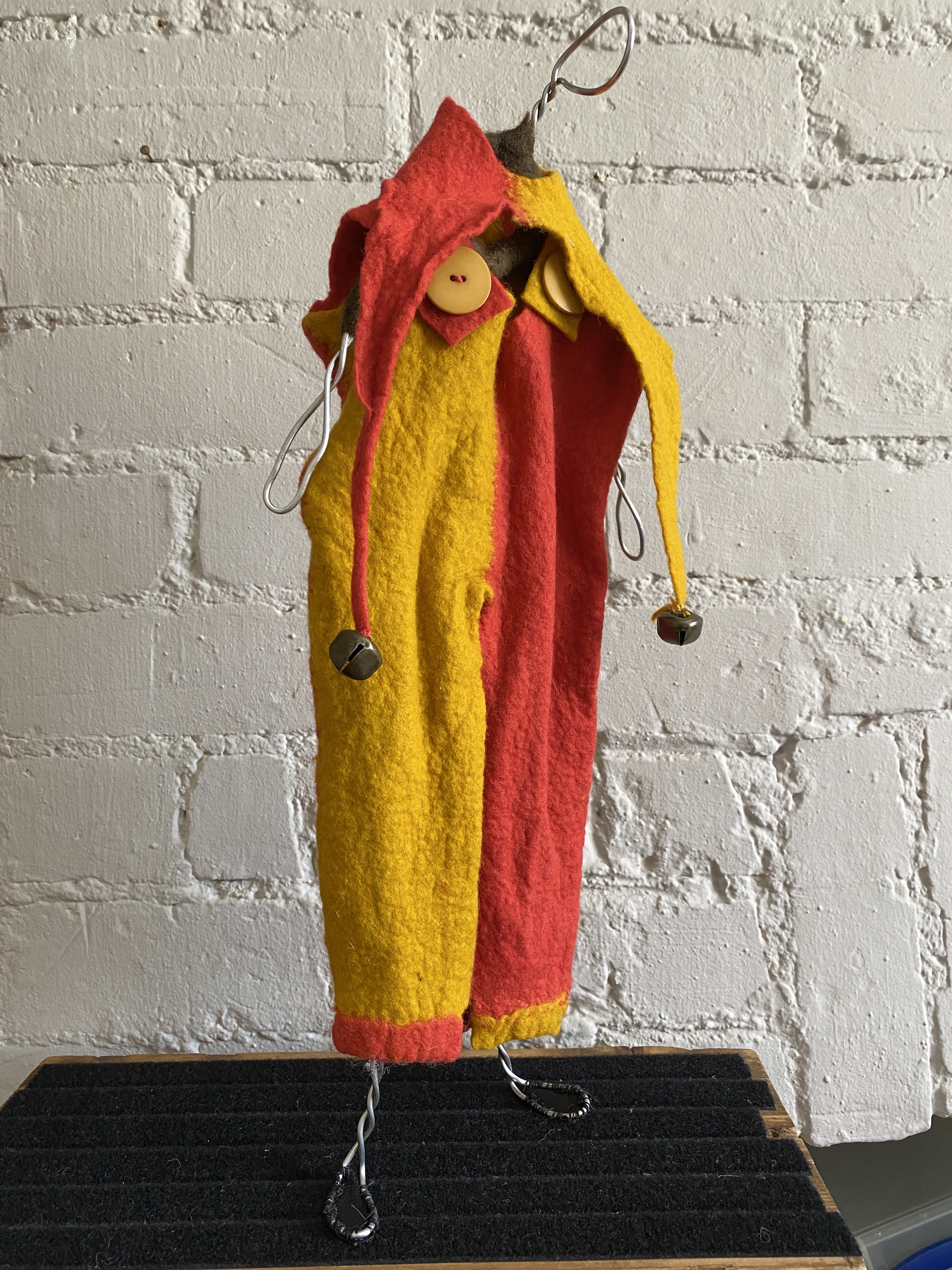
I have already spoken about some of the villagers and in time, with said embroidery they will become more colourful and of course animated. However, this character needs little adornment as he is a Jester often seen at ancient rural events having fun brandishing an inflated pig’s bladder on a stick and jingling his bells … as seen in Pieter Bruegel’s paintings during the 1500s, at a time when the impoverished community had little to celebrate. No change there then.
a minor detour …

As I grow older, I find time passes more quickly and this perception it seems is normal but for me no less perplexing. It only seems a few months ago since I retired. It was a time I looked forward to, having opportunity to enjoy the things I had put aside while working full time and bringing up my family. Instead in 2017 I found myself depressed and apparently without purpose. Until that is when I found my function and on the path of creativity and filling my time and space with projects, some super challenging and others less so. I undertook workshops, further education and created work for exhibitions. Time was well spent and fun for the most part. I didn’t always tidy up after myself thoroughly, it was enough to enjoy the good part. Managing the aftermath was not my priority, looking forward and the next task was my aim.
Until that is I discovered some of my precious dolls had been eaten ferociously by moths. While this disaster was soon overcome by thorough cleaning and destruction, followed by measures to ensure they didn’t come back and for a while it was business as usual.
But no so fast, the upheaval did highlight my relaxed attitude to clutter and reluctance to let go of stuff when it no longer served a purpose. This accumulation area of ‘no go’ except for unwanted creatures, who liked evidently, dark, warm, and enclosed areas to do what moths do. So, looking differently at the stuff as it languished uncared for on my shelves, I decided to set them and myself free.
Each shelf, cupboard and hiding area was liberated of unwanted equipment and material and I needed nerves of steel, while it was redundant it was stuff that had bought me ups and downs but ultimately to this place!
Each day I declutter allocating to various charitable organisations and friends. The shelves are less crowded and more importantly my mind is clearer. I don’t need stacks of redundant art materials I want time and space.
Also don’t want to leave my home for my children to declutter perhaps less kindly and who would blame them!
Introducing Tulip

As early as the 11th century London was an international port, goods came to and from lands across the sea. Markets like Cheapside, Smithfield and Billingsgate were in existence. Wool became an important commodity from late Saxon times traveling down the Thames to London and then to the continent. Then into the Middle Ages malt, grain, and timber, then into 1800s metals, manufactured goods and even cheese was passing through ‘my’ imagined village near Reading down the canal and river. Coming up the river and continuing north or turning west along the Kennet and Avon canal to Bath and Bristol were cargos of sugar, coal, tobacco, rum, cotton, dyes, tea, and mahogany etc. Much from Africa and India and some less far and less exotic, fertilizer for the growing market gardens that had moved out of the city. The fertiliser was made from human waste that had been treated so that it be handled and spread on the soil to encourage fruit, flowers, and vegetables to grow and flourish for home and foreign market. It was a by product of the industry that was created to clean the streets and the river of London that become badly polluted.
In my story the Shepherd had a younger brother who owned a cart, a valued tool that proved to be a vital part of his business and that of the community. He and the cart would often be found on the towpath or at the Quay Side near the lock where the Canal met the Thames, unloading goods to be delivered to local industries like the biscuit factory or brewery from the barges and narrow boats that were coming and going to London, Bath, Bristol or Lechlade.
It was here that the Carter met Tulip. He learned later that she had ‘history’ her father was a lighterman in the docks in London and may or not been involved in smuggling and Tulip had been unfairly implicated so escaped up river to find work and lodgings.
Lightermen were considered the most characteristic groups of workers in the docks. Lighters were flat bottomed vessels that were used to transport goods from the ships moored in the middle of the river. It was an extremely skilled job. While the lighter was unpowered the lighterman had to rely on his intimate knowledge of the river, its tides and currents and it demanded muscle power and paddles for steering. However, with all this experience the working conditions were as poor as the wages. So, it is little wonder that a father who had to a large family to provide for might take risks that may lead to imprisonment. Tulip was working in Covent Garden Market, now on the run and needed work and a home. The man with a cart had recently been widowed and was looking for a carer for his young family and the rest is history. Tulip, whose name refers to the flowers or at the least the bulbs that came from Holland bound for the market and gardens in and around London and along the Thames to Sutton Seeds that was founded on 1806. She was a good girl but not used to country life. She had the ideals of a city girl and didn’t take kindly to rural ways and traditions. Nonetheless, she bought colour to the somewhat drab surroundings and her stories of the big city, market and dockland were enjoyed by those who took the time to listen.
the post girl …
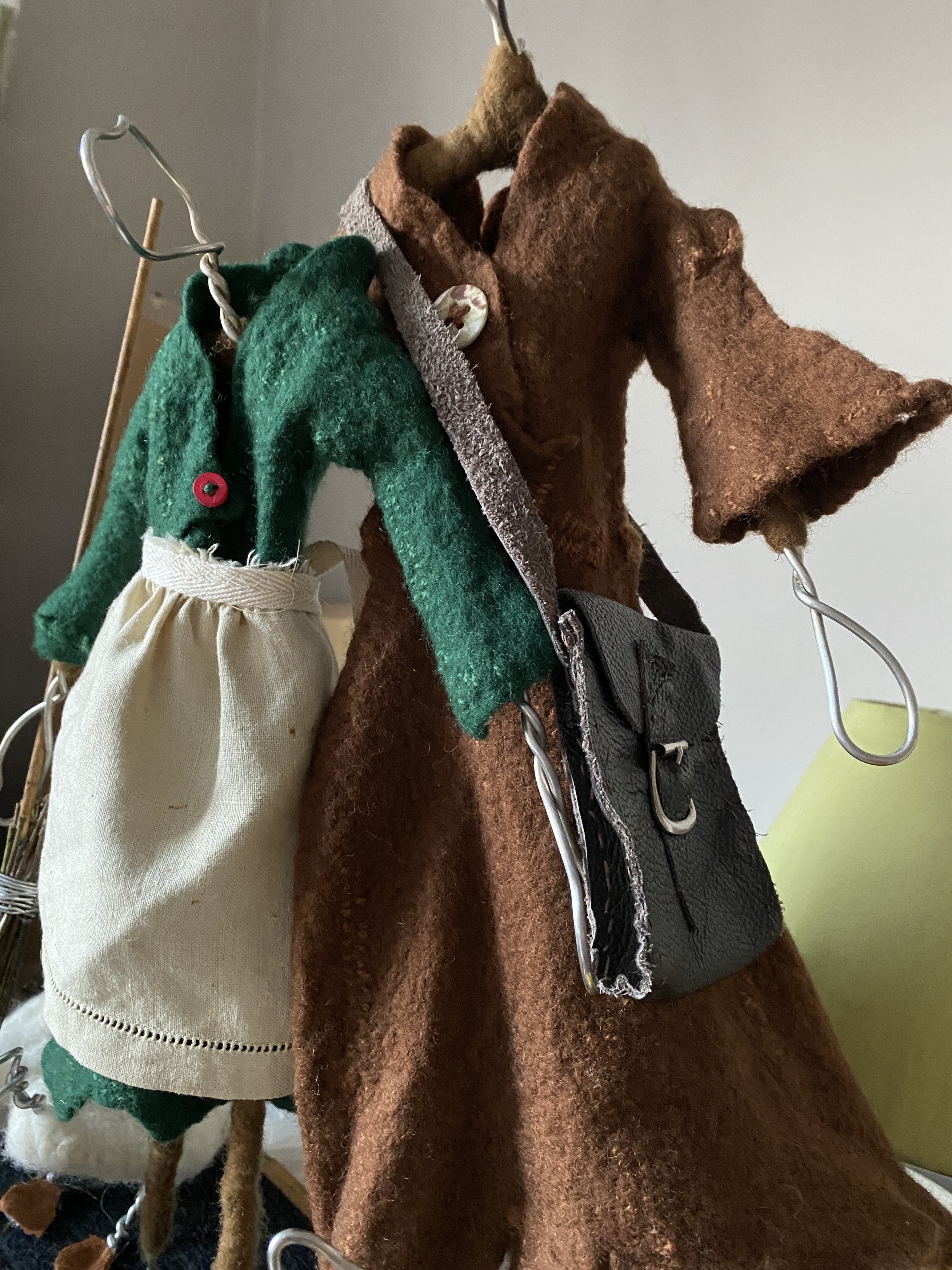
The post office was formed during the 17th century, but it was not until the late 18th century when uniformed post men and women were walking the streets and making daily delivery of letters and parcels. The out of town the post office was part of the village shop. One was able to buy stamps and post letter or parcel or money orders while buying other supplies. Those who wished or were able could open a savings account with the initial deposit of a shilling (5p). My big sister in the story who was not the eldest and not yet married, worked in the post office and part of her duties was to take a satchel of mail and deliver it to the further community in all weathers she trudges the countryside. While she undertook some clerical tasks it was the postmistress with more experience took overall responsibility. This job was probably more desirable for one who was good at written and mathematical work. Big sister was clever and hoped to be a postmistress one day.
 Coat Hanger Doll's House