Work Boots

As I continue to reflect on my life in the 1950s and incidents that happened then and have a vivid impact on my everyday life now. Anyone who knows me will have not noticed that I wear, regardless of time of year or indeed continents remember I frequent South America and Europe, I wear lace up work boots or shoes all day and every day.
As previously mentioned, my dad would take regular trips to the Scrap Man AKA Rag and Bome Man to get a return on his bag of scrap metal. Sometimes he would return with a little extra in his would-be empty bag. On one such visit he returned with what looked like a pair of lace up brown leather shoes that seemingly would fit me. Now this was quite a turn up. We lived in a houseboat moored against a riverbank. There were no ‘made’ or ‘metal’ roads or foot paths. Pedestrian links were at the mercy of the change of tides that happen there twice a day. Footwear was always a careful consideration. My sisters and I would wear buckle shoes or sandals or sand shoes AKA plimsols or pumps dependant on the seasons. Wellington boots were an option but these were often as wet inside as out! Enough to say shoes were not a fashion accessory more something to protect your feet and any given moment.
So back to the shoes in question, child size brown leather lace ups. On closer inspection they were not a pair. Yes, there was a left and a right and the same size but the was a subtle but recognisable difference in the design of each shoe. In those days shoes were hung beside the door outside the shop on string. One from each pair while its ‘other’ stayed in the box inside the shop. It would seem the two shoes, a likely pair had been stolen leaving an unmatched pair in boxes indoors. The shop keeper unlikely to sell the remaining ‘pair’ got a price from the scrap man who in turn made a deal with my dad.
A convoluted story but I remember the delight in a comfortable pair of shoes that might withstand the rigours of river life.
Any old iron …

Over the last decades I have reflected on my life particularly my experiences in post-war Britain. Tending to consider the hardships and the negative effect they had directly or indirectly on my life, presently.
Without wishing to get into a psychological or philosophical debate as to whether this was a healthy or wise way to come to terms with those harsh times, I would like to think it about more kindly.
Some of the incidents happened as a direct result of the hardships, yet, had positive results and powerful effect on my life now and will continue.
My dad was boat builder in a boat yard beside the Hamble River, also he salvaged broken crafts that were found at sea or washed up on the beaches. Using his skills to build new boats for pleasure boating or for homes, that were still required since Southampton and Portsmouth had been flattened during the recent war.
In his explorations and because of his workmanship he accumulated spare scrap metal. This was a vital source of cash for him as a father and home and boat builder. In Southampton beside the Itchen River lived a man whose business was the collection of scrap metal, initially for the war effort of the previous years. People would bring ‘any old iron’ or he would collect regularly in the city streets, before the days of garbage collection.
While he no longer needed to provide this service scrap metal was still a valued a commodity for people for like my dad.
Every so often, perhaps 2 or 3 times a year my dad would fill his canvas bag, which incidentally he had stitched using fragments of damaged sails, with copper, lead and iron. Taking the bus to town. While the Itchen River was not far as the crow flies, with a heavy bag the circuitous bus journey was necessary and oh so worthwhile.
Obviously, the cash input to our fragile economy was vital. However, for me I enjoyed the gifts that my dad returned with in his now empty bag!
One such gift was a sewing machine for my mother who went on to make clothes and household items for her growing family and later teach me to sew. For me, a bike, unable to bring this in his bag and on the bus, he rode it home! The bike was very old, no brakes, a fixed wheel and solid tyres nonetheless the bike and subsequent replacements have been my preferred form of transport to this day.
So, these items potentially ‘old iron’ and destined to smelting pot became catalyst to my journey that still goes on.
As young as you feel …
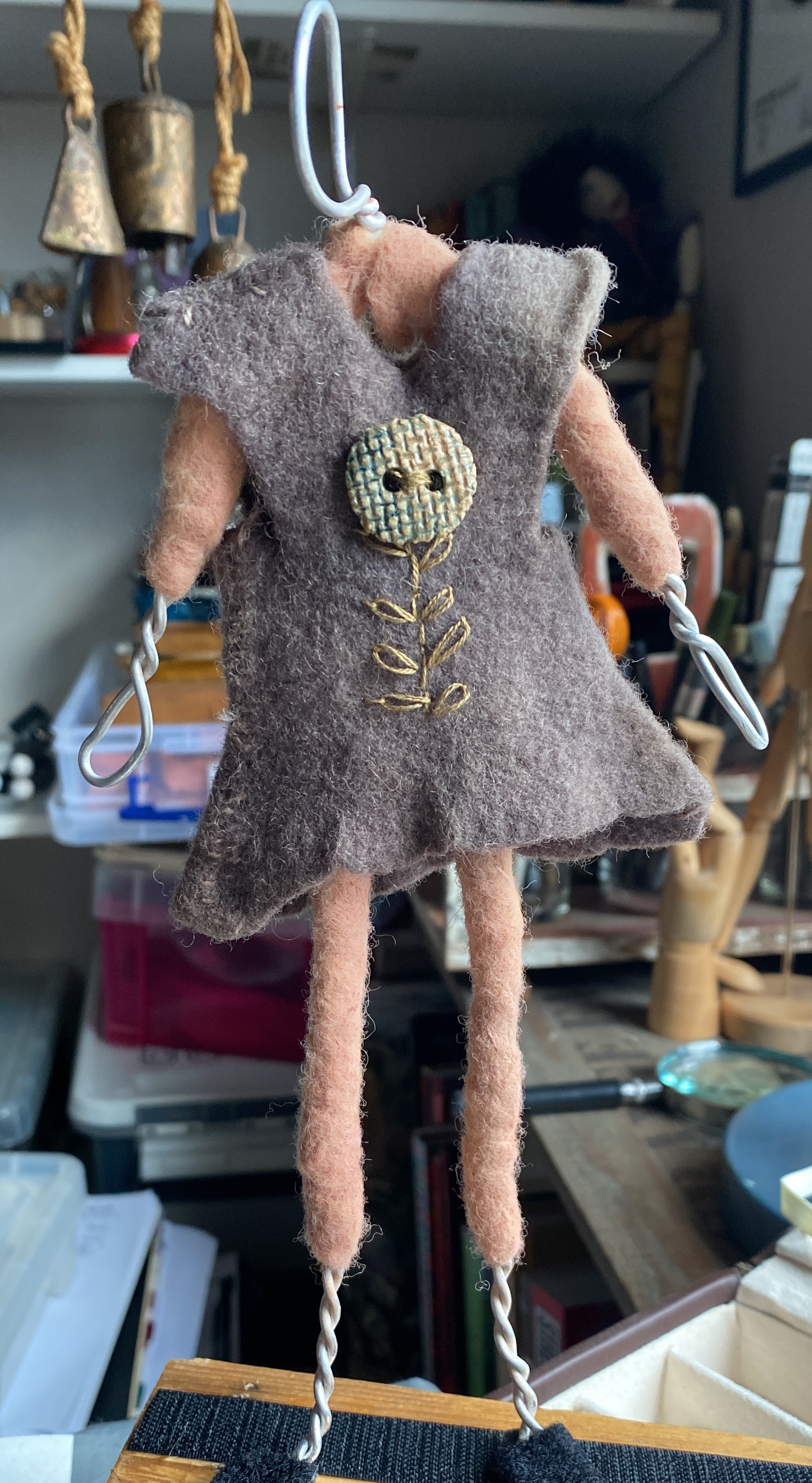
Having reached a significant milestone in my life last month I felt the need to put my house in order and consider how I spend the next couple of decades. I am reasonably fit and healthy for my age and my creative path is pretty much on course.
My youngest daughter who lives in Brazil was suggesting that perhaps I needed to have care or at least consider some measures to make my live easier. However, for the time being I think otherwise.
Not convinced, she come home with a friend to ensure that my house and garden is fulfilling my needs for now and the coming years.
My home and particularly my garden are my delight, so I have no plans to move but both need regular upkeep. So, I have employed a gardener and considering a cleaner to help with heavy and awkward tasks.
So, with this in mind, the friend pointed out some immediate shortcomings and kindly underook the necessary repairs mainly to steps, stairs and fencing.
While we did receive visitors and enjoy some sightseeing these last two weeks have passed productively and joyously.
Furthermore, my daughter and friend did join me at a Book Art Fair in Winchester, it was a significant 2-day event that proved to be a vital opportunity to show my book art which is quite different from my Coat Hanger Dolls and meet noteworthy makers.
Meanwhile we were able to discuss the coming Whiteknights Studio Trail which is another kettle fish. No less important, it is an annual weekend local event that attracts a lot of visitors. This time I will be showing my book and film soon to be published that culminates a body of work undertaken with the dolls over the last two years.
Although I am ready to go and the path has not be without difficulties I enjoy the journey … the idea of such an event fills me with dread so I welcomed my daughters advice and will welcome her home again to help me when the time comes in June.
My girl has returned to her home now, and I hope knowing that I not going to the grave yet.
Space is a gift
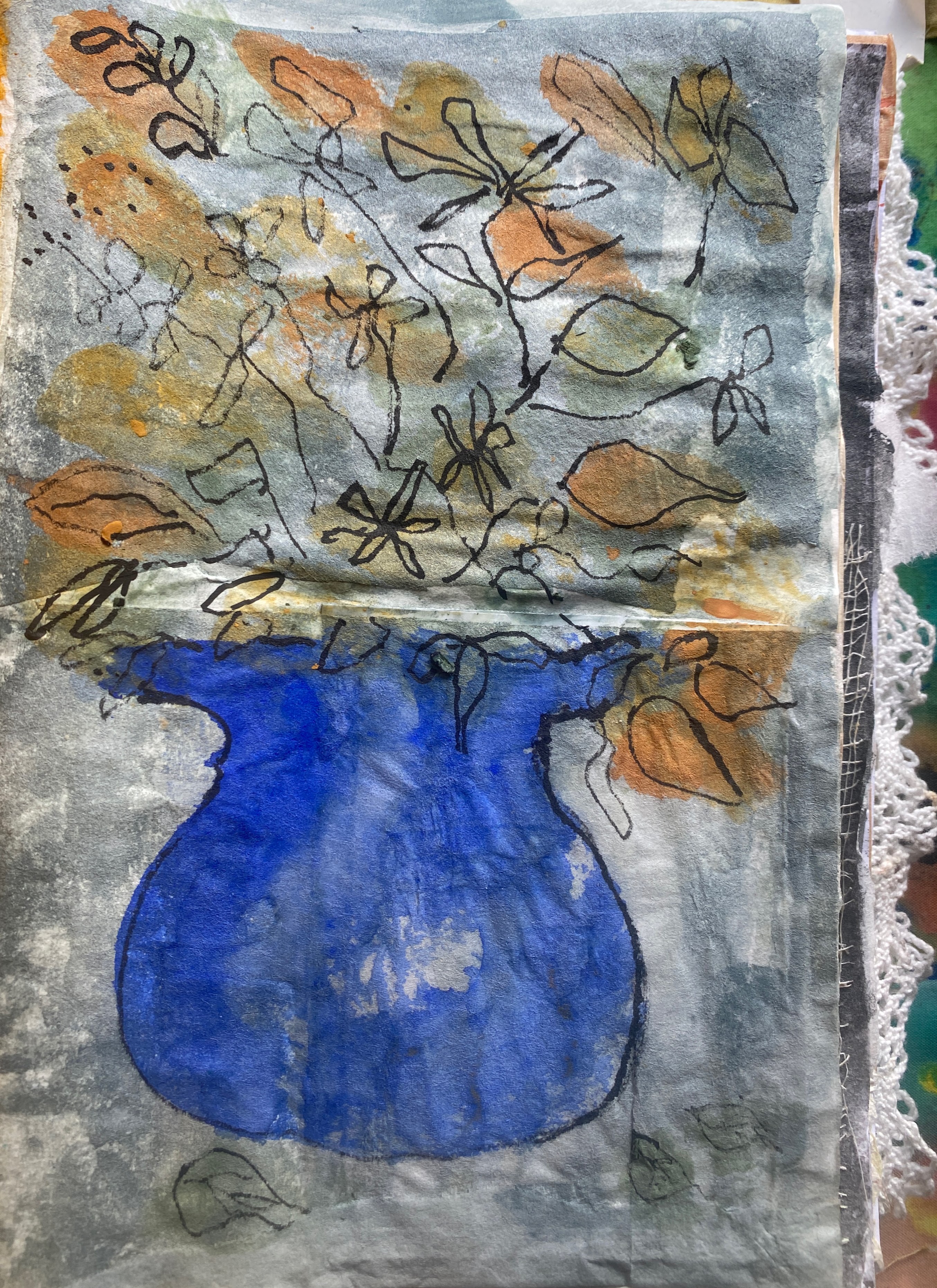
For Christmas last year I was given a book to ‘alter.’ It was a beautifully handmade book with lots of space for me to add to. The intentions of the maker and the giver came from their hearts to me who was suffering from anxiety and depression. The book was for me, to cheer me, to encourage me and lift effects of such illness. At first, I was delighted with the generous gift and for a while it did cheer me.
Soon, the pristine pages became seemingly untouchable and beyond my reach.
It was then not immediately but gradually that I realised that I had spent far too long, aching to please others and my mother who was particularly difficult and often cruel.
When I retired when I was in a position to please only myself I thought I would be okay and for a while I was in a honeymoon state. However, in time I became the bully, the very one who blighted my working life. Making demands for perfection, high expectation and false hope, striving to make the best, being the best, it was exhausting and not any fun. I was not seeing that if I disregarded the rod of tyranny and applied kindness, I might have found a different way.
The healing process was not immediate there was no divine intervention … recovering from a lifetime of anxiety and depression is not the aim even if it were possible. I had to learn to live beside ‘it’ like a faithful friend and dissuading gently the sadness, anger and fear and the other side effects that can thwart the healing process but sometimes inspire the artist within.
So, I remain truly thankful for that.
So back to the book, as I look at the leaves of perfection and love. It was a gift made by a friend given to me another and they want me to cherish it. Like I would any gift and that was hard. It seemed to represent something unattainable.
I had to find tools and find a place where I could be me. The muddle minded and skew-whiff person and be happy with that.
So for the next days and weeks and then months I made tentative marks on the each of the pages. Sitting with myself, with pens, pencils, brushes, paint and inks for a few or many minutes each day, I allowed my mind to let go of thoughts whether good or bad as if I were meditating and utilise the energy that ensued to add shapes and colour. It has been a long slow process and not always joyful and it isn’t finished yet …. but it has proved to be a perfect gift … Thank you
Circle of life …


I was born in the winter of1950. While it was 5 years since the end of WW2 the country was nowhere near recovered. There were still food shortages and rationing and many people displaced without adequate housing.
My family lived in a community who had taken up residency on boats on the Hamble River since Southampton had been badly flattened during the blitz. As the rehousing programme began families gradually moved back to the towns and cities.
However, my family remained on our houseboat, not a palace, but it met our needs, considering something more comfortable was less affordable. Also, my dad was a boat builder and was able to find work in the growing yachting industry. Nonetheless it was poor, and we had to make do and mend in the true sense of the words … it was what we did.
In time my mum and us children left my dad and moved to a tiny cottage that was more convenient to school etc. and was a little more comfortable for a growing family. Without the support of my dad, my mum worked hard to make ends meet and making do and mending was the norm.
Learning all the time ways to stretch the economy for when I married and had children of my own. While I was better provided for, when the children arrived in the early 70s so did political unrest, stringent economic cuts, 3-day week and electricity cuts. So, my early education came in useful.
Moving on, the country recovered in the 80s I remarried and had a third child with more political upheavals. Pole tax, withdrawal of married man’s tax allowance and other problems that lead us to negative equity and unable to make ends meet.
Our draughty little house needed floor covering particularly in the bathroom. I collected scraps of waste materials from other projects and old sheets and made a rag rug … and for over 30 years on my bathroom floor a constant reminder in more ways than one, of the circle of life …
Sadly, it was beginning to show wear and the warp threads were no longer fit for purpose … the weft fabric was in tack. This week I took it apart and remade it and with luck it will last another 30 years … and out live me!
Wood cut vs wood engraving …

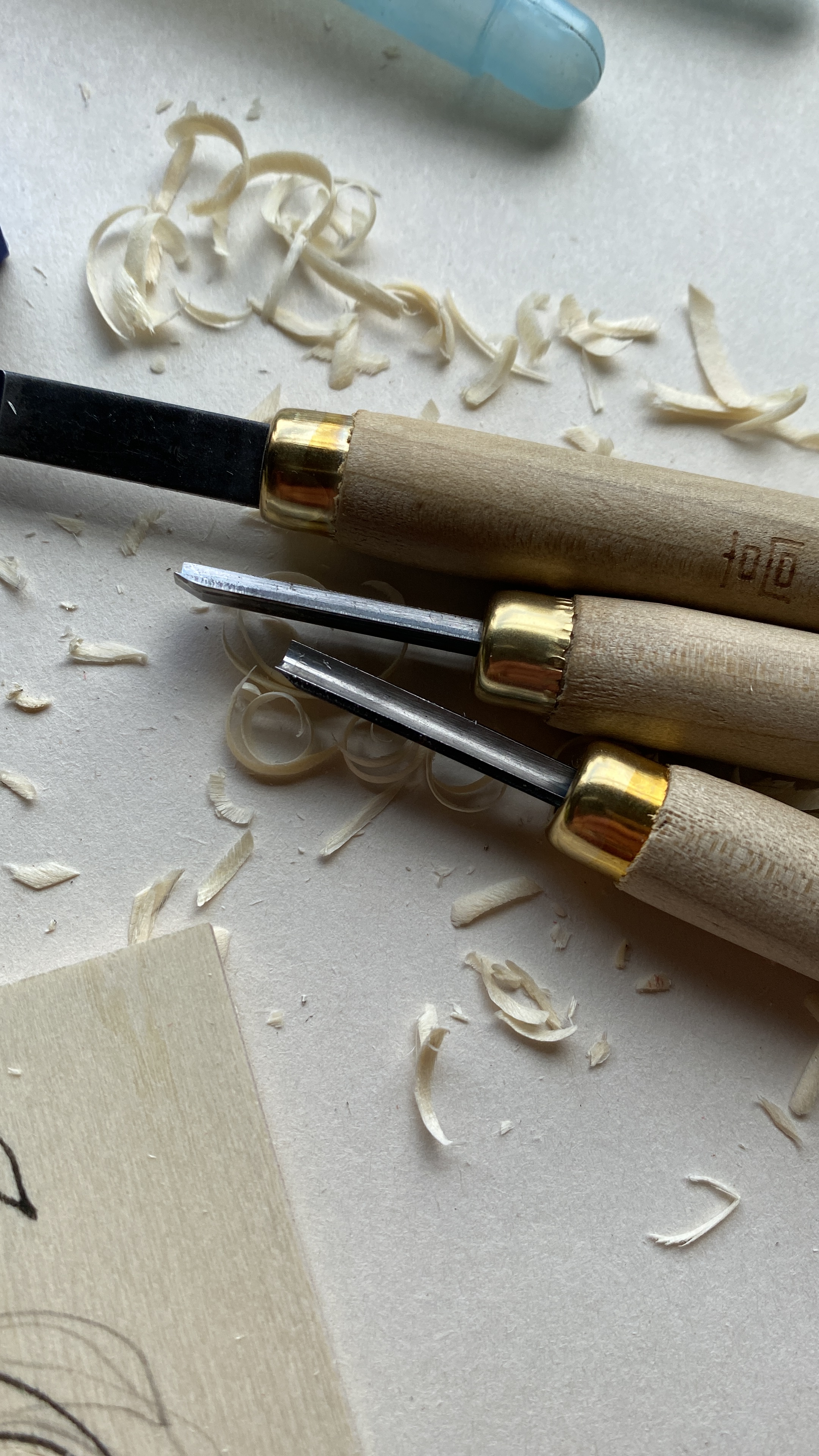

I began my printing journey while I was working as a rare book cataloguing assistant in Special Collections at Reading University Library. Amongst the collections there are endless fine examples of early printed works dating back to 16th century. However, it was a contemporary collection that I enjoyed more, in particular the work of the late Peter Hay a local artist and activist, his works with engraved erasers are gems and tell stories of local history and events to delight and enlighten.
I began to experiment myself with erasers and didn’t quite make the grade, but wood engraving and lino cut became a more serious pastime until I retired.
During this time, I visited Brazil regularly to visit my daughter and was able to visit printing studios and learn wood cutting. Unlike wood engraving where the block used are much smaller and cut across the grain and the tools and technique quite different and therefore more akin to lino cutting. Furthermore, in Brazil wood cut illustration is prevalent on the street it is a time-honoured tradition. The wood used is not fancy pants Japanese plywood but solid reclaimed wood old doors, shelves and building offcuts. No expensive finely honed tools, but those made from the spokes of broken umbrellas, again another product of the environment. Yet the fine work is produced in little print studios and serves the local community in the streets of Rio beside the coffee bars, restaurants, supermarkets, department stores not far from the beaches of Copacabana and Ipanema with old printing presses the type you might see in museums and picture books that are as busy as any other industry making books and booklets to sell on the street hanging on string for a few pence. … long story to explain that I have decided to ignite that brief learning experience and to make booklets maybe not traditionally Brazilian, but I will find my own style with wood from skips until then plywood is good to practice on.
Feeling groovy …

It has been a while since I posted. There is no one reason that I can think of or at least explain clearly. So enough to say there is much going on and more to think about. One thing is blatant but not open for discussion. I am getting older, and time is passing quickly. As a result, I feel like returning to old loves and previous creative experiences. Particularly those I began with at my first flush of retirement or when I was preparing for it. When it seemed urgent to learn new things and be extraordinarily creative. When completion and perfection were so important. Now a decade passed and a great deal of further education and overwhelmed with stuff, I am exhausted. All very wonderful but I need to slow down as the song goes …. ‘Slow down don’t move so fast we’ve got to make the morning last …. Feeling groovy’
To observe the here and now and celebrate imperfection, and impermanence.
Lots to think about …
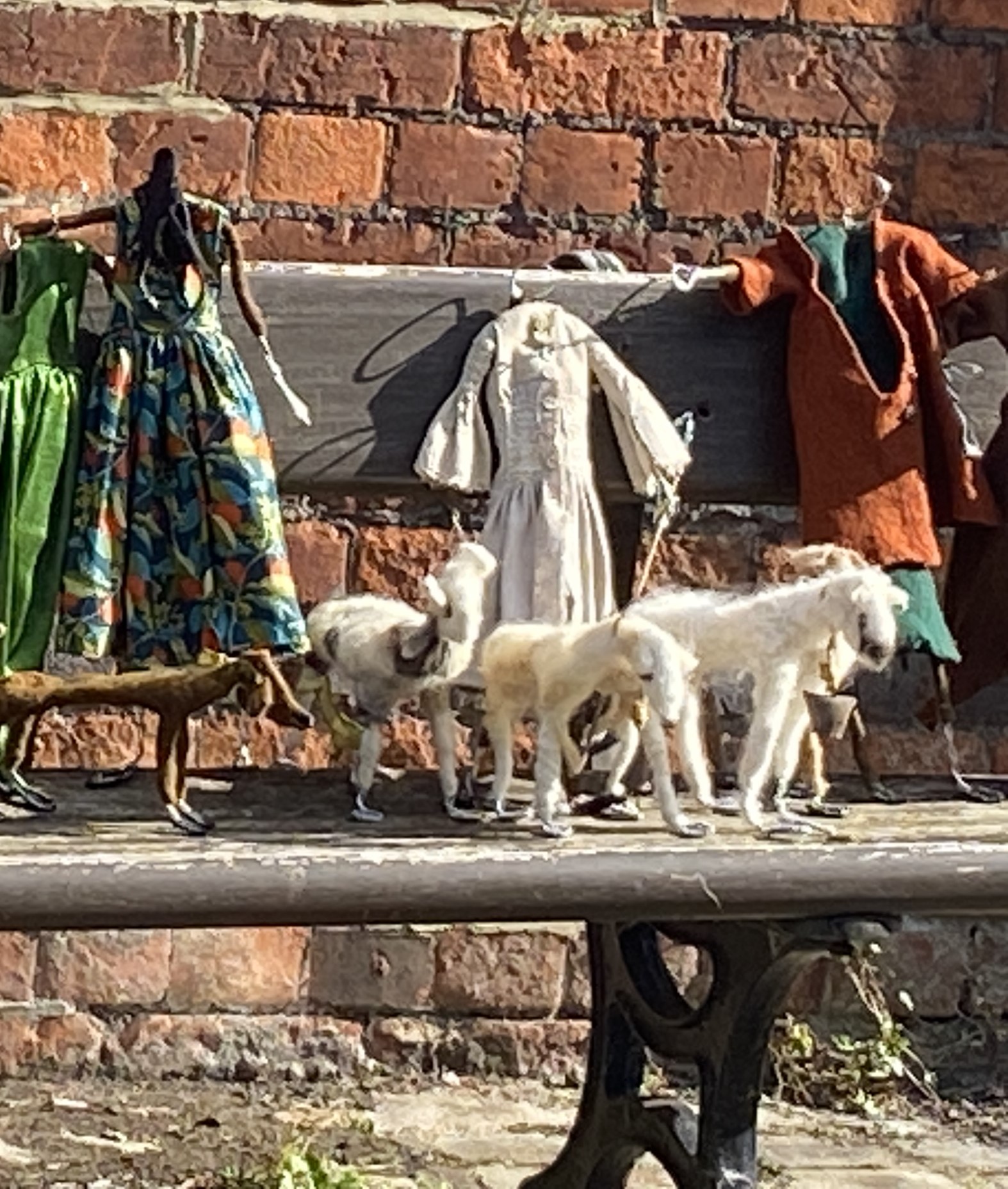
After many months perhaps years since I graduated, I have reached a point where I have to decide … hobby or professional?
After two successful residencies at Reading Museum and an amicable collaboration with a publisher and filmmaker I am in a position to create something viable … a film and two books.
The Reading Museum have tentatively agreed to make space and time to show the film and market the books but there will be no funds. While this came as no surprise it did draw my attention for the need for me to consider how I actually finance such an event.
The books require professional production, and the films need expert editing, also my costs need to be considered … all of which cannot be funded from my retirement pension.
My plans were thwarted, unless I begin a fund-raising exercise. This is the language of professional artists and alien to me.
After finding a potential benefactor I have begun the process. It has been arduous and alarming. I was blissfully unaware of the costs of professional procurement and indeed my own costs.
Financial needs aside the emotional input is also astounding. Putting a price on the endeavours of anther person is one thing, thank goodness they provided me with fair estimates of the work involved. My funds, described as research and development costs was so much more difficult to reconcile.
However, with all this understanding that I may become ‘professional’ there is a sense of hope. Thinking that I may yet be rejected with some constructive feedback, with newfound knowledge I may find myself on a platform to apply again it would be churlish not too.
Business as usual …

Finishing my residency was a bit of anticlimax. However, this worked in my favour for day while caught my breath before my next project or rather ‘business as usual’
Today’s story is about Clarice.
The post office was formed during the 17th century, but it was not until the late 18th century when uniformed post men and women were walking the streets and making daily delivery of letters and parcels. Out of town the post office was part of the village shop. One was able to buy stamps and post letter or parcel or money orders while buying other supplies. Those who wished or were able could open a savings account with the initial deposit of a shilling (5p).
Clarice, the shepherd’s daughter worked in the post office and part of her duties was to take a satchel of mail and deliver it to the further community in all weathers she trudges the countryside. While she undertook some clerical tasks it was the postmistress with more experience took overall responsibility. This job was probably more desirable for one who was good at written and mathematical work. Clarice was clever and hoped to be a postmistress one day.
All good things …
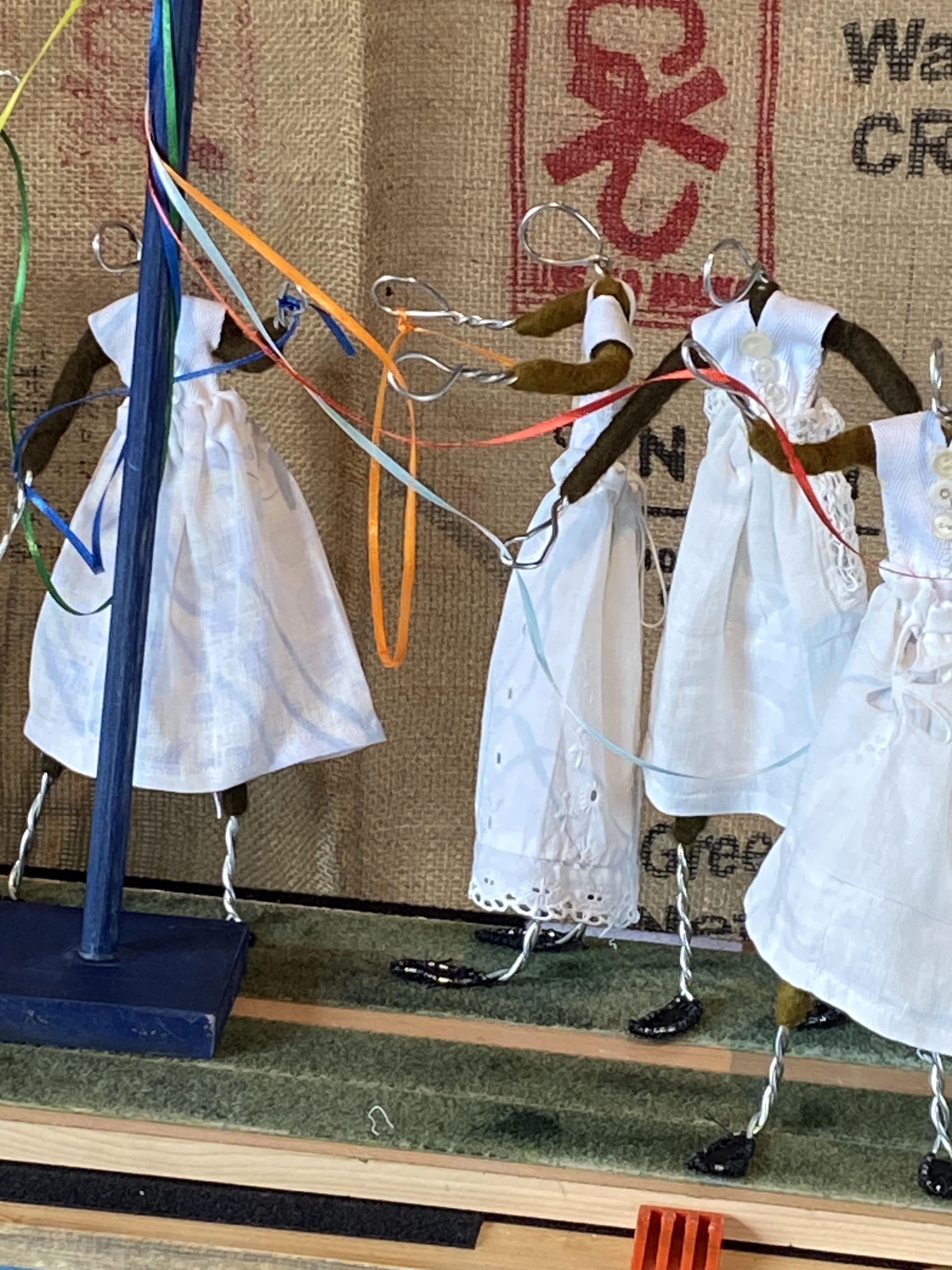
My time in the Turbine House is coming to an end. It has been an extraordinary time; all things considered.
Including the closing of the Public House nearby, for reasons I know not.
The beautiful historical building had served the town for 150 years or more as a pumping station. I am not sure of its usage (and without internet I cannot check the facts) but enough to know it was an important part of Reading’s rich heritage.
The pumping station and its surrounding buildings became redundant when the machinery was superseded and the site became a museum and a glorious snapshot of a bygone age.
In time the main building became a restaurant, and the other buildings remained a riverside museum and gallery space and attracted many visitors, local and some from further afield.
The restaurant was a popular place almost famous, but its client group was corporate and privileged far removed from those who built, worked, and lived in the locality of the pumping station a century or more ago.
When the restaurant closed, it was taken over by a London brewery and became a public house, one hoped that it might become part of the public domain where locals and visitors could find sustenance and a shared interest in visual and performing art, the museum and consider a bygone age. Be served a reasonably priced pint of beer and seasonal food fairly produced and traded. All this while looking at Reading as it forever grows and meets new technology whether we like it or not.
Sadly, my hopes were dashed, the brewery removed the glitzy fixtures and replaced them with more of the same giving the effect of a costly Weatherspoons with overpriced craft beers, gin and wine etc. and a menu to match. Nonetheless, it was better than nothing I later learned. The other buildings on the riverside site are used for artist’s events and exhibitions, so the pub did serve as an added incentive to guests and passersby not just the catering facilities but the seating outside and of the ‘comfort break’ amenities all vital for an artist wanting to reach a wider audience.
Then, a calamity the pub closed! The brewery hasn’t vacated the property, so it has been maintained by a ‘watchperson’ who opens the gates at 10 am and closes them at 6pm each day. This hasn’t so far been consistent, consequently I have been locked out and more seriously locked in. With the pub locked, the toilet facilities are now confined to a Portaloo, that is one step up from better than nothing. From that point of view my time here has been a little uncomfortable and at times unpleasant.
On the other hand, my space in the Turbine House is kind and familiar, I have spent time here before as an artist and visitor and the joys outweigh the hardships hands down. I have made myself comfortable with a makeshift tea/coffee station with a kettle precariously placed breaking rules of health and safety, I am sure. Notwithstanding a couple issues with filmmaking, the exhibition of my dolls has been more than adequate.
The natural light in the Turbine House is by nature is not stable and the electric sensor was equally troublesome, so the films have some interesting flashes. So, with some newfound knowledge and a reliable producer I/we can repair anything untoward.
When I first realised that the Turbine House is without Wi-Fi, I was a bit perturbed seemingly disconnected with the world. That misconception was short-lived, and I enjoyed the space and time to watch the world about me and connect with the environment I had been reading and writing about during these last few months.
Unfortunately, due to the aforementioned unforeseen locational and social issues passing visitors were fewer. However, those who did make the effort were a joy very welcome. Much progress was made regarding a ‘proper’ film and accompanying books. To prepare for this event was not without concern, working alone is not always preferable but each day has bought an element of delight sometimes miniscule but today my last something more exciting, when someone suggested a source of funding. At a time when artists struggle to finding exhibition space and are running out of ways to exhibit their work in the community, in a world where the owners of empty property are only interested in profit, a little bit of funding goes a long way to widen the opportunities. For this I am grateful.
 Coat Hanger Doll's House