Silent Sunday
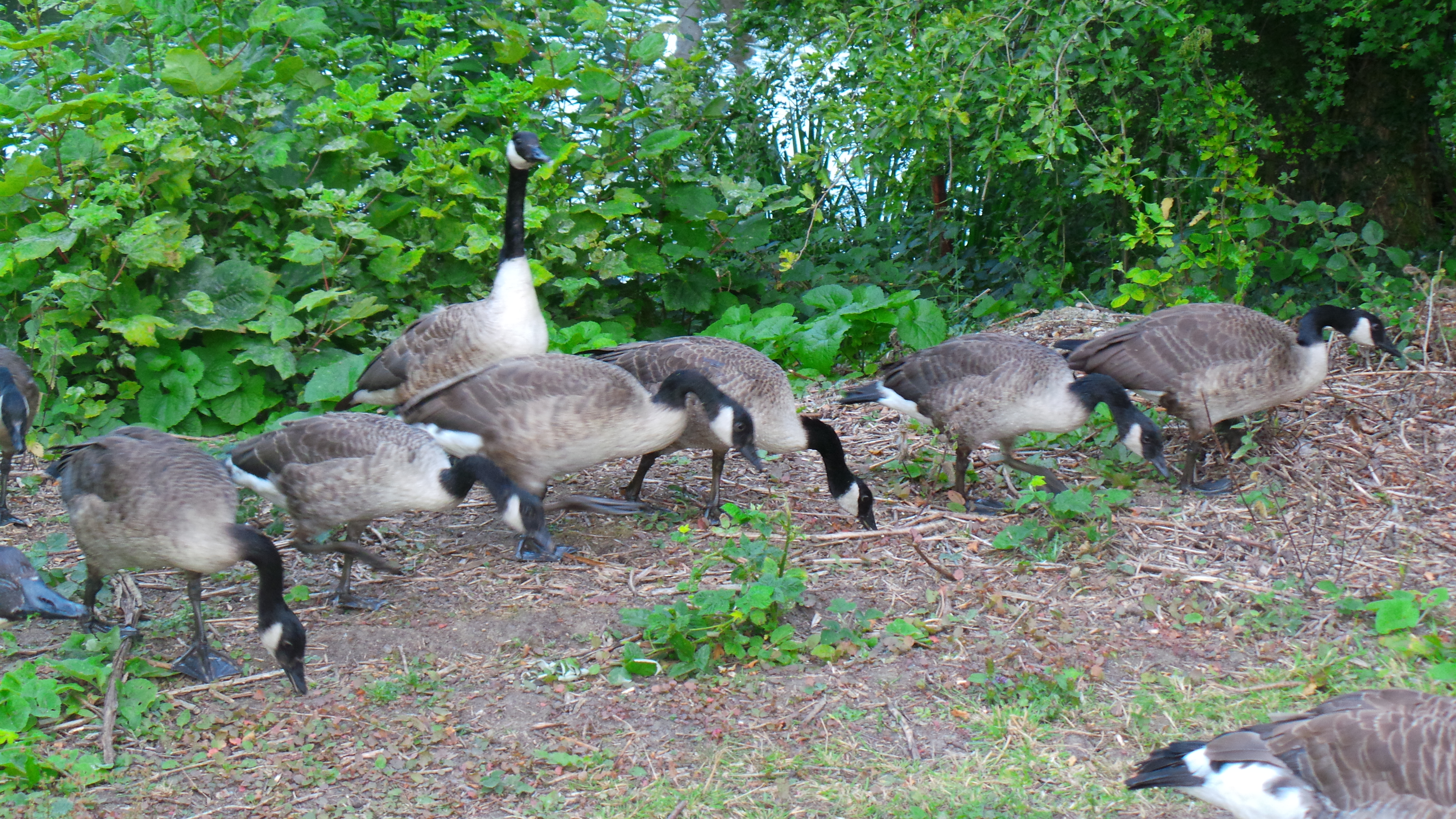

Its Saturday …
After a week of indecision I am going to buy a new laptop. I was gong to tell all about the the traumas of the decision making but that would taken longer than ‘War and peace’ Suffice to say the decision has not yet been made!! I have a list as long as my arm that has been amended daily and I still have pen poised. Really I would like it to be a pretty colour!!
Meanwhile I leave you with my creations from last week’s art class; inspiration draw from Ravilious, Peter Hay and my garden.


Library Snapshot on Friday
I had not heard of Enid Marx until this week; when I received my latest acquisition from Amazon … The Crafts in Britain in the Twentieth Century by Tanya Harrod. The book a mighty tome had a beautiful jacket but is binding was fabulous; a bold pattern printed on linen designed by Enid Marx ( 1902-1998)
She was not, I understand, a household name in her lifetime but she was still working at 95 years old and had produced an astonishingly diverse and distinguished output of design; from book-jackets and ceramics to seat fabrics for the Tube.
Enid Marx was educated at Roedean from 1914-1920, was a student at Central School of Art for a year and then moved to the Royal College of Art in 1922. Later she began hand-printing textiles in her workshop over a cowshed on Hampstead Hill. From 1931-1933 she taught wood-engraving at Ruskin School, Oxford , with Paul Nash and Eric Ravilious: with whom she and Edward Bawden were closely associated in the ‘Curwen Group’.
During the last war she wrote and illustrated small books for children, printed on off-cuts from the normal book production. She was also responsible for textiles for Utility Furniture. In 1945 she was elected Royal Designer for industry. From 1965-1970 she was Head of Department of Dress, Textiles and Ceramics at Croydon School of Art.
Apart from the wide range of her creative activities, from book-plates and postage stamps to Shell calendars and Zoo posters, Enid Marx was among the first to stimulate appreciation of English popular art. Her pioneer work, ‘English Popular and Traditional Art’ written with Margaret Lambert was published in 1947.
I am looking forward to learning more about Enid Marx and visiting Compton Verney House and other venues where I understand examples of her ‘work’ is showing.
So at least I can add to my meagre gallery! And will welcome ideas as regards viewing her vast collections


Images from An ABC of birds and beasts ; identified (with their diets and engraved by Enid Marx
the text hand-set in Berthold Wolpe’s Albetus’ and printed by Francis Cleverdon at the Trumpet Press, 1985.
English popular and traditional art by Margaret Lambert and Enid Marx
The crafts in Britain in the Twentieth Century by Tanya Harrod
Alphabe Thursday … H is for Hand-puppets


While in Brazil earlier this year we visited National Museum of Folklore and Popular Culture in Rio.
I was intrigued by the puppets there: and discovered since a little more about them.
They are called Mamulengo and typical of northeastern Brazil, especially in the state Pernambuco. The name originated from the Brazilian for the ‘soft hand’ that gives the puppet movement and life.
I understand that the theatres are much like our English Punch and Judy show. A performance that consists of a sequence of short scenes, each depicting an interaction between two characters. As in Punch and Judy there is the tussle between one dominant and the other weaker character. The two puppets are usually operated by one man, I am not sure if there are more operators that give movement and voice to more dolls in the Brazilian show.
The Mamulengo is part of the popular culture of the northeast Brazil and practiced since the colonial times perhaps imported at that time from Europe like our Punch and Judy.
The performances are in public, as a side show during religious festivals and public holidays. They might present biblical stories or portrayals of everyday situations and the behaviour of people; and usually comic and dark.
In England Punch and Judy was intended for adult audiences but has evolved into children’s entertainment since Victorian Times; I am not sure whether this is so true in Brazil.

Wisdom on Wednesday
I never met Peter Hay (1951–2003) I wish I had! Just to say how much his illustrations have influenced me and motivated a new pleasure in my live.
I am familiar with all the books that he and his colleagues at Two Rivers Press have published in almost 20 years. I have read the Charms against jackals from cover to cover more than once and always find something new about him and Reading, my adopted hometown. He is described in this book as ‘ sometimes a grumpy prime mover’ and only by reading this book will you find out what and where he moved. I can related to this grumpiness and call it as I get older; wisdom!
I think he was a wise man and celebrate this with a little print (6cm x 4cm) made from an eraser in the mode of Peter himself!
This lady with an over large bow in her hair was inspired by an illustration in the Much Maligned Town ; opinions of Reading 1586-1997 edited by Adam Sowan and illustrated by Peter Hay. I couldn’t resist adding a bouquet in the style of Picasso.
I don’t think either master will be threatened by my creation to celebrated wisdom on Wednesday.


Weekly Photo Challenge … Nostalgia
I read this week’s photo challenge as neuralgia and thought I know this, having just recovered from 24 hours of pain. Though difficult to capture on film I could wax lyrical; then I remembered my word limit and your height of interest … and of course reread the prompt.
Then thinking again for a moment or two because that is all it takes to say ‘I don’t do nostalgia’ Like 10 CC didn’t admit to ‘love’ I really don’t hanker after the good old days. My childhood, honestly was dim and distant. I don’t get in a song and dance about my not so wonderful school days or even the swingin’ sixties; I have done all that and got the tshirt; I am sure!
I work in an environment where we care for relics of the past centuries. Readers come and research their long gone relatives who might have worked in Huntley and Palmers’ Biscuit factory, Sutton Seeds, Courage’s Brewery or indeed any other rural establishment that flourished in England in the last millennium Then we have the academics who delight over the words of wisdom written in the golden age of literature, art, music, publishing and publishers. I fetch and carry tomes, ledgers and archives to be browsed, perused and gasped over … looking at my watch at regular intervals until 5pm when I can go home drag on my Levis and listen to Bob Dylan singing Highway 61 revisited.
No I don’t do nostalgia much!


Yesterday I …


To mark the summer solstice this year I decided to take a weekly walk each Sunday morning when the sun comes up. I thought, ‘just for a few weeks until the days begin to shorten’. At the winter solstice, ‘I suppose?’ This limit for me is important; because I can become a little obsessive and incline to drill myself to a 3 year route march which changes an agreeable jaunt into a dreaded monster.
Also, I am not a watcher of the pagan calendar but am interested in English seasonal traditions before Christianity. However that is where the interest stops for the moment; but it seemed like a good idea. I thought an hour or so would be fine and so far that seems right; for a pleasant circuit around the university campus or along the Thames or Kennet and Avon Canal.
This is not to be considered a keep fit exercise; no power walking, jogging, counting paces or watching the clock (too much) Just watching! And no added lumber except a camera.
Taking myself for a walk; has not happened for many years in fact I am sure it hasn’t happened for about 50 years. Although I did do the weekly shop for my mother alone, the rest of my walking was with someone else. I did and still enjoy walking with someone especially on a long walk. The walking experience for me over the decades has changed and come almost full circle. I am now in a position to jump out (alright roll) of bed, chuck on an item of clothing that belies any notion of fully clothed-ness and covers the crumpled slept-in look and a pair of shoes and wander … taking in the smells, sights and sounds alone!
Silent Sunday
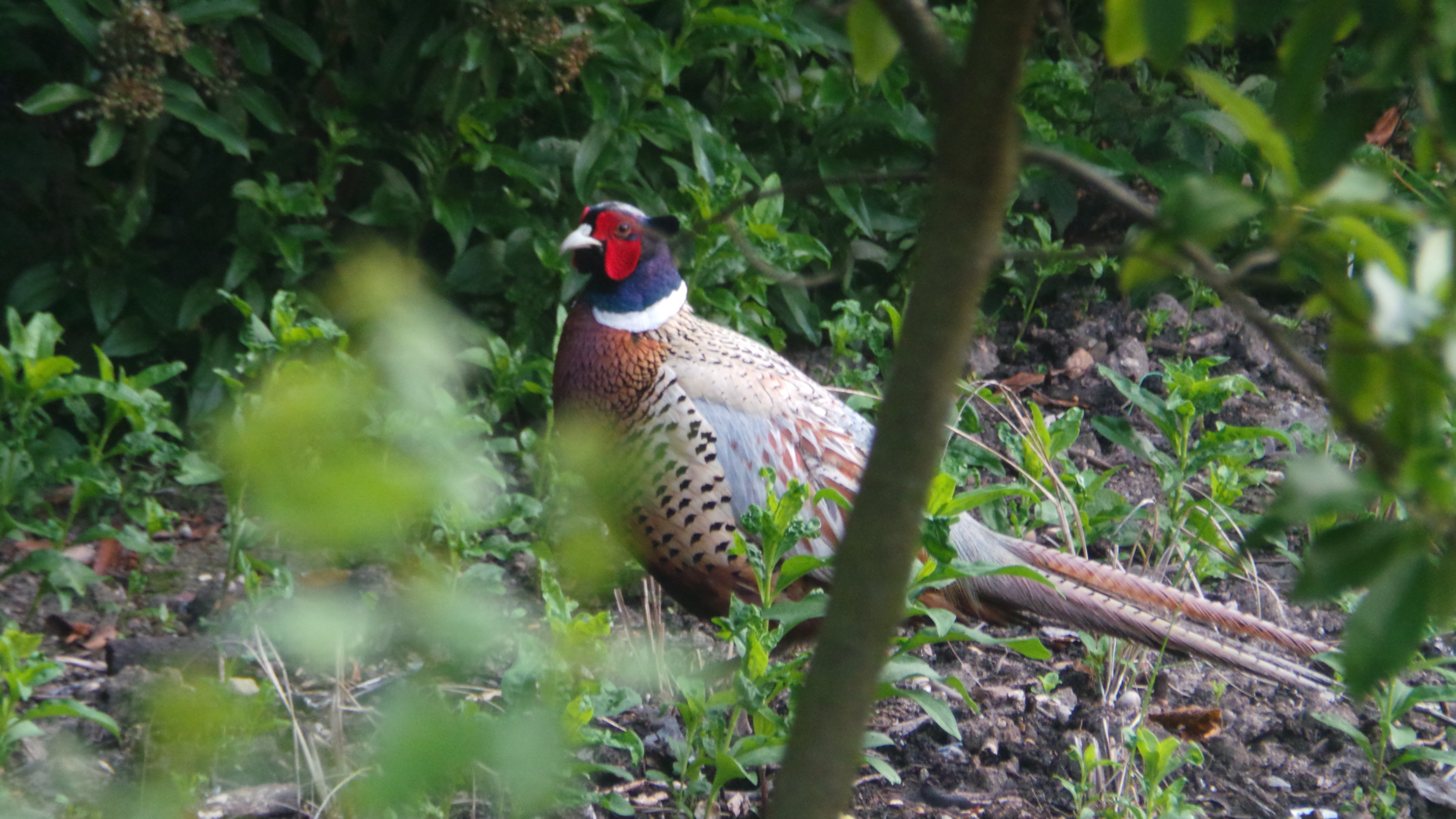
Saturday Art Class


Today I am going to my Printmaking Class, these little chaps are my work in progress. I like them very much but I would like to perfect some finer details.
I am smiling as I write this as the finished piece is on a A5 card; the equipment I consider necessary to create this would overload a pantechnicon. How I think I am going to carry it on my bike? i don’t know!
Pictures from the library …


I am a library assistant in the cataloguing department, in a university library. I have been working here for 13 years since graduating with a classics degree in 2000. Previously I worked in a bank and before being a full time mum I worked as an accounts clerk.
I am now fulfilling a childhood dream. Although the post seems a million miles away from being a clerical assistant in the main the job requires the same skills;being methodical, eye for detail and a good understanding for the need of accurate records all of which I maintain day by day.
However I am responsible to the Rare Book Cataloguer who has all of the above mentioned skills and 100% more so my job is full on.
All of the collections in our care are unique and special for all sorts of reasons, Some are very old, some are plain unusual, and others on specialist subjects. My role as an assistant is as it suggests closely managed and often mundane; shelving books daily is not everyone’s cup of tea However, materials, content and practices are from from dreary.
For many years the Special Collections have not been the central part of the University; since the students as a rule require the most up to date information and data.
The elderly books are not neglected and kept in the best conditions and most of them have a presence on the the library catalogue.
However over the years donations and acquisitions have not been given the full catalogue attention. It has been a work in progress with my aforementioned colleague and her strident measures to bring all the works some as old as 400 years into the 21st century; day by day we chip away.
As I said I am not a trained cataloguer I ‘find’ the books give them a brief record on the database and pass them to be catalogued; given the treatment they deserve, evaluated and given full recognition regarding subject matter, binding, paper, printer and relevant provenance.
The item is then returned to me to make any minor repairs or organise further protection and then place securely back on its shelf.
So you see I play only a small part in the procedure but it is a delight; a dream come true.
Only yesterday I was preparing some books from our Henley Collection to be catalogued, called Purchas Pilgrims; huge tomes written by a world explorer in 1725. There was another book from another collection incorrectly shelved during a recent move. It was a massive book of maps; an atlas some drawn by Fredrik de Witt and other cartographers in 1694. Without a title page this item was beyond my limited resources, a specialist map person was called in who will document each map; 2 or 3 hundred in splendid detail.
Returning to my little collection of early 20th century books; I also find little gems that I share weekly . I work on the Mark Longman Library; a collection of around 4000 items relating to publishers, publishing, binding, printing, illustration, book-selling etc while I don’t catalogue it fully I am able to classify it, so it easily found on the database it is also browsable in subject area here in the library.
This has been a scant overview of my job and I hope goes some way to explain my library snapshots over the last year or so. It is not so easy to isolate one item when I am not a specialist and know little about the subject matter as officially my job is clerical and may be considered by some as dull.
Fortunately; as this is my childhood dream, I can maintain my childlike enthusiasm in my own bubble while the cataloguers have reputation to uphold.
 Coat Hanger Doll's House