All bran …
Like I said … life in our childhood was a little less than conventional but as I become the older generation and the memories fade I celebrate …

Empire Trooper was to be broken up but her lifeboats were alright as lifeboats go – notoriously, they were pigs to sail and my dad was somewhat of a purist but with all of us children and money being short -needs must.
There was a lot of work to be done converting a double ended lifeboat to a transom sterned yacht. A lifeboat was all we could afford.
He put the lifeboat on chocks on the saltings near Miscellany. Then he cut through the hull of the boat down the stern post and opened it out. He steamed new timbers, using a bonfire and a long drainpipe making them more flexible.
My mother had remove the timber from the pipe and run them, one at a time to my dad who then bent them to make the new curve to the beautiful new mahogany transom he had made – it…
View original post 370 more words
The Isle of Wight
As my sisters, brother and I launch off into life after our recent loss I remember times; perhaps before the arrival of my brother …
 From around 1958 to 1961 sailed in our converted life-boat, Trooper to the Isle of Wight each weekend during the summer; we sailed around her occasionally on our way to somewhere else, France maybe? However, it was always done on a shoestring her conversion was a work in progress we never knew how it might turn out. It was dependant on money, resources and the weather, all at the same time often it didn’t happen but when it did it was perfect.
We could watch from afar, her iconic bulge domed beyond Calshot Spit, an ever changing backdrop to the vast array of crafts as they plotted a course from Southampton Water or the Hamble to the English Channel. We would venture closer and gaze at the imposing coast line sometimes she turned us away, the wind direction would change and making it difficult to land and moor so would…
View original post 357 more words
AlphabeThursday I is for Indian Yellow

Krishna, wearing a yellow dhoti; playing the flute to his girlfriend Radha.
Bright yellow pigments over the centuries have been prized by artists because they are vital in depicting gold and effects of sunlight. While mostly it came from tin some had a different and even more lowly beginnings.
Indian yellow was imported by Dutch traders and used in the paintings of 17th century. The pigment known in India since the 15th century as purree, puri or peori may have come originally from Persia.
The pigment arrived formed in hard, dirty, foul smelling balls. Some artists thought it was made using urine although others were reluctant believe them. Later it was suggested that the ingredients used may be that of camel urine. However was not until the late 19th century speculation were corrected.
It seems the yellow balls were produced certain milkmen who feed their cattle exclusively on mango leaves. The urine was heated until it thickened, formed into balls and dried. Despite is unpleasant production and appearance the ground pigment was very lovely giving a deep golden yellow.
However; it was also discovered cow-men fearing for their livelihood did not feed the cows any ‘nutrition’ so that the cows were in very poor health. The farmer’s practices were denounced as inhumane and laws passed to prohibit them. So Indian yellow soon became illegal and disappeared by 1908 and was soon replaced by chromium yellow.

Rowing a boat
This post has become a story within a story as I add another layer! These last weeks, what with the visitors and my mum’s death, being creative has not been my priority; this has been a mixed blessing. I am reluctant to say usual business will resume soon; I am wondering if this little girl who began almost 60 years ago should perhaps ‘push the boat out further’ … what do you think?
I have started to write poetry; and it has been more difficult than I thought. Each day I sit with a pad and a cup of tea or more. Sometimes I write and most times I don’t.
This morning I thought I would try and write a poem about learning to row … of this I am well accomplished – the rowing I mean.
But still I got no further than the sitting and drinking tea stage
When I remember I have a piece that also began as a poem
Ah well back to the drawing board and the cold tea … boom te boom
Don’t know what came first – the ability to row or the sense of balance (or more importantly getting into a dinghy)
The sense of balance becomes so highly tuned that one never forgets. Even after the initial joy of being old enough to row…
View original post 399 more words
Weekly Photo Challenge …. Windows


This festive season here in many parts of the UK has been thwarted by appalling weather; lots of wind and rain. For many people their homes were flooded; although we were not affected in this way we were confined to quarters for several days. Looking back over my photographs taken during this time there quite a few taken through steamed up windows.
Better to have loved and lost … a boat
As I fight with the oncoming separation from my daughter when she returns to Brazil; I remember the stories I wrote when I began my journey that began when she left the UK to begin her new life.
My father was in the Merchant Navy before and during the war where he learned to be a boat builder. The war over he returned to his home on the Essex coast where he was able to apply his carpentry craft in a factory that made wooden dash boards for the car industry. But his true love was sailing and sailing boats. So my father and a friend began salvaging and renovating boats not just for sailing but for homes or work sheds, in particular LCAs (landing craft assault vessels) used for transporting troops to the beaches of the Normandy coast on ‘D’ day. There was a thriving boating and sailing community around the Blackwater River in Essex, but the Solent and the Hamble as the home of the Royal Yacht Club, was the place to be for experienced boat builders in the new and upcoming boat yards.
So, having…
View original post 204 more words
Silent Sunday …

On dry land
We moved from the houseboat in 1962. It was to be a difficult time for us all. Although us children were registered and my mother claimed family allowance; my parents had never married and had not paid income tax or rates. Moving into a house bought many comforts and security such as running water, electricity and a garden where my mother could grow fruit and vegetables. However, it represented imprisonment to my father, so he remained on the river alone and we did not see him until many years later.
The tiny cottage was about 3 miles away in a village called Warsash. It had no mod cons and the toilet was at the end of a very long garden. My mother did not have the means to improve things so it was in many respects ‘out of the frying pan and into the fire.’
We enjoyed the instant lights but the cost was more than my mother expected. Making sure we had enough shillings became my task and I quickly learned how to beg and borrow and managed to fall short of stealing so that we could at least see to eat our tea – TV was out of the question for a while yet.
My mother found work in a nearby strawberry field during the summer and in the winter she did what she could to make ends meet. The strawberries grown in the area were famous. They were sent to Wimbledon and London Fruit markets from the railway station at Swanwick a village nearby. When old enough we all worked in the fields to earn a few shillings pocket money. I still looked after the little ones, although the elder of my two sisters was now able to share the responsibility and I felt less alone.
Although times were hard, there were some advantages to living in a larger community on land . My sisters and I joined a ballet dancing class. My little brother, now 2 years old would come along and wait at the back of the hall while we danced and imagined becoming Margot Fontaine. Sadly after a few weeks it was a luxury we could no longer afford, it was fun while it lasted and to this day we still tease my brother about his perfect petit jeté.
Flounder Day
Flounder day was traditionally the first Sunday in December. I don’t know exactly when the tradition began but I have a good idea and it does not have a lot to do with flounders.
My dad lived in Hamble, a small village famous internationally for sailing. During the ‘season’ the local population grew by thousands; but from October to May the locals dependent on the seasonal work had time on their hands. So they invented a congenial but false lifestyle to pass the time.
As part of this my father and his cronies met in a pub on a regular basis and formed a so called Literary Society. Needless to say not a book was ever discussed. However, their regular meetings would have a comfortable and legitimate edge when they rolled home drunk after a couple of hours or so. They were a motley bunch from various trades and professions; bank manager, estate agent, solicitor, car sales man, milk man and even a doctor.
My dad at that time owned a 60 foot fishing trawler that he would hire out for fishing and towing. From some idle chat the idea of the Flounder Day grew; a day to celebrate the flounder. It would begin at 7am on Sunday morning in a local pub-where else? There for an hour they would enjoy a round or two, then board the fishing boat ‘Rockall’ and motor out to the Solent. Then the happy band cruised to Cowes to celebrate some more over lunch, on this occasion it was to be fully blown Christmas lunch at the Fountain Inn. Then, the now fading crew return to Hamble later in the afternoon to freshen up before opening time.
As the day went on the moribund group were careful not to forget the glorious flounder and raise a glass or more to the fish and the day.
For me it was an infrequent and precious opportunity to meet up with my dad since he had left us many years before. We left Chesham in Bucks before dawn not yet fully awake; there was little traffic and the roads wet from a recent shower. As we reached Hampshire on the A3 a creature ran across the road we couldn’t have stopped safely. We hit the animal with a heavy thud; glancing back we saw an unmoving lump at the side of the road. We were speechless – we should have stopped. We didn’t. In blind panic we drove on. At Popham Services we looked at the car for damage; it was bad enough but the old maroon Cortina was past its sell by date any way. We drove on to Hamble and didn’t mention it again.
At the pub the reprobates were gathering. In contrast to the Literary Society wives and girlfriends were invited; so they appeared a friendly bunch.
There is something unpleasant about going to a pub at 7 in the morning with the smell of stale beer and cigarette smoke. The fire was not yet giving heat. As the punters lit up and the whisky began to flow, so the atmosphere warmed – the waft of Old Holborn from my dad’s roll up was almost pleasant. Tongues were loosening; Rose, the bank manager’s wife and her daughter affectionately called Fifi, the nominal wife and girlfriend circulated among the dozen or so men – flirting already.
My dad was not partaking of the hard stuff, yet. He had a job to do and did not have a half until the day was done and the boat was safely moored in Hamble. His licence is subject to this rule which he takes seriously along with the dress code of the day. It was a celebration so he sparkled as well as he was able – clean shirt, polished shoes and a hair cut!
So the day began the party left the land lord and his pub, crossed the quay to where the boat was moored. The ladies teetered with loaded freezer bags to the galley to prepare bacon butties. The men staggered with a few more cans and whisky bottles- just in case. Colin and I, in the still autumn air recovering from our journey – glad that we hadn’t joined in the already heavy drinking session. Not envious of my dad’s duty for the next few hours to keep this crew on board and safe.
AlphabeThursday … H is for Hematite
Hematite is red often called the blood stone; it is a strong and solid stone, it used to burnish gold for this is required a black and dense colour as dark as adamant (a legendary rock or mineral to which many properties were attributed, formerly associated with diamond or lodestone)
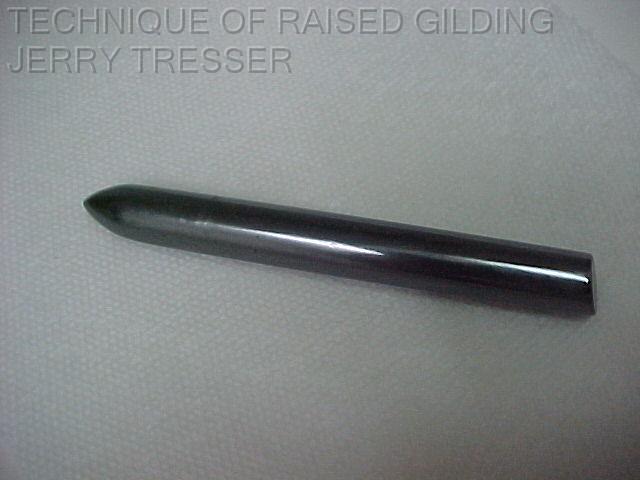
It must be sound; without grain. Then ground on a millstone until it looks like an oversized lipstick with handle that fit comfortably in the palm of the hand. Then it can be used for burnishing gold or silver. However, when not in use Cennini recommends it is kept in ‘your bosom’ so it will not get damp; this is not good for the gold.
But also used when painting frescos. The pure stone is purple but has the structure like vermilion. Once it has been pounded in a bronze mortar it is worked with water until the colour become perfect. Cennini goes on to say that the colour compares with cardinal, purple or lac but cannot be used with temperas; I wonder why?
 Coat Hanger Doll's House