Teapots
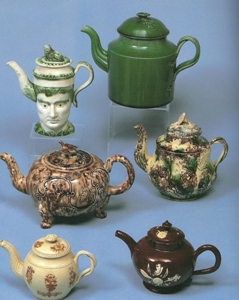
In a bid to research the beauty and use of our British teapot I recently broke my two front teeth. The book I required British teapots and tea drinking by Robin Emmerson -was folio sized and on a top shelf. I am 5’2’’ and it was almost beyond my reach. Although I was in a hurry I managed to retrieve the item but deciding that information on 18th and 19th century pots was not what I was looking for at that moment, I replaced the book.
As a dutiful library assistant I began to rearrange the shelf of books tidily. However, reaching from a vulnerable position, I dislodged a metal bookend that had not be carefully placed –it fell on my face and broke my teeth. I, distraught and spitting bits of teeth reported the mishap to a colleague on the information desk, who kindly suggested a cup of tea might be good for a shock, I declined.
Unfortunately, this was a Friday afternoon and the weekend was almost upon us so I wasn’t able to get my teeth fixed until the Monday morning … but I did and all was well.
Whilst these British pots are very beautiful they seemed rather functional; you put in the required amount of tea leaves into a warmed pot add the boiling water allow it to brew for a few minutes then pour the contents into awaiting cups add milk and sugar and drink. Or so it seemed at the time.
My opinion of British teapots and their place in the tea culture has since changed.
When I had fully covered I retrieved the book more carefully once more – I discovered the book contained images pots dating back to early 18th to middle 19th century from the Twining Tea-pot Gallery and the Ceramic Study room at Norwich Castle museum. The collection tells the story of tea –drinking in Britain that coincided with the founding of the tea blenders Twining. So on reflection rather than dull and functional the British pot has a story that is rich and diverse.
For instance, beside the report of Oliver Cornwell’s death in the Gazette (1658) was the earliest known British advertisement for tea ‘That excellent, and by all Physitians approved, China Drink, called by the Chineans, Tcha, by other nations Tay, alias Tee, is sold at the Sultaness-head, a coffee -house, in Sweetings rents by the Royal Exchange, London’
Tea drinking was considered in 1700 as a mark of good standing in society so families would chose to be shown drinking tea together in their portraits.
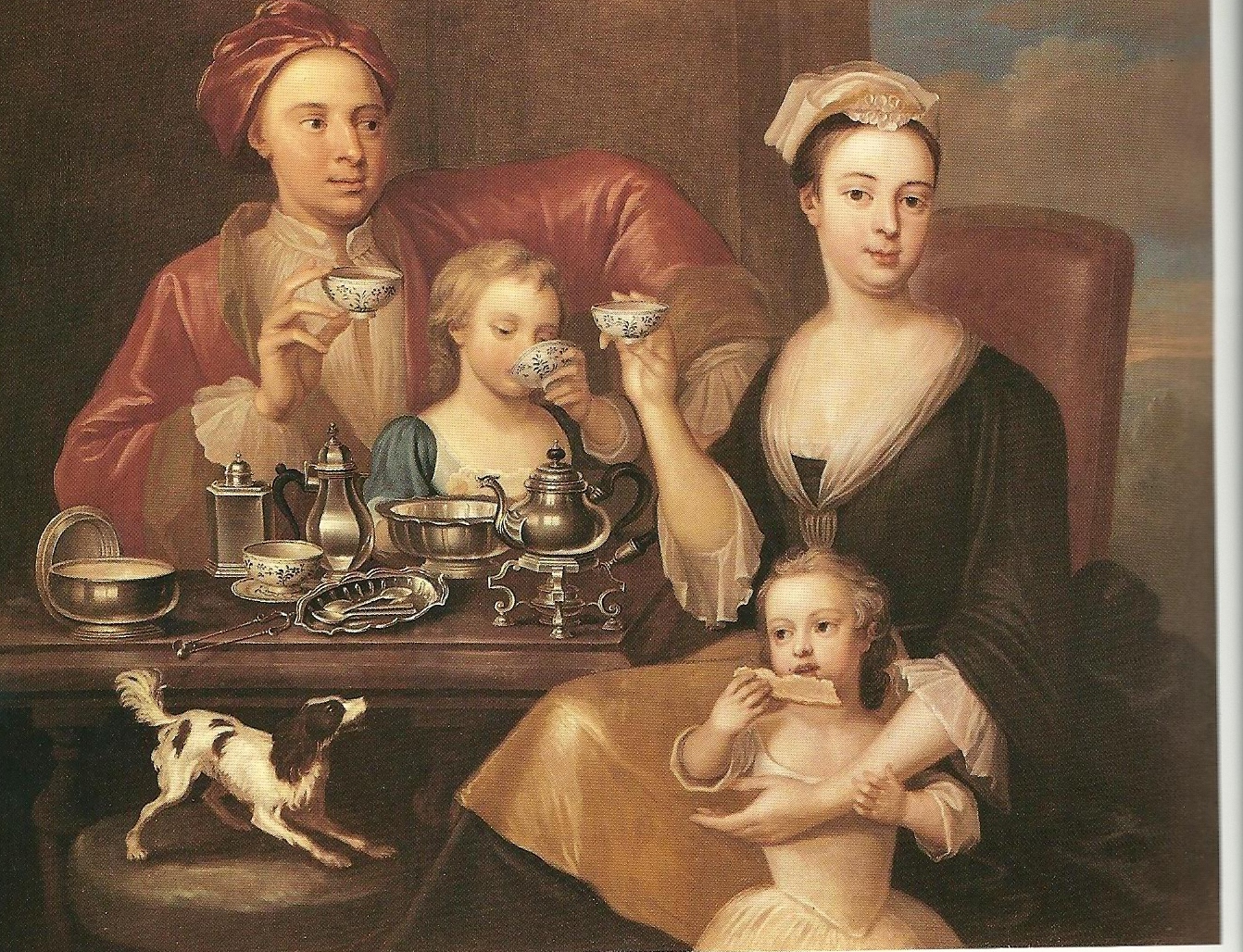
From teapots & tea drinking by Robin Emmerson
I am hoping when I get round to looking at other teapots, the reference books I hope will be placed on lower shelves.
 Coat Hanger Doll's House
Love the tea information, especially 1st British advertised tea dating back to cromwells time. Your humour through a nasty shock shines through. Do hope you’re okay x
Today has been good I am a lucky lucky lady Tra La !!
If they ever reopen, then the Bramah tea and coffee museum would probably be of interest to you: http://londonist.com/2010/08/bringing_back_bramah_tea_coffee_mus.php
Thanks. Fingers-crossed:)
I will be banging on the door, with my mug and good ribbon! Does that make sense? I would not want to smash my mug as I banged the door. Oh! its one in the morning, you get the gist … I will be there tra la. Thanks Vix