Alphabe Thursday V is for Violets

Violets have delighted us for centuries. Napoleon and Josephine both adored them; Josephine wore violet scented perfume that became her trademark. When she died in 1814 her husband planted violets at her graveside. Before Napoleon was exiled to St Helena; he picked some and wore them in a locket for the rest of his life.
In London during the 19th century poor girls sold bunches of lavender and violets on street corners. Vaughan Williams’ London Symphony includes an orchestral interpretation of a flower girl’s cry. It was possible to to make perfume from violets but it was difficult and expensive; only the wealthy trend setters who could afford to buy it.
Some people found the perfume over powering to the point of nausea but this effect wasn’t for long.
Shakespeare said
“Forward, not permanent, sweet not lasting.
The perfume and suppliance of a minute’
We are told that violets contain ionone which stops our sense of smell. While the flower continues to exude fragrance we lose our ability to smell it. However, after a few moments the smell returns to fade again; and continues in this way … to flirt.
The ancient Athenians too were passionate about violets; they chose it as their city’s official flower and emblem.
Victorian women like to sweeten their breath with cachous violet drops after they had been drinking.
I can remember as child in the 1950s sucking perfumed lozenges called Parma Violets.
From the aromatherapy point of view the violet essential oil remains low volume and high price; so used mainly in expensive perfumery. An aromatherapist would not use it freely because of the cost.
Violet leaf oil is antiseptic; its healing properties are especially valuable in treating skin conditions such as acne. The leaves have been used successfully in the treatment of those with breathing difficulties. Although the leaves contain salicylic acid that is used to relieve pain, it is an expensive alternative as it is available in other plants.
Recent research suggests that violet leaf oil has been used successfully in the treatment of AIDS.
For me it remains a lovely flower spied in hedgerows in the spring and not inclined to flourish in my garden; as proved this week.
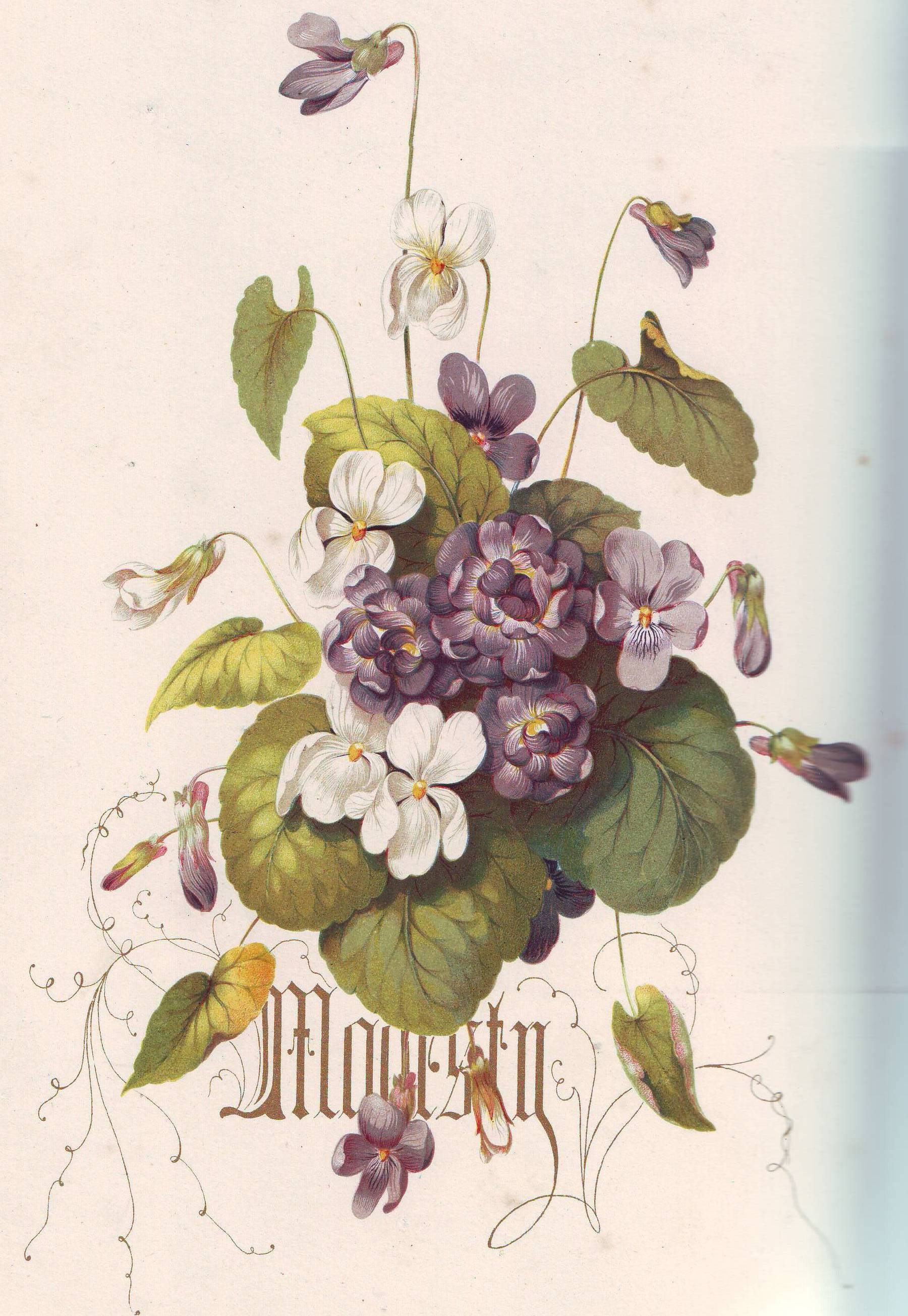
Further reading A natural history of the senses by Diane Ackerman
 Coat Hanger Doll's House
I love violets…great posts. Stopping by from Alphabe-Thursday
Thank You for kind comments and for dropping by
Violets are such dainty little things, but they have such tremendous impact even if it just one or two popping up here and there. I love to find them in the garden in the spring, they just make me smile! This is a lovely print of violets too. Thanks for sharing..
Thanks for dropping by and kind comments 🙂
Violets are one of my very favorites…
They are mine now!!
Violets were my mother-in-laws favorite. Thanks for reminding me.
=)
They are mine now … Wish I could grow them xx
I like the history about violets, thanks for sharing it. have a great day.
Thank you for looking in … and kind comments. You also have a good day. x
very interesting violet facts! I didn’t know about the fading in and out smell. I’ve always loved them, It’s my birth month flower. I’ve eaten violets and even “sugared” them.
Oh … I had forgotten that; about the sugared violets. I haven’t tried them but seem them. They look lovely … almost to good to eat; little sugary gems., to be gazed at. Thanks you for the reminder. Helenx
The only thing I knew for sure about violets before reading this…is that I love them!
One of my favorite flowers.
The fragrance and the happy little faces.
I have put them on salads before with nasturtiums! I forgot all about that!
Thanks for a very lovely and interesting link!
A+